
 EN
EN
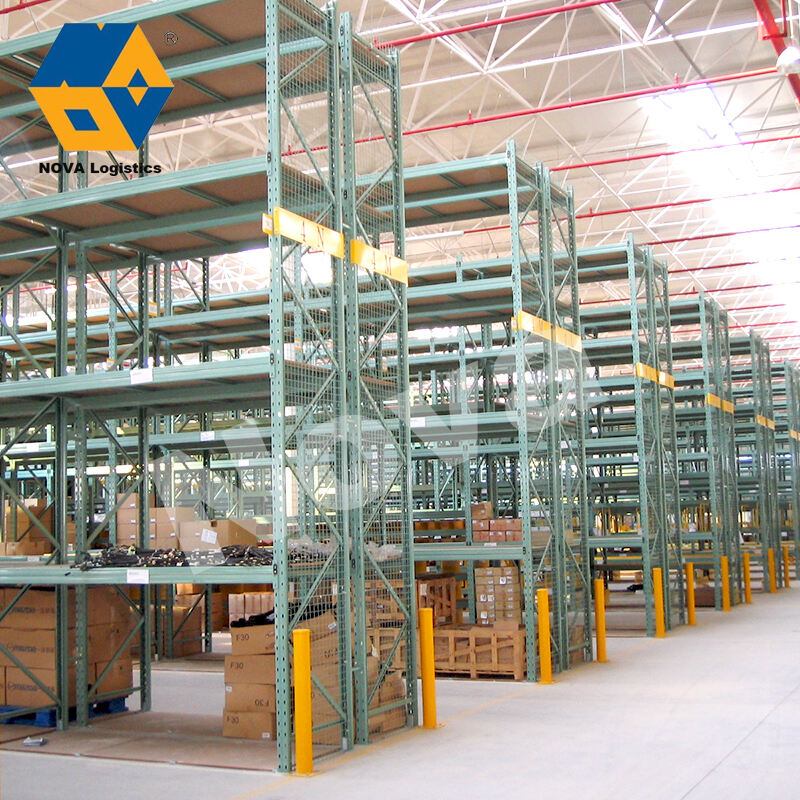
Choosing the right heavy duty rack configuration is one of the most consequential decisions a warehouse manager or operations director can make. The wrong choice leads to wasted floor space, inefficient picking workflows, and safety risks that compound over time. The right choice, by contrast, aligns storage capacity with operational flow, product turnover rates, and the physical characteristics of the goods being stored. Understanding which configuration fits which industry context is therefore not a matter of preference — it is a matter of operational precision.

Every industry carries its own demands in terms of load weight, SKU variety, access frequency, and regulatory compliance. A food distribution center has entirely different storage needs compared to an automotive parts warehouse or a cold-chain facility. This article examines the most widely used heavy duty rack configurations and evaluates which industrial environments they serve best, helping procurement teams and logistics planners make better-informed decisions when specifying or upgrading their storage infrastructure.
Selective Pallet Racking and Its Fit Across General Distribution
The Structural Logic of Selective Configuration
Selective pallet racking is the most commonly deployed form of heavy duty rack in general distribution and third-party logistics environments. The design consists of upright frames connected by load beams, allowing forklifts or reach trucks to access every individual pallet directly without moving surrounding stock. This direct-access principle makes it highly compatible with operations that manage a large number of SKUs with variable turnover rates.
The beam levels on a selective heavy duty rack are adjustable, which means operators can reconfigure bay heights as product dimensions or seasonal inventory mixes change. This flexibility reduces the need to invest in additional racking when the product range evolves. The structural simplicity of the system also means that installation and relocation are faster compared to more complex configurations.
From a capacity standpoint, selective heavy duty rack systems are designed to handle pallet loads ranging from several hundred kilograms to well over two tonnes per level, depending on beam span and upright gauge. This broad weight tolerance makes them suitable for consumer goods, general retail distribution, hardware, and building materials — industries where load variety is high but operational workflows demand fast, reliable pallet retrieval.
Industry Scenarios Where Selective Racks Deliver Most Value
Fast-moving consumer goods distributors consistently favor selective heavy duty rack layouts because the system supports FIFO (first-in, first-out) rotation without complex pick sequencing. Since every pallet is individually accessible from the aisle, pickers do not need to move stock to retrieve items deeper in a bay. This reduces handling time and minimizes the risk of product damage, which is particularly relevant when managing fragile or perishable consumer goods.
Hardware and building materials distributors also benefit significantly from selective racking because their product range often spans dramatically different dimensions and weights — from boxes of fasteners to heavy-gauge pipe sections. The heavy duty rack in these settings must accommodate both weight intensity and dimensional variation, and the adjustable beam structure enables exactly that kind of operational flexibility.
E-commerce fulfillment operations, particularly those managing returns and multiple product categories, find selective configurations well-matched to their workflows. The high aisle count increases pick-path efficiency, and the open-face accessibility of each bay supports rapid replenishment from inbound logistics. For any distribution environment where variety and speed are primary constraints, selective heavy duty rack systems remain the default choice.
Drive-In and Drive-Through Racks for High-Volume Single-SKU Storage
How Drive-In Configuration Works in Practice
Drive-in heavy duty rack systems eliminate individual aisle access in favor of continuous storage depth. Forklifts enter the rack structure itself and travel along internal rails to place or retrieve pallets. This configuration dramatically increases storage density because fewer aisles are required — the same footprint that accommodates three selective bays can often fit five or more drive-in positions. The trade-off is that direct access to individual pallets is lost; the system follows a LIFO (last-in, first-out) inventory logic.
Drive-through configurations extend this concept by providing entry and exit points on opposite sides of the heavy duty rack structure, enabling true FIFO rotation. This distinction matters enormously in industries where product expiry dates or batch traceability are regulatory requirements. The structural depth of both drive-in and drive-through systems demands more robust upright profiles and rail systems to withstand repeated forklift intrusion, making component quality a critical specification factor.
Industries That Benefit from High-Density Drive-In Racks
Cold storage and refrigerated warehouse operators are among the strongest adopters of drive-in heavy duty rack configurations. In refrigerated environments, every square meter of floor space carries significant energy costs, and maximizing storage density directly reduces the cost-per-pallet of temperature control. Since many cold-chain products — frozen foods, dairy, pharmaceutical biologics — are stored by batch rather than individual SKU, the LIFO access pattern of drive-in systems creates no operational disadvantage.
Beverage manufacturers and distributors managing large volumes of single-product pallets also rely heavily on drive-in heavy duty rack designs. A brewery or bottling plant that ships in trailer-load quantities of the same SKU has no need for individual pallet access — it needs maximum density and efficient block-loading capability. Drive-in systems deliver precisely that, often accommodating five to ten pallet depths per lane depending on facility dimensions.
Agricultural storage and grain-related industries often deploy drive-through heavy duty rack configurations to manage seasonal batch rotations. Because produce and agricultural inputs arrive in large homogeneous batches and must be dispatched in order of receipt, the FIFO capability of drive-through systems aligns directly with perishability management requirements. The robustness of the heavy duty rack structure in these environments must also withstand the weight of dense agricultural pallets, which can exceed standard consumer goods loads significantly.
Push-Back and Pallet Flow Racks for Dynamic Storage Environments
Push-Back Rack Mechanics and Operational Fit
Push-back heavy duty rack systems use a nested cart mechanism on inclined rails. When a new pallet is loaded, it pushes previously stored pallets back along the rail slope. When the front pallet is removed, the next pallet automatically rolls forward into the pick position. This design provides deeper-lane storage than selective racking while maintaining single-face access — a practical compromise between density and accessibility.
For operations that carry multiple SKUs with moderate turnover, push-back heavy duty rack configurations offer an appealing balance. Automotive parts distributors, for example, often need two to four pallets of depth per SKU but serve many hundreds of part numbers. Push-back lanes allow the warehouse to store meaningful depth per SKU without dedicating full drive-in tunnels, making it easier to manage a diverse parts catalog within a constrained footprint.
Retail backroom operations and omnichannel fulfillment hubs have also adopted push-back heavy duty rack systems to improve replenishment efficiency. Since the forward pallet is always available for picking without forklift maneuvering, the system supports both bulk replenishment and piece-pick operations simultaneously. The structural integrity of the push-back trolley and rail system must be matched to the pallet weights involved, making proper load rating specification essential.
Pallet Flow Racks and Their Role in FIFO-Intensive Industries
Pallet flow heavy duty rack systems use gravity-fed roller lanes to move pallets from a loading aisle to a retrieval aisle. Pallets enter from the high side and travel to the low side under controlled gravity, ensuring strict FIFO rotation. This configuration is particularly valuable in industries where date sensitivity is a compliance requirement rather than simply a best practice.
Pharmaceutical distributors and medical supply warehouses frequently specify pallet flow heavy duty rack systems because batch traceability and expiry date management are regulated activities. When every pallet that enters must leave in chronological order, gravity-fed flow lanes enforce this discipline automatically without relying on manual pick sequencing. The system removes human error from rotation logic, which is a significant compliance risk reduction in regulated industries.
Food and beverage manufacturers with high throughput also use pallet flow heavy duty rack to manage production output staging. As finished goods leave the production line on a continuous basis, flow lanes receive incoming pallets at one end while outbound logistics teams load trailers from the other. The continuous movement capability and automated rotation make this configuration particularly well-suited to high-volume food manufacturing environments where throughput speed and rotation accuracy are both critical.
Cantilever Racks for Long and Irregular Load Storage
The Structural Characteristics of Cantilever Systems
Cantilever heavy duty rack systems are fundamentally different from pallet-based configurations in that they eliminate the front upright column, leaving arms extending outward from a central spine. This open-face design accommodates loads that cannot be placed on standard pallet beams due to length, irregularity, or the need for multiple support points along a product's span. The cantilever system handles these challenges natively.
Steel service centers and metal distributors represent the most established user base for cantilever heavy duty rack configurations. Long steel bars, structural profiles, coiled materials, and sheet stock require support at multiple intervals along their length, and cantilever arms provide exactly this kind of distributed support without obstructing the loading bay. The arm spacing, load capacity, and column height must be engineered to the specific dimensions and weights of the materials being stored.
Other Industries Served by Cantilever Configurations
Timber and lumber yards have long used cantilever heavy duty rack systems to organize dimensional lumber, engineered wood panels, and composite beam stock. The irregular lengths found in timber inventories — ranging from short offcuts to full-length structural timbers — are precisely the kind of product that defeats conventional pallet racking. Cantilever arms can be set at variable spacing to accommodate this variety, and horizontal brace configurations keep the overall structure stable under the significant lateral loads that timber creates.
Pipe, tube, and cable manufacturers and distributors also rely heavily on cantilever heavy duty rack designs. Coiled cable can be stored on horizontal spindle arms, while pipe sections sit across standard cantilever arms at regular intervals. The versatility of the cantilever heavy duty rack makes it indispensable in any industrial sector where the product geometry is fundamentally incompatible with box-based or pallet-based storage.
Furniture manufacturing and retail distribution present another compelling application. Long upholstered pieces, flat-pack panel boards, and assembled furniture components are all poorly suited to conventional storage. Cantilever systems in these environments allow organized storage and retrieval of bulky, non-uniform items without improvised stacking that creates safety hazards and inventory management problems.
Mezzanine and Multi-Tier Rack Structures for Space-Constrained Facilities
When Vertical Space Is the Primary Available Resource
In many urban and suburban industrial parks, ground-floor footprint expansion is either impossible or economically unviable. Multi-tier heavy duty rack configurations address this constraint by building usable floor space vertically, integrating walkways and platforms within the racking structure itself. These systems allow a warehouse to effectively multiply its operational floor area without changing its building footprint.
Third-party logistics providers operating out of high-cost urban locations frequently invest in multi-tier heavy duty rack systems to serve e-commerce clients that require large SKU counts in a compact space. The upper tiers are typically used for slower-moving or bulkier items, while the ground tier handles high-frequency picks. The heavy duty rack structure in these multi-tier applications must account for accumulated load across all levels, which makes engineering certification a non-negotiable specification requirement.
Industry Applications for Mezzanine-Integrated Rack Systems
Automotive aftermarket distributors managing tens of thousands of part numbers in a single facility are strong candidates for multi-tier heavy duty rack solutions. Parts of varying size, weight, and pick frequency must be organized efficiently, and the vertical expansion that multi-tier racking provides can double effective storage capacity without a facility move. Integrated conveyor systems between tiers further accelerate pick-and-pass workflows in these environments.
Industrial maintenance, repair, and operations (MRO) distributors face similar challenges — enormous SKU counts, variable turnover, and the need for precise inventory location management. Multi-tier heavy duty rack configurations suit this context well because the structure can be divided by product category across tiers, with high-velocity items at ground level and lower-frequency stock above. This zoning approach reduces picker travel time and improves order accuracy.
Pharmaceutical and medical device distributors that manage both bulk pallet stock and individual unit picks benefit from hybrid systems that combine ground-level heavy duty rack pallet storage with upper-tier shelving for smaller items. This integrated architecture serves both inbound bulk storage and outbound piece-pick fulfillment within the same structural system, eliminating the need for a separate shelving area in a separate building zone.
FAQ
What load capacity should a heavy duty rack system support for industrial applications?
Load capacity requirements vary significantly depending on the industry and product type. In general, a heavy duty rack system used in industrial or manufacturing environments should support at least 1,000 to 2,500 kilograms per pallet level, though cold storage and metal distribution applications may require capacities well above this range. It is essential to specify capacity based on the actual heaviest pallet weight in your operation, including packaging and handling tolerance, rather than an average figure. Structural certification from a qualified engineer is strongly recommended for any high-load application.
How do I determine which heavy duty rack configuration is right for my warehouse?
The selection of a heavy duty rack configuration should start with an analysis of three core operational factors: inventory rotation requirements (FIFO vs. LIFO), the number of distinct SKUs being stored, and the access frequency per pallet position. High-SKU, high-frequency operations typically benefit from selective configurations, while low-SKU, high-volume operations suit drive-in or pallet flow systems. Long or irregular load types point toward cantilever systems, and space-constrained facilities with large SKU counts often require multi-tier solutions. A storage system consultant or racking manufacturer can assist in modeling the best fit based on your specific inventory profile and building dimensions.
Can a heavy duty rack system be reconfigured as business needs change?
Selective heavy duty rack systems are highly reconfigurable because beam heights are adjustable and bays can be extended, shortened, or relocated with standard tools. More complex configurations such as drive-in, pallet flow, or cantilever systems require more significant structural changes when reconfiguring, but are not necessarily fixed permanently. Most reputable heavy duty rack systems are designed with future adaptability in mind, and modular component compatibility allows for significant layout changes over time. However, any reconfiguration should be reviewed against load ratings to ensure structural safety is maintained throughout the change process.
What safety standards apply to heavy duty rack installations in industrial facilities?
Safety standards for heavy duty rack installations vary by region but generally include requirements for load labeling, column protection from forklift impact, seismic anchoring in applicable zones, and regular inspection protocols. In many markets, compliance with EN 15512 (Europe), RMI specifications (North America), or AS 4084 (Australia) is expected or legally required. Additionally, floor-fixing anchors, rack guards, and end-of-aisle barriers are considered standard safety installations for any commercial heavy duty rack system. Facilities should establish a documented inspection schedule and damage reporting protocol to ensure ongoing compliance throughout the operational life of the system.
Table of Contents
- Selective Pallet Racking and Its Fit Across General Distribution
- Drive-In and Drive-Through Racks for High-Volume Single-SKU Storage
- Push-Back and Pallet Flow Racks for Dynamic Storage Environments
- Cantilever Racks for Long and Irregular Load Storage
- Mezzanine and Multi-Tier Rack Structures for Space-Constrained Facilities
-
FAQ
- What load capacity should a heavy duty rack system support for industrial applications?
- How do I determine which heavy duty rack configuration is right for my warehouse?
- Can a heavy duty rack system be reconfigured as business needs change?
- What safety standards apply to heavy duty rack installations in industrial facilities?