
 EN
EN
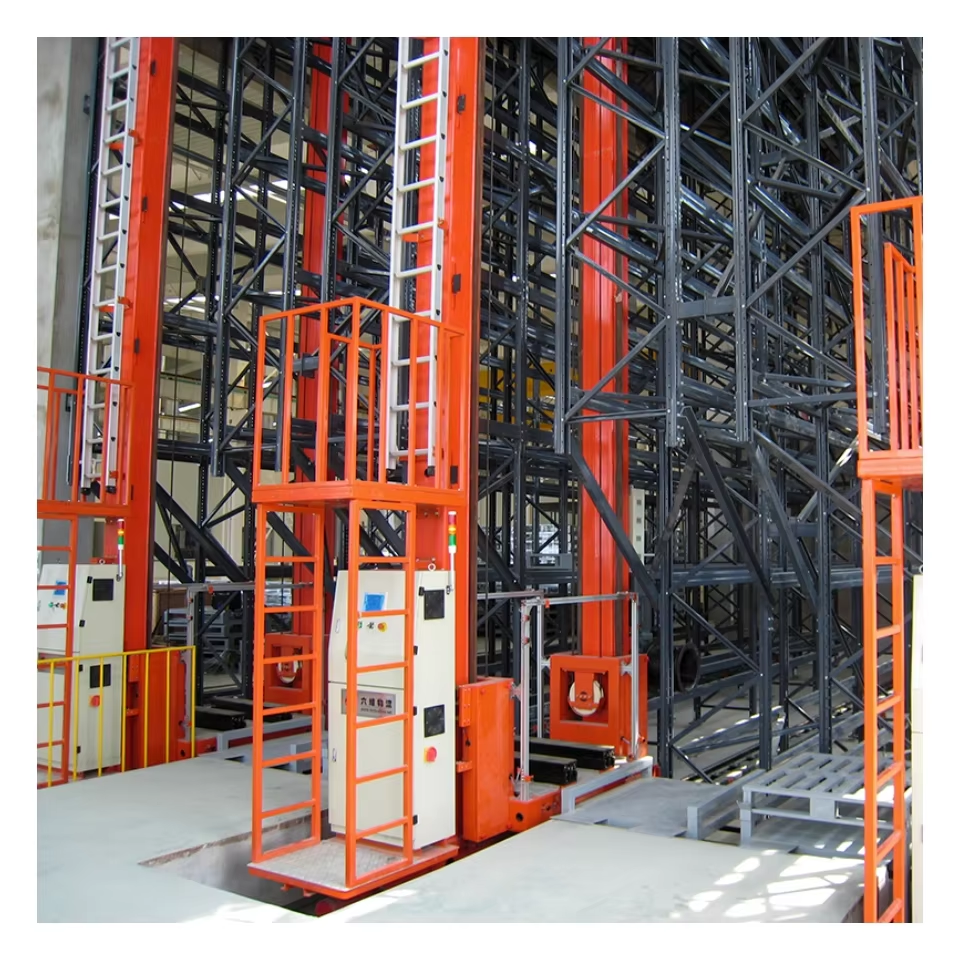
Les entrepôts modernes sont soumis à une pression sans précédent pour maximiser leur capacité de stockage tout en préservant leur efficacité opérationnelle et leur rentabilité. Face à l'essor continu du commerce électronique et à la complexification croissante des chaînes d'approvisionnement, les entreprises se tournent vers des solutions de stockage avancées capables de gérer la demande croissante en stocks sans nécessiter d'importants agrandissements de leurs installations. Systèmes de rayonnage industriels sont devenues la pierre angulaire des opérations d'entrepôt modernes, offrant des capacités de stockage sophistiquées qui transforment la façon dont les entreprises gèrent leurs processus d'inventaire et de logistique.
L'évolution du stockage en entrepôt a largement dépassé le stade des simples rayonnages pour englober des solutions d'ingénierie sophistiquées qui optimisent chaque mètre cube d'espace disponible. Ces systèmes de stockage avancés s'intègrent parfaitement aux systèmes automatisés, aux logiciels de gestion d'entrepôt et aux équipements de manutention afin de créer des écosystèmes de stockage complets. Les entreprises qui mettent en œuvre ces solutions constatent des améliorations significatives en termes de densité de stockage, d'efficacité opérationnelle et de rentabilité globale.
Optimisation de l'utilisation de l'espace d'entrepôt
Optimisation du rangement vertical
L'un des principaux atouts des systèmes de stockage modernes réside dans leur capacité à optimiser l'espace vertical. Les méthodes de stockage traditionnelles laissent souvent un espace en hauteur considérable inutilisé, tandis que les solutions de rayonnage conçues sur mesure permettent d'étendre la capacité de stockage jusqu'au plafond, tout en garantissant un accès sécurisé et une intégrité structurelle optimale. Cette approche verticale augmente généralement la capacité de stockage de 200 à 300 % par rapport aux méthodes de stockage au niveau du sol.
La conception verticale de ces systèmes repose sur des principes avancés de répartition des charges, garantissant une stabilité optimale même aux hauteurs maximales. Les ingénieurs calculent avec précision la répartition du poids, les contraintes sismiques et les coefficients de sécurité afin de créer des structures capables de supporter des charges importantes tout en préservant un accès aisé aux matériaux stockés. Cette précision d'ingénierie permet aux entrepôts d'atteindre une densité de stockage remarquable sans compromettre la sécurité ni l'accessibilité.
Les solutions de stockage vertical modernes intègrent également des systèmes de guidage sophistiqués qui aident les opérateurs à se déplacer efficacement dans les environnements de stockage à plusieurs niveaux. Ces systèmes comprennent une visibilité optimale, des systèmes de numérotation intuitifs et la compatibilité avec les équipements de prélèvement automatisés permettant d'accéder rapidement et en toute sécurité aux emplacements de stockage en hauteur.
Avantages de la configuration haute densité
Les configurations de stockage haute densité représentent une rupture fondamentale avec les aménagements d'entrepôt traditionnels qui privilégient les larges allées et la facilité d'accès. Ces configurations spécialisées optimisent les surfaces de stockage tout en préservant la fonctionnalité opérationnelle grâce à des schémas d'accès et une intégration des équipements soigneusement conçus. Il en résulte une densité de stockage pouvant dépasser de près de 400 % celle des méthodes traditionnelles dans certaines configurations.
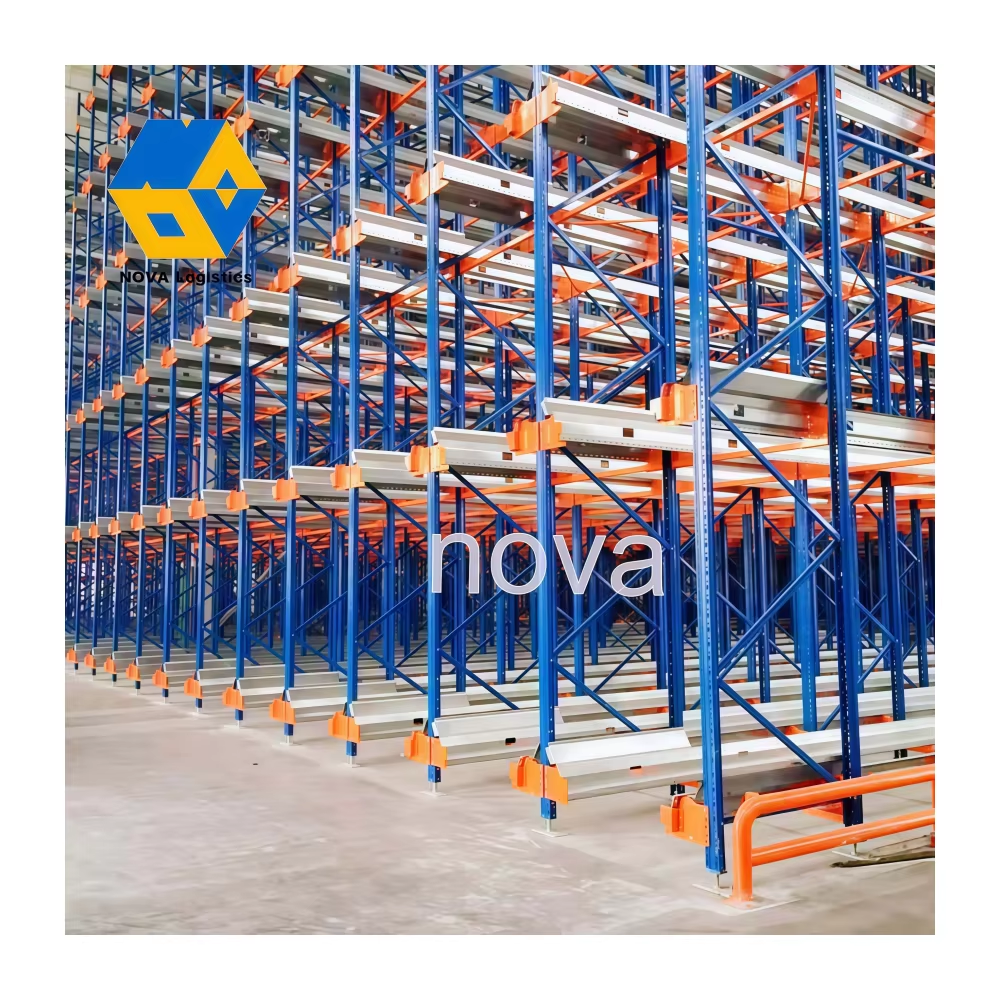
Les configurations « drive-in » et « drive-through » illustrent parfaitement les principes de la haute densité en éliminant les allées multiples entre les emplacements de stockage. Au lieu d'exiger des voies d'accès distinctes pour chaque emplacement, ces systèmes permettent aux chariots élévateurs et aux engins automatisés d'accéder directement aux allées de stockage et à plusieurs emplacements de palettes depuis un point d'entrée unique. Cette approche réduit considérablement la surface au sol nécessaire aux allées tout en maintenant des temps d'accès raisonnables aux stocks.
Les systèmes à flux continu et à poussée permettent d'optimiser la densité de stockage grâce à un système d'alimentation par gravité qui fait avancer automatiquement les articles au fur et à mesure de leur prélèvement. Ces configurations sont particulièrement efficaces pour les stocks à rotation rapide, gérés selon le principe du premier entré, premier sorti (FIFO), alliant une densité maximale à des pratiques de gestion des stocks optimales.
Améliorations de l'efficacité opérationnelle
Gestion optimisée des matériaux
Les systèmes de rayonnage avancés transforment les opérations de manutention en créant des emplacements de stockage standardisés qui s'intègrent parfaitement aux équipements de manutention modernes. Les caristes peuvent se déplacer plus efficacement dans ces systèmes car les dimensions standardisées et la visibilité optimale réduisent le temps de positionnement et améliorent la précision. Il en résulte des cycles de rangement et de prélèvement plus rapides, ce qui a un impact direct sur le rendement global de l'entrepôt.
Ces systèmes prennent également en charge des solutions de manutention automatisées et semi-automatisées qui optimisent l'efficacité opérationnelle. Les systèmes automatisés de stockage et de récupération peuvent s'interfacer directement avec les rayonnages, assurant ainsi une intégration parfaite entre l'infrastructure de stockage et les équipements de manutention. Cette intégration permet un fonctionnement entièrement automatisé, les mouvements de stock se poursuivant même sans supervision humaine.
La standardisation inhérente aux systèmes de rayonnage professionnels ne se limite pas aux emplacements de stockage ; elle englobe également les points d’intégration des convoyeurs, des véhicules à guidage automatique et des équipements de manutention robotisés. Cette standardisation constitue le socle d’une automatisation évolutive, capable de s’adapter aux besoins de l’entreprise et aux progrès technologiques.
Amélioration de la gestion des stocks
Les systèmes de stockage modernes intègrent des fonctionnalités qui améliorent considérablement la précision et la gestion des stocks. Des emplacements de stockage clairement définis, associés à des systèmes d'adressage standardisés, facilitent le suivi des mouvements de stock et la tenue d'inventaires précis. De nombreux systèmes s'intègrent aux logiciels de gestion d'entrepôt pour assurer un suivi en temps réel de la localisation et une visibilité optimale des stocks.
La structure des systèmes de rayonnage professionnels favorise des stratégies de gestion des stocks avancées, telles que l'inventaire tournant, l'analyse ABC et le positionnement basé sur la rotation des stocks. Les articles peuvent être positionnés stratégiquement en fonction de leur taux de rotation : les stocks à rotation rapide sont placés dans des zones facilement accessibles, tandis que les articles à rotation plus lente bénéficient d'un stockage à haute densité.
Ces systèmes permettent également une meilleure protection des stocks grâce à un stockage organisé qui réduit les dommages liés à une mauvaise manipulation ou à un empilage instable. Les produits stockés à des emplacements désignés et correctement supportés sont moins susceptibles d'être endommagés lors des opérations de stockage ou de prélèvement, ce qui améliore l'intégrité globale des stocks et réduit les pertes.
Coût-efficacité et retour sur investissement
Exigences réduites en matière d'installations
L'efficacité spatiale obtenue grâce aux technologies avancées systèmes de rayonnage industriels Cela se traduit directement par une réduction des coûts d'exploitation grâce à plusieurs mécanismes. Les entreprises peuvent souvent éviter des agrandissements coûteux en optimisant la capacité de stockage de leurs bâtiments existants, ce qui leur permet de reporter, voire d'éliminer, le besoin d'investissements immobiliers supplémentaires. Cette optimisation de l'espace peut repousser les besoins d'expansion de plusieurs années, tandis que le volume d'activité continue de croître.
Pour les entreprises qui envisagent de nouvelles installations, les solutions de stockage haute densité permettent de réduire l'emprise au sol des bâtiments tout en conservant une capacité de stockage équivalente. La réduction de la taille des bâtiments se traduit par une diminution des coûts de construction, des taxes foncières, des dépenses énergétiques et des besoins de maintenance. Ces économies s'accumulent au fil du temps, générant ainsi des avantages économiques substantiels à long terme.
La possibilité de stocker davantage de marchandises dans un espace réduit permet également une meilleure utilisation des emplacements de choix. Les entreprises peuvent ainsi maintenir leurs entrepôts plus proches de leurs clients ou des plateformes de transport sans nécessiter de vastes terrains, améliorant ainsi la qualité de service tout en maîtrisant leurs coûts immobiliers.
Gains d'efficacité sur la main-d'œuvre
Les systèmes de rayonnage professionnels créent des environnements de travail plus organisés, ce qui permet d'accroître la productivité grâce à la réduction des temps de déplacement, une meilleure précision de préparation des commandes et des processus standardisés. Les opérateurs peuvent ainsi accomplir leurs tâches plus rapidement lorsque les emplacements de stockage sont clairement définis, facilement accessibles et organisés de manière logique. Ces gains d'efficacité se traduisent directement par une réduction des coûts de main-d'œuvre par unité traitée.
Les avantages ergonomiques des systèmes de rangement bien conçus contribuent également à l'efficacité du travail en réduisant la fatigue et les risques de blessures. Les systèmes conçus avec des hauteurs d'accès appropriées, une visibilité dégagée et des méthodes d'accès sécurisées permettent de maintenir la productivité des travailleurs tout au long de leurs quarts de travail, tout en réduisant les coûts liés aux indemnités d'accident du travail et le taux de roulement du personnel.
Le temps de formation des nouveaux employés est également réduit lorsque les systèmes de stockage adoptent des conceptions standardisées et intuitives. Dans un environnement organisé, doté de systèmes de localisation clairs et de processus standardisés, les nouveaux employés deviennent productifs plus rapidement, ce qui diminue les coûts de formation et améliore la flexibilité de la main-d'œuvre.
Avantages en matière de sécurité et de conformité
Caractéristiques de sécurité structurelle
Les systèmes de stockage modernes intègrent de nombreux dispositifs de sécurité qui protègent à la fois les marchandises stockées et le personnel d'entrepôt. Le dimensionnement des charges garantit que les structures de stockage peuvent supporter les poids prévus en toute sécurité, avec des marges de sécurité appropriées, tandis que les mesures parasismiques protègent contre les dommages causés par les tremblements de terre dans les régions exposées. Ces dispositifs de sécurité sont essentiels pour le maintien de la couverture d'assurance et la conformité réglementaire.
Les systèmes de protection contre les chocs intégrés aux rayonnages professionnels contribuent à prévenir les dommages causés par les collisions de chariots élévateurs et autres impacts liés à l'exploitation. Les protections de poteaux, les protections d'extrémité d'allée et les matériaux résistants aux chocs permettent de préserver l'intégrité structurelle, même dans les entrepôts à forte activité où les chocs occasionnels sont inévitables.
L'intégration des systèmes d'extinction d'incendie garantit le bon fonctionnement des sprinklers et autres dispositifs de protection incendie dans les zones de stockage. Un espacement adéquat, le choix des matériaux et une conception appropriée contribuent au respect des normes de sécurité incendie tout en optimisant la densité de stockage, répondant ainsi simultanément aux objectifs opérationnels et de sécurité.
Soutien à la conformité réglementaire
Les systèmes de stockage professionnels aident les entreprises à se conformer aux diverses réglementations en matière de sécurité au travail, aux codes du bâtiment et aux normes industrielles. Les exigences de l'OSHA relatives aux pratiques de stockage sécuritaires sont plus facilement respectées lorsque les systèmes de stockage comprennent des garde-corps appropriés, un marquage de la capacité de charge et une signalisation claire des allées, favorisant ainsi des opérations en toute sécurité.
De nombreux secteurs industriels ont des exigences de stockage spécifiques pour certains types de produits, et des systèmes de rayonnage sur mesure peuvent être conçus pour répondre à ces besoins particuliers. Le stockage pharmaceutique, les exigences de sécurité alimentaire, la manipulation de matières dangereuses et d'autres applications réglementées bénéficient de systèmes de stockage conçus en intégrant dès le départ les impératifs de conformité.
La documentation et la certification fournies avec les systèmes de stockage professionnels facilitent également la vérification de la conformité lors des inspections et des audits. Une documentation technique appropriée, des certificats d'essais de charge et des dossiers d'installation permettent de démontrer la conformité aux réglementations et normes applicables.
Scalabilité et Adaptabilité
Logements pour la croissance future
Des systèmes de stockage bien conçus offrent la flexibilité nécessaire pour la croissance future et l'évolution des besoins opérationnels. Leurs composants modulaires permettent une extension ou une reconfiguration au gré des besoins de l'entreprise, lui permettant ainsi d'adapter son infrastructure de stockage sans remplacement complet. Cette adaptabilité préserve la valeur de l'investissement sur le long terme.
La possibilité de modifier la configuration du stockage permet également de s'adapter aux variations saisonnières, aux changements de gamme de produits et aux améliorations opérationnelles. Les entreprises peuvent ajuster l'agencement de leurs entrepôts pour accueillir des produits de différentes tailles, mettre en œuvre de nouvelles stratégies de gestion des stocks ou intégrer des solutions d'automatisation supplémentaires sans avoir à reconstruire entièrement leur infrastructure de stockage.
Les possibilités d'extension intégrées dès la conception permettent une croissance fluide et une continuité opérationnelle assurée. L'ajout progressif de capacité de stockage s'effectue selon les besoins, évitant ainsi les perturbations et les coûts liés à des modifications ou des déménagements majeurs des installations.
Capacités d'intégration technologique
Les infrastructures de stockage modernes sont conçues pour une intégration technologique optimale, prenant en charge les systèmes de gestion d'entrepôt, les équipements d'automatisation et les technologies de surveillance actuels et futurs. L'alimentation électrique, la communication de données et les points de fixation des équipements intégrés facilitent l'intégration des évolutions technologiques au fur et à mesure de leur disponibilité.
Les interfaces standardisées des systèmes de stockage professionnels offrent une plateforme pour diverses solutions technologiques, allant de la simple lecture de codes-barres au suivi RFID sophistiqué et à la gestion automatisée des stocks. Cette compatibilité technologique garantit que l'infrastructure de stockage peut accompagner les améliorations opérationnelles et les gains d'efficacité au gré des évolutions technologiques.
Les capacités d'intégration s'étendent également aux technologies émergentes telles que l'intelligence artificielle, l'apprentissage automatique et l'Internet des objets, qui promettent des améliorations opérationnelles supplémentaires. Les systèmes de stockage conçus pour intégrer les technologies futures constituent le socle de ces fonctionnalités avancées à mesure qu'elles se développent et deviennent rentables.
FAQ
Quels facteurs les entreprises doivent-elles prendre en compte lors du choix de systèmes de stockage pour leurs installations ?
Les entreprises doivent évaluer plusieurs facteurs clés, notamment la hauteur sous plafond disponible, les caractéristiques des produits (taille, poids, etc.), la rotation des stocks et les équipements de manutention existants. La capacité structurelle du bâtiment, les normes de construction locales et les exigences parasismiques influencent également le choix du système. Il convient par ailleurs de prendre en compte les plans de croissance futurs, les objectifs d'automatisation et les besoins d'intégration avec les systèmes de gestion d'entrepôt afin de garantir que la solution choisie soutienne les objectifs opérationnels à long terme.
Quel est l'impact des systèmes de stockage haute densité sur les coûts d'exploitation des entrepôts ?
Les systèmes haute densité permettent généralement de réduire les coûts d'exploitation grâce à plusieurs mécanismes, notamment la diminution de l'espace nécessaire, l'amélioration de la productivité du personnel et la réduction des temps de manutention. Bien que l'investissement initial puisse être plus élevé que pour les solutions de stockage classiques, les gains d'espace réalisés permettent souvent d'éviter l'agrandissement des installations, ce qui représente des avantages économiques substantiels à long terme. Les coûts énergétiques peuvent également diminuer grâce à la réduction de la taille des installations et à l'amélioration de l'efficacité opérationnelle.
Quelles sont les exigences de maintenance associées aux systèmes de rayonnage professionnels ?
Les systèmes de stockage professionnels nécessitent des inspections régulières afin de vérifier leur intégrité structurelle, leur conformité aux capacités de charge et le bon fonctionnement des dispositifs de sécurité. La maintenance courante comprend la vérification des dommages causés par les chocs, le contrôle de la répartition des charges et le contrôle de l'état des accessoires de sécurité, tels que les protections de colonnes. La plupart des systèmes bénéficient d'inspections annuelles réalisées par des professionnels, tandis que les contrôles opérationnels quotidiens permettent d'identifier les problèmes potentiels avant qu'ils ne s'aggravent.
À quelle vitesse les entreprises peuvent-elles espérer un retour sur investissement pour les systèmes de stockage avancés ?
Les délais de retour sur investissement varient selon les circonstances, mais de nombreuses entreprises constatent des périodes de récupération allant de 18 mois à 4 ans. Parmi les facteurs influençant le retour sur investissement figurent les économies d'espace réalisées, les gains d'efficacité de la main-d'œuvre, les coûts d'agrandissement des installations évités et les améliorations opérationnelles. Les entreprises ayant une rotation des stocks élevée ou des biens immobiliers coûteux bénéficient généralement de délais de récupération plus courts, tandis que celles dont l'activité est saisonnière ou qui ont des besoins spécifiques peuvent avoir des délais de récupération plus longs, mais obtiennent tout de même des avantages substantiels à long terme.
Table des Matières
- Optimisation de l'utilisation de l'espace d'entrepôt
- Améliorations de l'efficacité opérationnelle
- Coût-efficacité et retour sur investissement
- Avantages en matière de sécurité et de conformité
- Scalabilité et Adaptabilité
-
FAQ
- Quels facteurs les entreprises doivent-elles prendre en compte lors du choix de systèmes de stockage pour leurs installations ?
- Quel est l'impact des systèmes de stockage haute densité sur les coûts d'exploitation des entrepôts ?
- Quelles sont les exigences de maintenance associées aux systèmes de rayonnage professionnels ?
- À quelle vitesse les entreprises peuvent-elles espérer un retour sur investissement pour les systèmes de stockage avancés ?