
 EN
EN
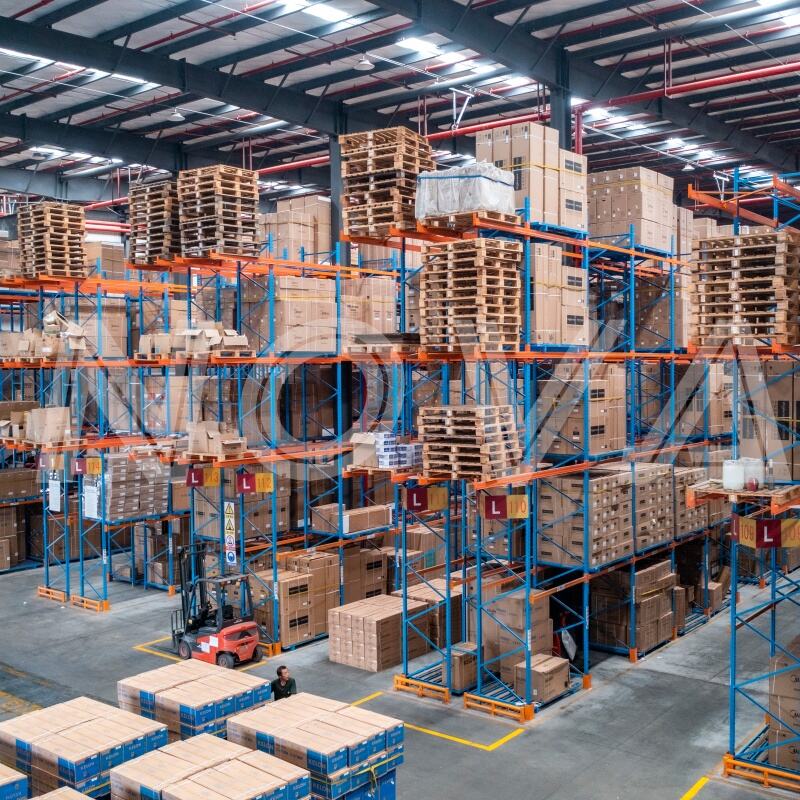
Warehouse managers across industries face a persistent challenge: making limited floor space work harder without sacrificing accessibility or operational speed. A well-designed pallet rack system is one of the most effective tools available to address that challenge directly. By organizing vertical storage space and enabling systematic inventory placement, a pallet rack transforms a cluttered warehouse floor into a structured, scalable environment built for efficiency.

Storage flexibility is not just about fitting more products into a space. It is about adapting quickly to changing inventory volumes, product sizes, and picking workflows. The pallet rack is uniquely suited to this role because its modular construction allows warehouses to reconfigure layouts as business needs evolve. Whether you operate a small regional distribution center or a high-throughput fulfillment facility, understanding how a pallet rack improves flexibility is essential for smarter infrastructure decisions.
The Structural Logic Behind Pallet Rack Flexibility
Modular Design Enables Fast Reconfiguration
One of the defining advantages of a pallet rack is its modular architecture. Upright frames and horizontal beams connect without welding, meaning that beam heights can be adjusted to accommodate taller or shorter loads. When product dimensions change seasonally or when a warehouse takes on a new client with different SKU profiles, the pallet rack can be modified without purchasing entirely new equipment. This adjustability directly supports storage flexibility by eliminating rigid infrastructure that would otherwise lock operations into a fixed configuration.
In practical terms, a warehouse team can raise or lower pallet rack beam levels within a single shift. This kind of fast reconfiguration is critical for businesses that handle mixed-product inventories or experience seasonal demand swings. The pallet rack acts as a long-term investment that continues to serve the facility across many different storage scenarios rather than becoming obsolete when conditions change.
Vertical Space Utilization Through Pallet Rack Design
Floor space in a warehouse carries a direct cost, and every square meter left underutilized represents lost value. A pallet rack extends usable storage into vertical space, often reaching ceiling heights that would otherwise go unused. By stacking inventory upward on a pallet rack, warehouses reduce their storage footprint and free up ground-level space for staging, picking lanes, or equipment movement. This vertical strategy fundamentally changes how storage capacity is calculated and managed.
Selective pallet rack configurations, in particular, allow individual pallet access at every tier without moving surrounding stock. This design eliminates the inefficiency of deep-stack storage and supports first-in, first-out rotation where needed. When a pallet rack is properly integrated into aisle planning, it creates a balanced layout that serves both high-density storage and fast retrieval simultaneously.
Pallet Rack Configurations That Support Different Workflows
Selective Pallet Rack for High-SKU Operations
A selective pallet rack is the most widely used configuration in warehouses that manage a large number of distinct SKUs. Because each pallet rack position is independently accessible, operators can retrieve or replenish any item without disturbing adjacent inventory. This direct-access model reduces pick times, minimizes handling errors, and simplifies cycle counting. For facilities managing hundreds or thousands of product lines, the pallet rack provides the granular control needed to keep inventory organized and accessible.
The pallet rack in a selective layout also integrates easily with forklift equipment and warehouse management systems. Beam levels can be labeled, barcoded, or assigned digital location codes, turning each pallet rack bay into a trackable storage address. This compatibility with modern warehouse technology makes the pallet rack a foundational component of data-driven inventory management.
Double-Deep and Drive-In Pallet Rack for High-Volume Storage
When storage density takes priority over individual pallet access, a double-deep or drive-in pallet rack configuration offers greater capacity per aisle. A double-deep pallet rack positions two pallets back to back on each rack level, increasing storage density while still using standard forklift equipment with a reach attachment. Drive-in pallet rack systems allow forklifts to enter the rack structure itself, creating deep lanes suited for large quantities of a single SKU.
These pallet rack configurations are particularly valuable in cold storage environments or distribution centers handling bulk goods where product turnover is consistent. The trade-off between density and accessibility is a core decision when selecting a pallet rack system, and understanding this balance helps operations managers match their pallet rack configuration to their actual workflow demands rather than defaulting to a generic layout.
Long-Term Operational Benefits of Pallet Rack Investment
Scalability Aligned With Business Growth
A pallet rack system is designed to grow alongside a business. Additional pallet rack bays can be added to existing upright frames, extending the storage system without replacing the original infrastructure. This scalability makes the pallet rack a cost-efficient choice for growing companies that need incremental capacity expansion rather than complete facility overhauls. Investing in a pallet rack early creates a structural foundation that absorbs future inventory growth with minimal additional capital expenditure.
Scalability also applies to load capacity. Heavy-duty pallet rack systems are engineered to support substantial weight per beam level, meaning the same pallet rack frame can be reused even when product weights increase. This structural resilience ensures that the pallet rack remains relevant and functional across a wide range of operational conditions over many years.
Safety and Compliance in Pallet Rack Systems
Storage flexibility must never come at the cost of safety. A properly installed pallet rack includes column protectors, anchor bolts, and load capacity labels that ensure safe use across all configured positions. Regular pallet rack inspections identify damaged beams or connectors before they become hazards, and replacement parts for standard pallet rack systems are widely available. Maintaining a safe pallet rack environment protects both inventory and personnel while sustaining the operational reliability that warehouse flexibility depends on.
FAQ
What is the most flexible pallet rack configuration for mixed inventory?
A selective pallet rack is generally the most flexible option for warehouses managing mixed inventory. It provides direct access to every pallet rack position independently, which supports varied SKU profiles, fast retrieval, and easy reconfiguration without moving surrounding stock.
How often should a pallet rack system be inspected for safety?
Industry best practices recommend a formal pallet rack inspection at least once per year, with informal visual checks performed regularly by warehouse staff. Any pallet rack component showing visible damage, bending, or corrosion should be assessed immediately and replaced before continued use.
Can a pallet rack system be expanded after initial installation?
Yes. Most pallet rack systems are designed with expansion in mind. New pallet rack bays can be added to existing upright frames as long as load ratings are respected. This modular expandability is one of the core reasons businesses choose a pallet rack system as a long-term warehouse storage investment.