
 EN
EN
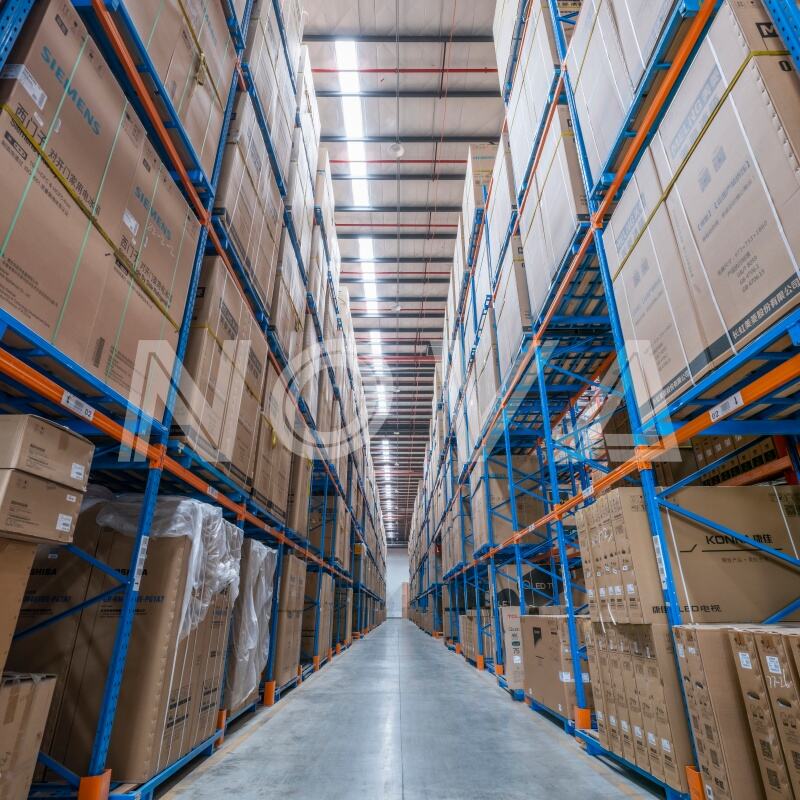
Selecting the right pallet rack design is one of the most consequential decisions a warehouse manager or logistics planner can make. The wrong configuration leads to wasted vertical space, inefficient picking workflows, and even serious safety risks. Because every warehouse operation differs in terms of inventory volume, SKU count, product turnover rate, and floor layout, there is no universally superior pallet rack system. Instead, the best choice depends on understanding which design characteristics align with your specific operational demands.

This article breaks down the major pallet rack designs available in the market today, explains the operational scenarios each one serves best, and provides decision-useful criteria to help you match the right structure to your unique warehouse environment. Whether you are building a new facility from scratch or retrofitting an existing distribution center, understanding the functional distinctions between pallet rack configurations will prevent costly errors and unlock significant efficiency gains.
The Foundation of Pallet Rack Selection: Matching Design to Workflow
Why Application Context Drives Design Choice
Before evaluating any specific pallet rack design, it is essential to map out the warehouse workflow it must support. Operational throughput, inventory rotation strategy, and the physical characteristics of stored goods all influence which structure performs best. A high-volume distribution center with thousands of daily picks demands very different infrastructure than a manufacturing plant storing raw materials with low turnover.
The two primary inventory management protocols — FIFO (first in, first out) and LIFO (last in, first out) — directly shape pallet rack suitability. FIFO is essential for perishable goods, pharmaceuticals, and date-sensitive products. LIFO is more commonly used in bulk storage situations where rotation is less critical. Understanding which protocol applies to your operation immediately narrows the appropriate pallet rack category.
Similarly, the ratio of SKUs to pallet positions affects design selection. Operations with hundreds of unique SKUs require direct access to every individual pallet rack position. Operations with fewer SKUs stored in high quantities can tolerate deep-lane storage configurations that sacrifice selectivity for density. Getting this ratio wrong at the planning stage leads to either over-engineered costs or chronic picking bottlenecks.
Load Capacity and Structural Considerations
Every pallet rack design carries specific load capacity parameters defined by its beam size, upright gauge, and connection system. Heavy industrial goods such as steel coils, automotive components, or construction materials require robust beam configurations and floor anchoring systems. Lighter consumer goods storage can often use lighter-gauge systems that cost less and allow more flexible reconfiguration over time.
Ceiling height is another structural variable that shapes pallet rack design selection. Facilities with high clear heights benefit enormously from designs that maximize vertical storage density, while buildings with lower ceilings need configurations that minimize structural footprint per pallet position. A well-matched pallet rack system capitalizes on every available cubic meter of the building envelope.
Selective Pallet Rack: The Benchmark for Versatility
Core Design Characteristics and How They Create Value
The selective pallet rack is the most widely deployed storage solution in the warehouse industry, and for good reason. Its defining feature is direct forklift access to every individual pallet position without disturbing adjacent loads. This single-deep or double-deep configuration provides 100 percent selectivity, making it ideal for operations managing high SKU diversity, frequent order picking, or time-sensitive inventory rotation.
A pallet rack in selective configuration typically consists of vertical uprights, horizontal load beams, and optional wire decking or pallet supports. The modular nature of the system allows beam heights to be adjusted in increments, meaning the same structure can accommodate varying pallet load heights across different aisles. This adaptability is a critical advantage in operations where product dimensions change seasonally or as supplier contracts evolve.
From a workflow perspective, selective systems integrate seamlessly with standard counterbalance forklifts, reach trucks, and order pickers. Because no special equipment is required, the learning curve for warehouse staff is minimal and operational costs remain predictable. For facilities managing a broad range of SKUs with continuous inbound and outbound activity, the selective pallet rack remains the benchmark against which all other designs are measured.
When Selective Configuration Is the Right Fit
Selective pallet rack designs fit best in distribution centers, retail fulfillment warehouses, and third-party logistics (3PL) facilities where product variety is high and picking frequency is intensive. When customers or production lines demand rapid access to specific SKUs at any moment, the direct-access model eliminates the retrieval delays that come with denser storage configurations.
It also suits operations that require regular inventory audits, cycle counting, or visual stock verification. Because every pallet rack position is individually accessible and visible, stocktaking processes become faster and more accurate. This transparency reduces discrepancies between physical inventory and warehouse management system records, improving overall operational reliability.
Drive-In and Drive-Through Pallet Rack: Density Over Selectivity
How High-Density Storage Changes the Operational Equation
Drive-in and drive-through pallet rack designs sacrifice individual pallet selectivity in exchange for dramatically higher storage density. In a drive-in system, forklifts enter the rack structure along a single aisle and place pallets on continuous rails that extend several positions deep. Drive-through systems use the same principle but allow entry from both ends of the lane, supporting FIFO rotation when needed.
These configurations are particularly effective when storing large quantities of the same SKU. Cold storage facilities, beverage warehouses, and bulk agricultural operations routinely rely on drive-in pallet rack systems because the products stored are homogeneous and do not require individual-position access. Maximizing pallet density per square meter directly reduces real estate costs and energy expenditure per unit stored in climate-controlled environments.
The trade-off is clear: once a drive-in lane is loaded, every pallet ahead of the rear-most load must be moved before retrieving specific items. This makes drive-in pallet rack configurations unsuitable for operations requiring frequent access to varied SKUs. Operations that commit to this design must have disciplined inventory allocation strategies to prevent operational gridlock.
Industry Scenarios Where Drive-In Racks Excel
Cold chain warehousing is perhaps the most compelling use case for drive-in pallet rack designs. Refrigerated and frozen storage facilities operate at a significant energy cost per cubic meter. Eliminating empty aisle space through dense rack loading directly lowers operating costs, making the density advantage financially impactful beyond simple space savings.
Seasonal distribution operations also benefit from drive-in configurations. When a warehouse temporarily stores large quantities of a single product — holiday merchandise, agricultural harvests, or promotional inventory — drive-in pallet rack systems allow that product to be consolidated efficiently, freeing other zones of the facility for ongoing mixed-SKU operations. This zoning strategy leverages the density benefit without permanently compromising selectivity across the warehouse.
Push-Back and Pallet Flow Rack: Dynamic Systems for Active Inventory
Push-Back Rack and Its Role in LIFO Operations
Push-back pallet rack systems use nested carts mounted on inclined rails within the rack structure. When a new pallet is loaded from the front, previously loaded pallets are pushed backward along the rail. When a pallet is removed, remaining loads slide forward under gravity, always presenting the next available pallet at the front face of the system. This mechanism supports LIFO rotation at medium to high density levels.
The push-back pallet rack design suits operations where multiple pallets of the same SKU are stored two to five positions deep and where LIFO rotation is acceptable. Manufacturing support warehouses, wholesale distribution operations, and facilities managing seasonal or slow-moving inventory are natural candidates. The system allows more density than selective racking while still providing face-of-aisle access without forklift entry into the rack structure.
A significant operational benefit of push-back pallet rack designs is reduced forklift travel. Because the system delivers the next pallet to the operator automatically, forklift drivers spend less time navigating deep into storage lanes. This reduces cycle times, lowers fuel or battery consumption, and decreases the risk of rack damage from forklift collisions inside narrow lanes.
Pallet Flow Rack for High-Throughput FIFO Operations
Pallet flow pallet rack systems use gravity rollers or wheels set on inclined rails to move pallets from the loading face to the picking face automatically. Pallets are loaded at the higher end and retrieved from the lower end, ensuring strict FIFO rotation without manual intervention. This makes pallet flow systems indispensable in food and beverage distribution, pharmaceutical logistics, and any application where product expiration dates or lot sequencing must be rigorously maintained.
Because the loading and picking aisles are on opposite sides of the pallet rack structure, replenishment and order picking operations can occur simultaneously without forklift conflicts. This parallel workflow capability is a substantial throughput advantage in high-velocity environments where operations run across multiple shifts. The ability to decouple inbound and outbound activities within the same storage zone directly supports continuous picking productivity.
Pallet flow pallet rack configurations require careful engineering to ensure consistent lane speed, pallet integrity, and braking control, particularly when handling heavy or irregularly shaped loads. Investing in quality flow lane components and conducting regular maintenance inspections is essential to preserving system reliability over the long operational lifecycle of the rack structure.
Cantilever and Specialized Pallet Rack Designs for Non-Standard Loads
Cantilever Rack for Long and Oversized Materials
Standard beam-based pallet rack systems are engineered around uniform pallet footprints. However, many industrial warehouses store materials that exceed standard pallet dimensions — steel bars, timber, pipes, aluminum profiles, and rolled textiles. Cantilever rack designs address this need by replacing horizontal beams with outward-projecting arms attached to a central spine, creating open-face storage bays with no vertical obstructions.
Cantilever systems function as a specialized category within the broader pallet rack family, and their selection criteria align with the type and dimension of oversized goods being stored. Single-sided cantilever racks are positioned against walls to maximize floor utilization, while double-sided configurations are placed in open aisles to serve both faces. Arm spacing, load capacity per arm, and spine height are all engineered to the specific material profile.
For manufacturing facilities, metal service centers, lumber yards, and construction supply warehouses, cantilever pallet rack alternatives eliminate the awkward compromises of storing long goods across multiple standard pallet positions. Dedicated cantilever infrastructure improves load stability, simplifies material handling, and reduces the risk of product damage that occurs when oversized materials are improperly stored in conventional beam-rack systems.
Mezzanine and Multi-Tier Configurations for Space-Constrained Facilities
In urban distribution centers and facilities where floor space carries a premium cost, mezzanine and multi-tier pallet rack configurations provide a structural solution for vertical space exploitation. These systems build elevated working platforms or storage decks above ground-level operations, effectively doubling or tripling usable floor area without expanding the building footprint.
Multi-tier pallet rack structures are particularly common in e-commerce fulfillment environments where a large number of small SKUs must be stored in a dense but accessible format. Manual picking operations can be conducted across multiple levels, served by conveyors, lifts, or internal staircases integrated into the rack framework. The result is a highly efficient use of cubic volume that standard single-level racking cannot match in space-constrained environments.
Planning a mezzanine or multi-tier pallet rack installation requires detailed structural engineering assessment, including floor load capacity, fire suppression system clearances, and egress requirements. These systems represent a significant capital investment but deliver long-term returns in facilities where expanding floor area is either impossible or prohibitively expensive.
FAQ
What is the most flexible pallet rack design for operations with many different SKUs?
The selective pallet rack is the most flexible design for high-SKU-count operations. It provides direct forklift access to every individual pallet position, supports easy beam height reconfiguration, and integrates with standard material handling equipment. This makes it suitable for dynamic environments where product mix, pallet sizes, and picking frequencies change regularly.
Can a single warehouse use more than one pallet rack design?
Absolutely. Many modern warehouses use a hybrid approach where different pallet rack designs are deployed in different zones based on inventory characteristics. For example, a facility might use selective racking in the fast-moving SKU zone, drive-in configurations for bulk reserve storage, and pallet flow systems for date-sensitive items. This zoned strategy maximizes both density and operational efficiency across the facility.
How does ceiling height affect pallet rack design selection?
Ceiling height directly determines how many vertical levels a pallet rack system can accommodate. Higher clear heights allow for taller upright frames and more pallet levels, which increases storage density per square meter of floor space. Facilities with low ceilings must rely on wider floor footprints or higher-density horizontal configurations to compensate. Always account for sprinkler clearance, lighting placement, and forklift mast height when designing pallet rack configurations against ceiling height constraints.
What safety factors should be considered when choosing a pallet rack design?
Key safety considerations for any pallet rack system include proper load capacity labeling, floor anchoring, column protector installation, and seismic compliance where applicable. Drive-in and push-back configurations require additional attention to forklift operator training since these systems involve closer proximity between equipment and rack structure. Regular inspection programs, load beam replacement after impact events, and adherence to manufacturer load ratings are non-negotiable safety practices for all pallet rack installations.
Table of Contents
- The Foundation of Pallet Rack Selection: Matching Design to Workflow
- Selective Pallet Rack: The Benchmark for Versatility
- Drive-In and Drive-Through Pallet Rack: Density Over Selectivity
- Push-Back and Pallet Flow Rack: Dynamic Systems for Active Inventory
- Cantilever and Specialized Pallet Rack Designs for Non-Standard Loads
- FAQ