
 EN
EN
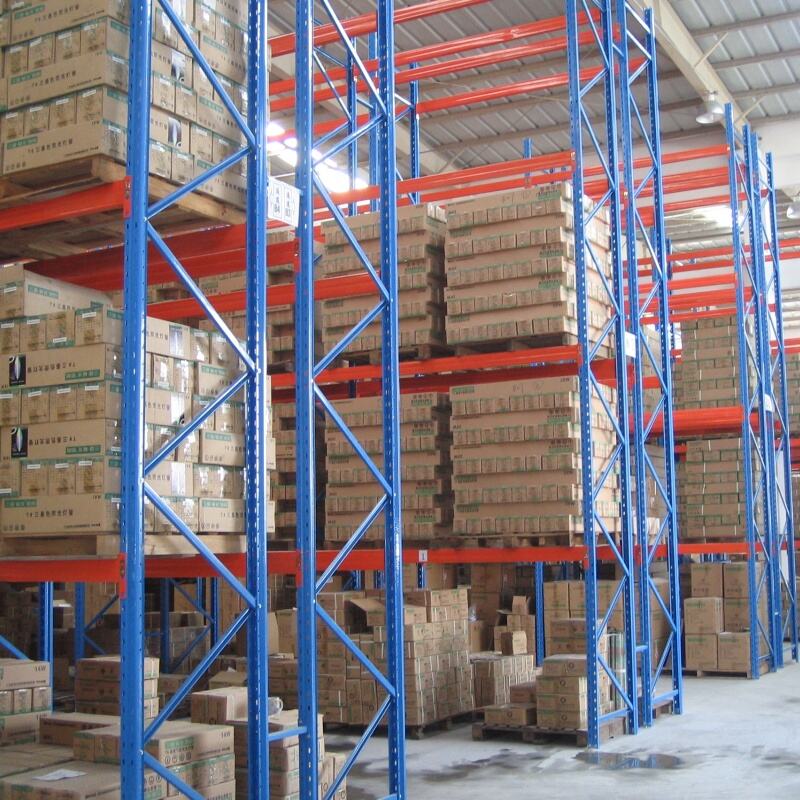
Warehouse safety is not a matter of chance — it is a direct result of the systems, structures, and processes that organizations put in place. Among all the variables that influence how safely a facility operates, the design and organization of storage infrastructure ranks among the most critical. A well-engineered pallet rack system does far more than hold products off the floor. It creates order, defines traffic flow, reduces the risk of product damage, and gives warehouse personnel the spatial clarity they need to work confidently and efficiently without putting themselves or their colleagues at risk.

The connection between pallet rack infrastructure and inventory safety is deeply practical. Every day, warehouse teams rely on structured storage to locate products accurately, move goods without obstruction, and maintain load stability that prevents costly and dangerous collapses. When these systems are selected thoughtfully, installed correctly, and maintained on a routine schedule, they become a core pillar of a facility's entire safety culture. Understanding exactly how a pallet rack system supports safer inventory management helps operations managers, warehouse supervisors, and procurement professionals make more informed decisions that protect people and assets alike.
The Structural Role of Pallet Rack in Organizing Warehouse Space
Creating Clear Pathways and Defined Work Zones
One of the most immediate ways a pallet rack system contributes to safety is by creating a predictable, structured layout within the warehouse. Without defined storage infrastructure, goods accumulate in unpredictable patterns on floors, creating hidden hazards and obstructing emergency exits. A properly installed pallet rack configuration separates storage from movement corridors, ensuring that forklifts and pedestrians always have clearly designated zones in which to operate.
This spatial organization reduces the frequency of near-miss incidents, which are one of the strongest predictors of serious accidents in warehouse environments. When inventory has a fixed location on a pallet rack, workers know exactly where to go, how to approach a load, and what equipment to use. That predictability eliminates much of the guesswork that leads to rushed or careless handling behavior.
Furthermore, clear aisle widths determined by the rack layout allow facilities to comply with regulatory requirements for emergency egress and equipment maneuverability. A pallet rack system that is designed with aisle spacing in mind from the outset makes it far easier to maintain those standards consistently as inventory volumes fluctuate throughout the year.
Vertical Storage and Load Containment
Exploiting vertical space through a pallet rack system reduces floor-level congestion, which is one of the most common sources of slip, trip, and fall incidents in warehouse operations. By moving inventory upward rather than outward, the facility keeps ground-level pathways clear while simultaneously increasing total storage capacity. This balance between safety and efficiency is one of the defining advantages of modern pallet rack design.
Load containment is another critical structural benefit. A well-specified pallet rack uses horizontal beams, column guards, and back panels to prevent pallets from shifting, overhanging, or falling during retrieval. Each of these features directly reduces the likelihood of product falling onto workers below, which represents one of the most severe injury risks in any storage environment.
Heavy-duty beam configurations within a pallet rack system also provide the rated capacity needed to support dense or oversized loads without deflection or structural compromise. Selecting the correct beam depth, gauge, and connector type for the actual load weights being stored is a foundational step in creating a safe storage environment from the very beginning.
How Pallet Rack Design Reduces Inventory Handling Risks
Accessibility and Ergonomic Handling Conditions
A pallet rack system that is configured with accessibility in mind significantly reduces the physical strain placed on warehouse workers during picking and replenishment tasks. When beam heights are set at appropriate levels, workers can retrieve goods without awkward reaching, excessive bending, or unstable climbing. These ergonomic considerations are often overlooked in rack planning but have a measurable impact on both injury rates and long-term worker health outcomes.
Selective pallet rack configurations are particularly effective in environments where individual SKUs need to be accessed frequently. Because every pallet position in a selective rack is reachable from the main aisle without moving other inventory, workers and forklift operators face fewer situations where blocked access forces improvised and potentially unsafe retrieval methods. Direct accessibility is a safety feature in its own right.
In facilities handling heavy or awkward loads, the pallet rack layout should account for the turning radius and lift height of the equipment being used. When the rack spacing and beam placement align with the operational capabilities of the machinery in use, the risk of equipment striking uprights, damaging beams, or destabilizing loaded pallets drops significantly.
FIFO and LIFO Management Through Rack Configuration
Inventory rotation discipline is not only a quality management concern — it is also a safety concern. Goods that remain in storage beyond their intended shelf life may deteriorate structurally, especially in the case of stacked products, chemically active materials, or packaged goods with time-sensitive integrity. A pallet rack system that enforces first-in, first-out rotation ensures that older stock is always consumed before newer arrivals, reducing the chance of handling degraded or unstable inventory.
Drive-in or flow rack variants of the pallet rack concept are purpose-built to enforce FIFO or LIFO rotation automatically through their lane structure. This removes the need for workers to manually reorganize inventory to maintain rotation order, which in turn reduces the time spent inside the racking structure and lowers the risk of accidental contact with overhead loads.
Even in standard selective pallet rack systems, proper lane labeling, slot assignment, and inventory management protocols work together with the physical structure to support safe, systematic product rotation. The rack becomes an active participant in inventory discipline rather than a passive container.
Structural Integrity and Load Rating Compliance
Understanding Weight Capacity and Load Limits
Every pallet rack system is engineered to support a defined maximum load, and operating within those rated limits is one of the most fundamental safety requirements in any warehouse. Overloading a rack — whether by placing heavier pallets than specified or storing more products per bay than the design allows — creates conditions for progressive structural failure that can result in catastrophic collapse. Understanding load ratings is not optional; it is an absolute operational baseline.
Load capacity notices should be prominently displayed on every pallet rack bay, and all personnel involved in loading activities should be trained to understand and respect those limits. This includes not only the weight per beam level but also the maximum bay load and the uniformity of load distribution. Uneven loading, even within the rated weight, can introduce lateral stress that compromises upright integrity over time.
When the inventory profile of a facility changes — for example, when denser products replace lighter ones — the pallet rack system should be re-evaluated by a qualified engineer to confirm that existing components remain adequate. Assuming that an older rack configuration will accommodate new load conditions without verification is a significant and avoidable risk.
Damage Detection, Inspection Protocols, and Repairs
Even a correctly specified and properly loaded pallet rack can become unsafe over time if damage from forklift impact, overloading, or environmental factors goes unaddressed. Bent uprights, cracked welds, displaced beam connectors, and deformed base plates are all indicators that the structural capacity of the rack has been compromised. Regular inspection programs are therefore an essential complement to initial installation quality.
Industry best practice recommends that warehouses conduct formal pallet rack inspections at least annually, with ongoing visual checks performed by trained staff on a weekly or monthly basis. Any damaged component should be clearly tagged and taken out of service immediately, with loads redistributed to undamaged bays until repairs are completed using manufacturer-approved replacement parts.
Column protectors and end-of-aisle guards are proactive investments that reduce the frequency and severity of forklift-related damage to pallet rack uprights. By absorbing impact energy before it reaches structural steel, these accessories extend rack service life and maintain the safety margins that the system was originally designed to provide. Protecting the rack from impact is protecting the inventory — and the people — it supports.
Operational Practices That Maximize Pallet Rack Safety
Staff Training and Rack Awareness Programs
The safest pallet rack installation in the world will not perform safely if the people working around it lack the knowledge to interact with it correctly. Comprehensive training programs that cover rack anatomy, load limits, damage reporting procedures, and safe loading techniques are essential for any warehouse team. Training should be provided at onboarding and refreshed regularly, particularly after any incident involving rack contact or load instability.
Forklift operators carry a particular responsibility in maintaining pallet rack safety because their equipment is the most frequent source of rack damage in active warehouse environments. Operator certification, speed limit enforcement in racking aisles, and clear protocols for reporting minor impacts before they become major structural problems all contribute to a culture where rack integrity is treated as a shared operational priority.
Encouraging workers to report rack damage without fear of blame creates an environment where problems are identified early. This psychological safety around reporting is just as important as the physical safety measures built into the pallet rack design itself. Organizations that treat every damage report as valuable information rather than a disciplinary matter tend to have significantly fewer serious incidents.
Integrating Rack Systems Into Broader Warehouse Safety Frameworks
A pallet rack system does not operate in isolation. Its performance and safety contribution are maximized when it is integrated into a comprehensive warehouse safety framework that includes floor marking, lighting standards, emergency procedures, and equipment maintenance schedules. When all of these elements are aligned, the facility operates as a coherent safety system rather than a collection of independent components.
Floor markings that define rack zones, pedestrian paths, and equipment staging areas work in direct coordination with pallet rack placement to guide behavior intuitively. Workers who can see clear boundaries do not need to guess whether they are in a safe zone or a risk area. This visual guidance reduces cognitive load and allows workers to focus attention on the task at hand rather than navigating ambiguous spatial cues.
Lighting within racking aisles is often underinvested in warehouse environments, yet poor visibility is a major contributor to handling errors and accidents. Adequate aisle lighting, combined with a well-organized pallet rack layout, gives workers the visual clarity needed to confirm pallet placement, read load labels, and identify rack damage before it becomes a hazard. Light and structure work together to create a genuinely safer inventory management environment.
FAQ
What is the most important safety factor when selecting a pallet rack system?
The most important safety factor is ensuring that the pallet rack system's rated load capacity aligns with the actual weights and dimensions of the inventory being stored. Beyond that, installation quality, upright protection, and regular inspection are all critical components of a safe racking environment. No single feature compensates for a mismatch between load requirements and structural capacity.
How often should a pallet rack system be inspected for damage?
Formal inspections of a pallet rack system should be conducted at least once per year by a qualified inspector or engineer. In addition, daily or weekly visual checks by trained warehouse staff should be standard practice. Any signs of deformation, cracking, beam displacement, or upright lean should be reported and assessed immediately, with affected bays taken out of service until repairs are made.
Can a pallet rack system be modified after installation to accommodate different inventory?
Yes, many pallet rack systems are designed with adjustable beam heights and modular components that allow reconfiguration as inventory profiles change. However, any modification should be reviewed against the original engineering specifications and performed using approved components. Unauthorized modifications that change beam spacing, load capacity, or structural geometry can compromise the safety of the entire system.
What role does aisle width play in pallet rack safety?
Aisle width is directly tied to both operational safety and regulatory compliance in warehouse environments. Insufficient aisle width increases the risk of forklift operators striking pallet rack uprights during turns, raises the chance of pedestrian-equipment conflicts, and can obstruct emergency egress routes. Aisle dimensions should be determined based on the turning radius of the equipment in use and the local regulatory standards applicable to the facility.