
 EN
EN
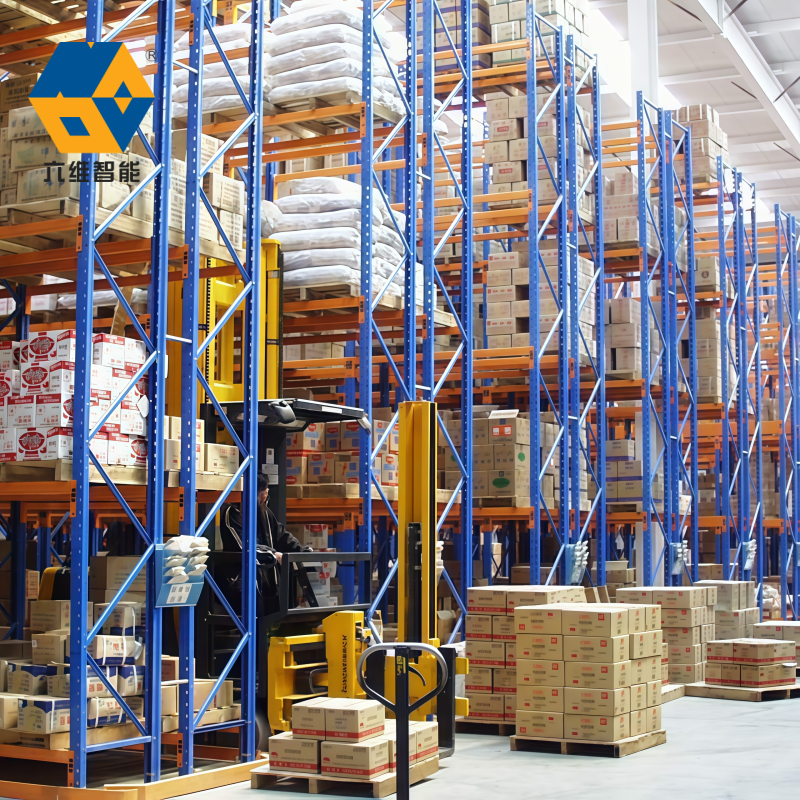
In any high-volume warehouse environment, the way inventory is stored directly influences how efficiently operations run. Disorganized storage leads to slower picking times, increased labor costs, and a higher risk of product damage. This is precisely why facility managers and logistics professionals are increasingly turning to heavy duty pallet racks as a foundational solution for transforming warehouse order and productivity. These systems are not simply shelving units — they represent a structural approach to maximizing every square foot of available space while keeping goods accessible, safe, and systematically arranged.

Understanding how heavy duty pallet racks improve warehouse organization requires looking beyond their physical structure. It means examining how they reshape workflows, support inventory management systems, enable safer forklift operations, and ultimately create a more predictable, scalable storage environment. Whether you are managing a distribution center, a manufacturing facility, or a retail fulfillment warehouse, the principles behind effective rack-based organization remain consistent and highly practical.
The Structural Foundation of Organized Warehousing
How Load Capacity Drives Storage Discipline
One of the most immediate ways heavy duty pallet racks improve organization is by enforcing a structured approach to how goods are stored and categorized. Because these systems are engineered to handle substantial loads — often ranging from 1,000 to several thousand kilograms per level — they encourage warehouse planners to assign specific load categories to specific rack zones. This load-based zoning is a cornerstone of organized warehousing.
When every bay, beam level, and column has a defined weight threshold and product category assigned to it, the entire warehouse begins to function more like a logical system rather than a reactive storage area. Workers know exactly where to deposit incoming pallets and where to retrieve them during fulfillment. This clarity reduces errors, shortens search times, and prevents the common problem of randomly stacked goods blocking access to higher-priority items.
Heavy duty pallet racks also impose dimensional consistency. Because pallets must conform to the rack's beam spacing and depth, warehouses naturally move toward standardized pallet sizes and load configurations. This standardization ripples through the entire operation, making storage more predictable and inventory counts more reliable.
Vertical Space Utilization and Floor Layout Logic
One of the most transformative effects of heavy duty pallet racks on warehouse organization is their ability to shift storage from a horizontal sprawl to a vertical column. Many warehouses have ceiling heights of 8 to 12 meters or more, yet a significant portion of that vertical volume goes unused when storage relies on floor stacking alone. Rack systems unlock that overhead space in a controlled, accessible way.
By storing goods vertically, warehouses can dramatically reduce the floor area consumed by inventory. This freed floor space can then be reallocated to staging areas, packing stations, or additional traffic lanes — all of which contribute to smoother internal logistics. The relationship between vertical rack storage and floor organization is deeply interconnected; improving one almost always improves the other.
Furthermore, the modular nature of heavy duty pallet racks allows planners to design aisle widths with precision. Wide aisles accommodate counterbalance forklifts, while narrow-aisle configurations support reach trucks, and very narrow aisle setups can be paired with specialized handling equipment. This aisle planning directly determines how efficiently goods move through the warehouse on a daily basis.
Inventory Visibility and Access Efficiency
Direct Access to Every SKU
A well-organized warehouse is one where any product can be located and retrieved without delay. Heavy duty pallet racks, especially selective racking configurations, provide direct access to every individual pallet position. Unlike block stacking or drive-in systems that require moving products to reach others, selective heavy duty pallet racks ensure that each SKU occupies its own addressable location.
This direct access model is essential for operations managing a wide variety of SKUs with different turnover rates. Fast-moving products can be assigned to lower, more ergonomically accessible beam levels, while slow-moving inventory can occupy upper tiers without disrupting daily picking operations. This deliberate vertical organization by velocity is a critical element of warehouse efficiency that heavy duty pallet racks make structurally possible.
When combined with a warehouse management system (WMS), rack locations can be digitally mapped so that each beam level and bay has a unique address. Workers guided by handheld scanners or voice-directed picking systems can navigate directly to the correct position, eliminating wasted travel time and improving order accuracy significantly.
Supporting FIFO and LIFO Inventory Strategies
Heavy duty pallet racks are highly adaptable to different inventory rotation strategies, which is another dimension of how they improve warehouse organization. For perishable goods, pharmaceuticals, or items with expiration dates, first-in-first-out (FIFO) rotation is essential. Rack configurations such as pallet flow systems or drive-through setups built on heavy duty pallet rack frameworks support FIFO naturally by loading from one end and retrieving from the other.
For bulk commodities or non-perishable items where last-in-first-out (LIFO) rotation is acceptable, standard selective heavy duty pallet racks work perfectly, allowing warehouse teams to load and unload from the same aisle face. This flexibility means a single racking infrastructure can serve multiple product categories with different organizational requirements.
The ability to align rack configuration with inventory rotation logic removes a major source of warehouse disorder. When rotation strategy is built into the physical storage structure rather than managed through manual discipline alone, consistency improves and costly rotation errors decrease substantially.
Safety, Compliance, and Operational Order
Eliminating Hazardous Storage Practices
Disorganized warehouses are not just inefficient — they are dangerous. Floor-stacked pallets that exceed safe stacking heights, goods stored in unmarked locations, and improvised shelving all create conditions where accidents are more likely. Heavy duty pallet racks address these risks directly by providing a purpose-engineered structure that replaces ad-hoc storage practices with a regulated, repeatable system.
Every component of a properly installed heavy duty pallet rack — from the upright frames to the beam connectors — is rated for specific loads and tested under defined safety standards. When warehouse teams store goods within those rated parameters, the risk of structural failure is minimal. Load capacity signs posted on rack uprights reinforce this discipline, making it visible and enforceable at the floor level.
Beyond load safety, heavy duty pallet racks reduce the incidence of falling objects, obstructed emergency exits, and blocked fire suppression systems — all of which are serious compliance concerns. An organized rack system naturally keeps aisles clear and inventory contained within defined boundaries, supporting both regulatory compliance and everyday operational safety.
Protecting Product Integrity During Storage
Warehouse organization is not only about finding products faster — it is equally about maintaining their condition during storage. Heavy duty pallet racks hold goods in stable, elevated positions that reduce the risk of moisture damage, pest exposure, and accidental crushing that can occur with floor stacking. This protection directly reduces shrinkage and loss, which are hidden costs that often go unaccounted in warehouses relying on informal storage methods.
Goods stored on properly configured heavy duty pallet racks are also less susceptible to forklift damage during retrieval, because clear access paths and defined pallet positions reduce the maneuvering required to extract a load. This precision reduces accidental pallet drops and collisions, which are among the most common causes of product damage and rack structural issues in busy warehouse environments.
For temperature-sensitive or fragile products, rack organization also allows for the creation of dedicated storage zones with appropriate environmental controls. Because heavy duty pallet racks define clear spatial boundaries, setting up climate-controlled zones within a larger warehouse becomes significantly more manageable.
Scalability and Long-Term Warehouse Planning
Modular Expansion Without Disruption
One of the most strategically valuable qualities of heavy duty pallet racks is their modularity. As a business grows, inventory volumes increase and storage demands evolve. Unlike fixed infrastructure such as mezzanine floors or built-in shelving, heavy duty pallet racks can be extended, reconfigured, or partially relocated without major construction. This adaptability is critical to maintaining warehouse organization during periods of growth or operational change.
Adding new bays to an existing rack row, increasing beam levels as ceiling clearance allows, or rearranging entire zones to accommodate new product lines are all achievable with modular heavy duty pallet rack systems. This scalability means that a warehouse's organizational framework can evolve alongside the business rather than becoming a constraint on growth.
This flexibility also supports temporary changes, such as seasonal inventory surges or new product introductions. Warehouse managers can pre-plan rack expansions, allocate new zones in advance, and maintain a structured environment even when inventory volumes fluctuate significantly throughout the year.
Integration with Automation and Technology
Modern warehouses increasingly integrate automation technologies such as conveyor systems, automated guided vehicles (AGVs), and goods-to-person picking systems. Heavy duty pallet racks serve as the structural backbone that makes these technologies viable. Without a stable, uniformly organized rack infrastructure, automation systems cannot function with the precision they require.
For warehouses adopting barcode or RFID-based inventory tracking, heavy duty pallet racks provide the fixed, addressable locations that these systems depend on. Every rack position becomes a node in the warehouse's digital map, enabling real-time inventory visibility that is simply not achievable in disorganized or unstandardized storage environments.
As warehouse technology continues to advance, the importance of a well-organized physical infrastructure only grows. Heavy duty pallet racks represent an investment not just in current operational efficiency but in the technological readiness of the warehouse for future enhancements. Their compatibility with automation tools makes them a future-proof foundation for any serious logistics operation.
FAQ
What types of warehouses benefit most from heavy duty pallet racks?
Heavy duty pallet racks are beneficial across a wide range of warehouse types, including distribution centers, manufacturing facilities, retail fulfillment centers, cold storage warehouses, and third-party logistics operations. Any facility that stores goods on pallets and needs to maximize space while maintaining organized, accessible inventory can benefit from these systems. Their scalability makes them suitable for both small and large warehouse footprints.
How do heavy duty pallet racks support forklift operations in a warehouse?
Heavy duty pallet racks create defined aisle widths and clear access paths that allow forklift operators to navigate the warehouse safely and efficiently. Because each pallet has an assigned location within the rack structure, operators spend less time searching for positions and can retrieve or deposit loads with greater precision. This reduces travel time, minimizes accidental contact with racks or neighboring pallets, and significantly improves throughput during busy operational periods.
Can heavy duty pallet racks be reconfigured after installation?
Yes, most heavy duty pallet rack systems are designed to be modular and adjustable. Beam heights can be repositioned to accommodate different pallet heights, bays can be added or removed, and entire sections can be relocated within the warehouse if operational needs change. This flexibility is one of the key reasons why heavy duty pallet racks are considered a long-term infrastructure investment rather than a fixed asset that quickly becomes obsolete.
How do heavy duty pallet racks contribute to inventory accuracy?
By providing a fixed, addressable location for every pallet, heavy duty pallet racks make it far easier to implement accurate inventory tracking systems. Each rack position can be assigned a unique location code that integrates with a warehouse management system, enabling real-time tracking of stock movements. This location-based approach reduces misplaced inventory, improves cycle counting accuracy, and ensures that inventory data in the system reflects the actual physical state of the warehouse at all times.