
 EN
EN
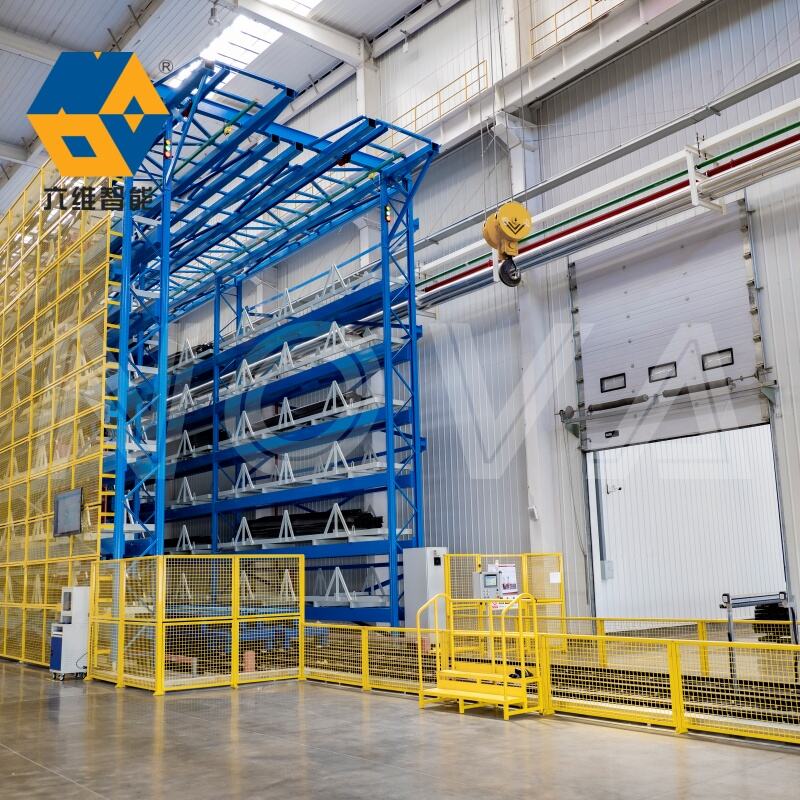
Modern supply chains demand more than just storage space — they require intelligent, responsive systems that can track, retrieve, and replenish inventory with precision and speed. An asrs warehouse, which stands for Automated Storage and Retrieval System warehouse, is increasingly recognized as one of the most effective infrastructures for achieving exactly that. By combining mechanical automation with data-driven software, these facilities transform how businesses manage their goods, reduce operational waste, and make faster decisions based on real-time inventory data.
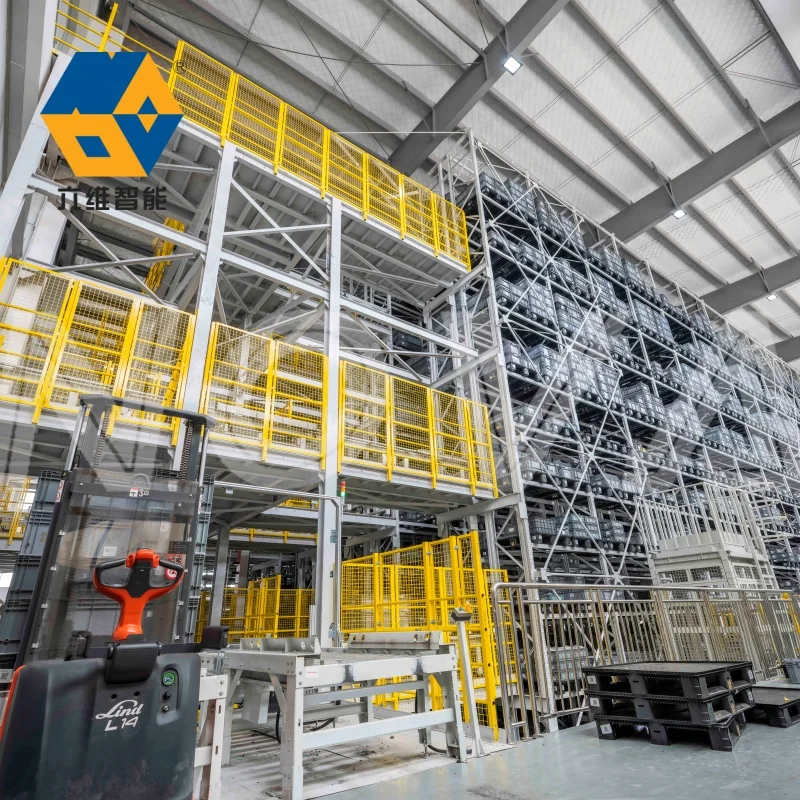
The connection between an asrs warehouse and smart inventory management is not coincidental — it is structural. Every element of an automated storage and retrieval system, from the rack configuration to the shuttle mechanism to the warehouse management software, is engineered to provide accuracy, traceability, and efficiency at scale. For B2B operators managing high-volume SKUs, fluctuating demand cycles, and tight fulfillment windows, understanding how an asrs warehouse supports smart inventory management is not just a technology question — it is a strategic business priority.
The Foundational Role of an ASRS Warehouse in Inventory Control
Automated Tracking at Every Inventory Touch Point
At the core of any asrs warehouse operation is an integrated tracking system that monitors every item from the moment it enters the facility to the moment it leaves. Unlike conventional warehouses where manual scanning and paper-based records create blind spots, an asrs warehouse uses barcode, RFID, or sensor-based identification to log each inventory movement automatically. This creates a continuous, timestamped record of stock location, quantity, and condition that is available in real time.
This level of tracking is foundational to smart inventory management because it eliminates guesswork. Warehouse managers no longer have to conduct time-consuming manual audits to confirm stock levels. The system itself maintains perpetual inventory accuracy, which enables faster reorder decisions, more reliable demand forecasting, and reduced risk of stockouts or overstock situations. The asrs warehouse becomes the single source of truth for inventory data across the entire supply chain.
For businesses operating across multiple product lines or managing seasonal demand peaks, this automated tracking capability provides a significant operational advantage. The system logs which items are moving fastest, which are aging in storage, and which locations within the asrs warehouse are under- or over-utilized. This granular visibility feeds directly into smarter purchasing, replenishment, and slotting decisions.
Eliminating Human Error from Inventory Processes
One of the most direct ways an asrs warehouse supports smart inventory management is by systematically removing human error from the picking, putaway, and cycle count processes. In manual warehouse environments, misplaced items, incorrect quantity entries, and mislabeled stock are common and costly. These errors compound over time, causing discrepancies between physical inventory and recorded inventory that undermine every downstream decision.
An asrs warehouse addresses this by replacing human discretion with system-directed actions. The automated retrieval mechanism knows precisely where each SKU is stored and retrieves it according to preprogrammed logic — first-in-first-out (FIFO), last-in-first-out (LIFO), or zone-based prioritization, depending on the operational requirement. This eliminates retrieval errors and ensures that inventory rotation policies are consistently enforced without relying on worker memory or judgment.
The result is a measurable improvement in inventory record accuracy, which is a critical enabler of smart inventory management. When businesses can trust their data, they can act on it confidently — reducing safety stock buffers, tightening reorder points, and improving order fulfillment rates. The asrs warehouse essentially creates the data integrity layer that makes intelligent inventory decisions possible.
How ASRS Technology Enables Dynamic Inventory Optimization
Real-Time Data Integration with Warehouse Management Systems
A key mechanism through which an asrs warehouse supports smart inventory management is its native integration with Warehouse Management Systems (WMS) and Enterprise Resource Planning (ERP) platforms. The automated storage and retrieval infrastructure does not operate in isolation — it feeds live inventory data into the broader software ecosystem that governs supply chain decisions. This integration is what elevates an asrs warehouse from a storage solution to a true intelligence platform.
When a retrieval event occurs in the asrs warehouse, the WMS is updated instantly, triggering downstream workflows such as pick confirmation, shipment scheduling, or replenishment alerts. Conversely, when new stock arrives, the system automatically assigns optimal storage locations based on current density, item velocity, and zoning rules. This bidirectional data flow creates a self-optimizing inventory environment where the system continuously adjusts to changing conditions without manual intervention.
For operations that have integrated their asrs warehouse with demand planning tools, the benefits extend further. Historical retrieval data feeds predictive models that forecast future inventory needs with greater accuracy. This allows procurement teams to time their purchasing decisions more precisely, reducing carrying costs while maintaining adequate stock coverage. The asrs warehouse becomes not just a place to store goods, but a strategic asset that informs smarter procurement cycles.
Adaptive Slotting and Storage Density Management
Smart inventory management requires that goods are not only tracked accurately but also stored intelligently. An asrs warehouse enables adaptive slotting — the practice of dynamically assigning storage locations based on item demand velocity, size, and retrieval frequency. In a manual warehouse, reslotting is a labor-intensive process that is often deferred indefinitely. In an asrs warehouse, slotting adjustments can be executed through software without physical reorganization of the racking infrastructure.
This capability has a direct impact on operational efficiency and inventory responsiveness. High-velocity SKUs are automatically positioned for fastest retrieval, while slower-moving items are stored in more remote zones without reducing their accessibility. The asrs warehouse can also maximize vertical storage density, utilizing full building height in ways that conventional racking systems cannot match. This means more SKUs can be managed within the same footprint, which is particularly valuable in high-cost real estate environments.
From a smart inventory standpoint, higher storage density combined with intelligent slotting means that the physical layout of the warehouse actively supports inventory management goals. Businesses can hold larger safety stock positions for critical items without expanding their facility, or they can use the space savings to consolidate multiple distribution points into a single high-efficiency asrs warehouse. Either way, the system converts physical space into a managed inventory resource rather than a passive container.
Supporting Demand-Driven Fulfillment Through ASRS Capabilities
High-Speed Retrieval and Order Fulfillment Accuracy
Smart inventory management is ultimately judged by fulfillment performance — how quickly and accurately orders are picked, packed, and shipped. An asrs warehouse excels in this dimension because its retrieval mechanism operates continuously, without fatigue, breaks, or the variability that characterizes human pickers. Multi-shuttle systems in particular can execute dozens of retrieval cycles per hour, maintaining consistent throughput even during peak demand periods.
This speed advantage has important inventory implications. When fulfillment is fast and accurate, businesses can operate with leaner inventory buffers because they are not compensating for slow or error-prone picking processes. The asrs warehouse allows companies to adopt just-in-time replenishment strategies more confidently, knowing that even late-arriving stock can be quickly stored and retrieved to fulfill pending orders. This agility is a defining characteristic of smart inventory management in competitive markets.
Order accuracy in an asrs warehouse environment typically exceeds 99%, compared to much lower rates in manual picking environments. This accuracy translates directly into lower return rates, fewer customer complaints, and reduced administrative burden from error resolution. For B2B operations where incorrect shipments can disrupt downstream production schedules, the reliability of an asrs warehouse is not just a convenience — it is a contractual and financial safeguard.
Managing Multiple SKUs and Complex Inventory Profiles
Many industrial and distribution businesses manage thousands of SKUs simultaneously, each with different size profiles, turnover rates, storage requirements, and regulatory conditions. An asrs warehouse is specifically suited to handling this complexity because its software logic can apply different management rules to different product categories simultaneously. Temperature-sensitive items, hazardous goods, high-value components, and bulk commodities can all coexist within the same asrs warehouse environment under distinct handling and tracking protocols.
This multi-SKU capability is central to smart inventory management because it eliminates the need to maintain separate storage environments or manual tracking systems for different product types. The asrs warehouse consolidates all inventory intelligence into a single integrated platform, making it far easier to generate accurate, cross-SKU reports on stock levels, expiry dates, lot numbers, and fulfillment status. Decision-makers get a unified inventory picture rather than fragmented data from multiple systems.
As product portfolios grow and evolve, an asrs warehouse scales with them. Additional rack modules, shuttle units, or system zones can be added to accommodate new SKUs or increased volume without fundamentally restructuring the facility. This scalability means that the inventory management infrastructure grows in alignment with business expansion, protecting the initial investment while continuously delivering operational value.
Strategic Business Benefits of an ASRS Warehouse for Inventory-Driven Organizations
Reducing Carrying Costs and Working Capital Waste
One of the most tangible financial benefits that an asrs warehouse delivers to inventory-driven organizations is a measurable reduction in carrying costs. Carrying cost — the total expense of holding unsold inventory — includes storage space, financing, insurance, obsolescence, and labor. Each of these cost components is reduced when an asrs warehouse is operating at full capability. Tighter inventory control reduces overstock, faster retrieval reduces storage duration, and automation reduces the labor needed to manage inventory daily.
For businesses where inventory ties up significant working capital, the asrs warehouse creates a pathway to improved cash flow. When inventory accuracy is high and demand signals are well-understood, businesses can reduce their overall stock levels without increasing stockout risk. This frees capital that was previously locked in safety stock buffers and redirects it toward growth investments, capacity expansion, or supplier negotiations. The asrs warehouse is, in this sense, a financial optimization tool as much as an operational one.
The reduction in labor costs also contributes to the financial case for an asrs warehouse. Automated retrieval and putaway functions replace repetitive manual tasks, allowing warehouse staff to be redeployed to higher-value activities such as quality inspection, exception handling, and process improvement. Over time, the productivity gains from an asrs warehouse compound, as both labor efficiency and inventory accuracy continue to improve with system maturity.
Building Resilience into Inventory Management Operations
Supply chain disruptions — whether caused by demand spikes, supplier delays, or logistics bottlenecks — expose the vulnerabilities of poorly managed inventory. An asrs warehouse builds resilience into inventory operations by providing better visibility, faster response capability, and more flexible stock positioning than manual alternatives. When a disruption occurs, the system provides an accurate, real-time snapshot of available inventory, enabling faster decisions about reallocation, emergency procurement, or customer prioritization.
The reliability of an asrs warehouse is also a resilience factor. Automated systems are less susceptible to absenteeism, turnover, or training gaps that can cripple manual warehouse operations during peak periods or crises. The consistency of machine-driven processes means that inventory management performance does not degrade during high-stress periods — which is precisely when accuracy and speed matter most. Businesses that have invested in an asrs warehouse are, as a result, better positioned to maintain service levels when external conditions are challenging.
From a long-term strategic perspective, investing in an asrs warehouse signals organizational commitment to data-driven, technology-supported inventory management. It creates the infrastructure foundation that enables future capabilities such as artificial intelligence-driven demand sensing, autonomous replenishment, and integrated supplier collaboration. The asrs warehouse is not just a solution for today's inventory challenges — it is a platform for tomorrow's supply chain intelligence.
FAQ
What types of businesses benefit most from an ASRS warehouse for inventory management?
Businesses that manage high SKU counts, operate under tight fulfillment timelines, or require strict inventory traceability tend to benefit most from an asrs warehouse. Industries such as automotive parts distribution, pharmaceuticals, electronics manufacturing, cold chain logistics, and e-commerce fulfillment are particularly strong candidates. Any operation where inventory accuracy, retrieval speed, and storage density are competitive differentiators can derive substantial value from implementing an asrs warehouse solution.
How does an ASRS warehouse improve inventory accuracy compared to manual systems?
An asrs warehouse improves inventory accuracy by replacing manual picking, putaway, and counting with system-directed automation. Every inventory transaction is recorded automatically in real time, eliminating the data entry errors, misplacements, and counting mistakes that are common in manual environments. This creates a continuously accurate inventory record that businesses can rely on for procurement, fulfillment, and financial reporting without the need for frequent manual audits.
Can an ASRS warehouse be integrated with existing ERP or supply chain software?
Yes, most modern asrs warehouse systems are designed with open integration architecture that supports connection to ERP platforms, WMS software, demand planning tools, and transportation management systems. This integration capability is essential for smart inventory management because it allows the asrs warehouse to function as a live data node within the broader supply chain software ecosystem rather than operating as an isolated storage system.
What is the typical implementation consideration when deploying an ASRS warehouse?
Implementing an asrs warehouse requires careful planning around facility layout, weight and load specifications, software integration requirements, and workflow redesign. The structural capacity of the building must support the racking and shuttle system loads, and the WMS or ERP integration must be configured to align with existing inventory management processes. Working with experienced system providers and conducting thorough process mapping before deployment ensures that the asrs warehouse is optimized for the specific operational requirements of the business from day one.
Table of Contents
- The Foundational Role of an ASRS Warehouse in Inventory Control
- How ASRS Technology Enables Dynamic Inventory Optimization
- Supporting Demand-Driven Fulfillment Through ASRS Capabilities
- Strategic Business Benefits of an ASRS Warehouse for Inventory-Driven Organizations
-
FAQ
- What types of businesses benefit most from an ASRS warehouse for inventory management?
- How does an ASRS warehouse improve inventory accuracy compared to manual systems?
- Can an ASRS warehouse be integrated with existing ERP or supply chain software?
- What is the typical implementation consideration when deploying an ASRS warehouse?