
 EN
EN
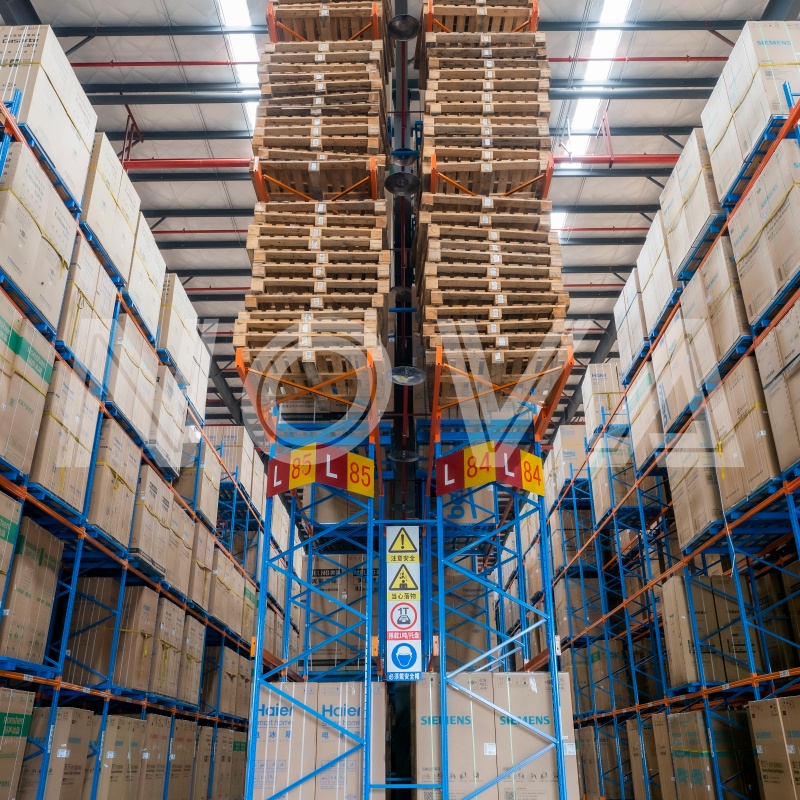
Large scale warehousing operations require storage solutions that deliver both capacity and reliability. Heavy duty pallet racks form the backbone of modern logistics infrastructure, enabling businesses to maximize vertical space while maintaining strict safety standards. Understanding how heavy duty pallet racks function and scale within industrial environments is essential for warehouse managers seeking to optimize operations and reduce costs. These systems transform how companies store, retrieve, and manage inventory across thousands of square feet of facility space.

Heavy duty pallet racks represent a fundamental shift in how warehouses handle high-volume storage demands. Unlike light or medium-duty alternatives, these systems are engineered to support extreme weight loads while maintaining structural integrity across decades of continuous use. The design philosophy behind heavy duty pallet racks centers on reliability, scalability, and adaptability to diverse product types and warehouse configurations. This article explores the critical capabilities, technical specifications, and practical implementation considerations that make heavy duty pallet racks indispensable for ambitious logistics operations.
Understanding Heavy Duty Pallet Rack Architecture
Load Capacity and Structural Engineering
Heavy duty pallet racks are engineered to withstand extraordinary weight pressures that standard storage systems cannot support. The structural design incorporates reinforced steel frames, precision-welded connections, and load-bearing beams that distribute weight evenly across vertical supports. Each level of heavy duty pallet racks can sustain multi-ton loads without deflection or permanent deformation, a critical requirement for warehouses storing dense products like machinery, automotive parts, or raw materials. The engineering specifications are typically validated through third-party testing and compliance with international warehouse safety standards.
Vertical Space Optimization
One of the primary advantages of heavy duty pallet racks is their ability to extend storage vertically within existing facility footprints. Warehouses can stack heavy duty pallet racks to heights of 25 feet or more, depending on facility ceiling clearance and product specifications. This vertical scaling multiplies available storage capacity without requiring expensive facility expansion or lease increases. Heavy duty pallet racks with strategic height planning can triple or quadruple the storage density compared to floor-level arrangements, directly improving return on warehouse real estate investment.
Operational Benefits in Large Scale Settings
Inventory Access and Retrieval Efficiency
Heavy duty pallet racks are designed with selective access architecture, allowing warehouse staff to retrieve specific items without moving surrounding inventory. This selective pallet racking approach significantly accelerates order fulfillment cycles and reduces labor costs associated with item retrieval. Forklifts and material handling equipment can navigate aisles between heavy duty pallet racks to reach individual pallets quickly, supporting rapid inventory turnover. The aisle design and beam placement in quality heavy duty pallet racks systems minimizes wasted space while maintaining safe working clearances for equipment operators.
Safety and Compliance Standards
Heavy duty pallet racks must meet rigorous safety regulations including OSHA standards, RMI guidelines, and local building codes. Properly designed heavy duty pallet racks include safety features such as vertical load pins, beam locks, and frame bracing that prevent collapse or lateral shifting during seismic events or equipment impact. Regular inspection protocols for heavy duty pallet racks ensure ongoing compliance and identify wear patterns before structural compromise occurs. Warehouses investing in certified heavy duty pallet racks systems dramatically reduce liability exposure and worker injury risks associated with storage system failures.
Implementation and Scalability Considerations
Customization for Diverse Product Categories
Heavy duty pallet racks accommodate varying product dimensions, weight distributions, and storage requirements across different industries. Warehouses can customize beam depths, deck configurations, and aisle widths within heavy duty pallet racks frameworks to optimize storage for specific inventory types. Pharmaceutical warehouses, automotive suppliers, and heavy equipment distributors all rely on heavy duty pallet racks configured uniquely for their operational needs. This flexibility ensures that heavy duty pallet racks remain productive investments regardless of changing product lines or market demands.
Cost-Benefit Analysis and ROI
The initial investment in heavy duty pallet racks typically yields positive returns within 18 to 24 months through increased storage capacity and operational efficiency gains. Facilities reduce square footage requirements per stored unit, lower labor costs through faster item retrieval, and minimize product damage from improved organization. Heavy duty pallet racks also support just-in-time inventory practices by enabling precise product location tracking and systematic stock rotation. Large scale warehousing operations calculate ROI by measuring capacity increase against facility expansion alternatives, and heavy duty pallet racks consistently demonstrate financial advantage.
Installation and Future Expansion
Professional installation of heavy duty pallet racks ensures proper alignment, load distribution, and safety compliance from day one. Quality vendors provide installation support and training for warehouse staff operating heavy duty pallet racks systems. The modular nature of heavy duty pallet racks allows facilities to expand storage capacity incrementally as business grows, adding levels or additional frame sections without complete system replacement. This scalability makes heavy duty pallet racks an intelligent long-term infrastructure investment for warehouses anticipating future growth.
FAQ
What weight capacity do heavy duty pallet racks typically support per level?
Heavy duty pallet racks commonly support between 2,000 to 6,000 pounds per level, with some specialized systems designed for loads exceeding 10,000 pounds depending on beam spacing and material specifications. The exact capacity depends on pallet dimensions, load distribution patterns, and the specific engineering of each heavy duty pallet racks model. Warehouse managers should verify capacity ratings with manufacturers and ensure products distributed across pallets conform to manufacturer specifications to maintain heavy duty pallet racks safety margins.
How do heavy duty pallet racks compare to other storage alternatives like drive-in racks or automated systems?
Heavy duty pallet racks offer selective access advantages over drive-in systems, allowing retrieval of specific items without moving surrounding inventory, while providing lower cost implementation compared to fully automated storage systems. Drive-in racks sacrifice selectivity for increased density, while automated systems require significant capital investment but eliminate labor costs. Heavy duty pallet racks strike an optimal balance for most large scale warehousing operations by combining capacity, accessibility, safety, and cost-effectiveness. The choice depends on specific inventory characteristics, throughput requirements, and budget constraints unique to each facility.
What maintenance requirements do heavy duty pallet racks demand to ensure long-term reliability?
Heavy duty pallet racks require periodic inspection for damaged beams, bent uprights, and corroded connections, typically performed annually or semi-annually depending on warehouse utilization intensity. Regular heavy duty pallet racks maintenance includes tightening fasteners, replacing damaged safety pins, and removing accumulated debris that could compromise structural integrity. Professional inspection services can identify early-stage wear patterns and recommend preventive repairs before failures occur. Proper maintenance extends heavy duty pallet racks lifespan to 20 or more years, maximizing return on the initial infrastructure investment and ensuring continuous operational safety.