
 EN
EN
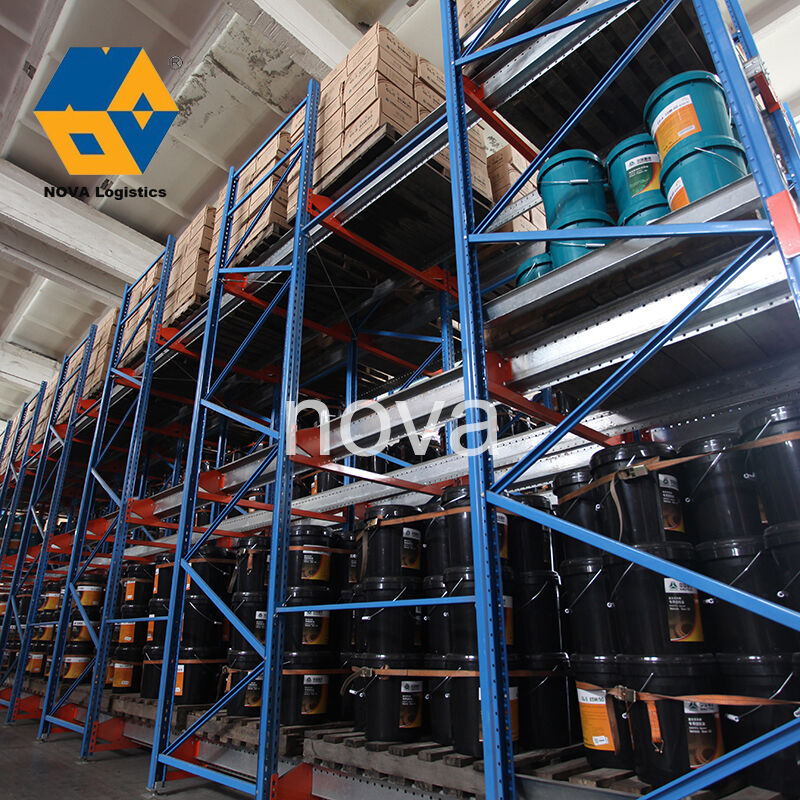
Modern warehouses are under constant pressure to maximize every square meter of available floor space while maintaining operational efficiency. As inventory volumes grow and storage demands increase, traditional racking solutions often fall short of delivering the density and throughput that businesses require. A shuttle rack system has emerged as one of the most effective answers to these challenges, enabling warehouses to dramatically increase storage capacity without expanding their physical footprint.
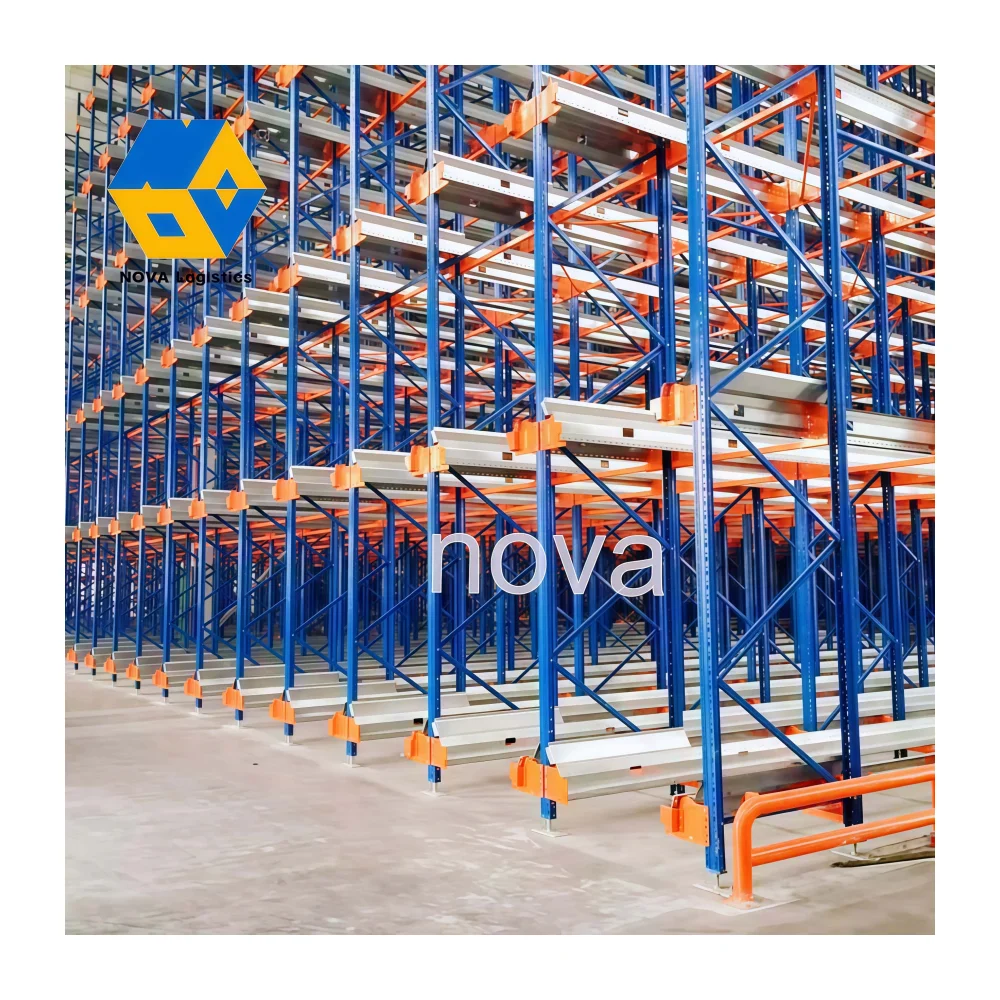
The fundamental principle behind a shuttle rack system is the use of a semi-automated cart — the shuttle — that travels along rails within deep storage channels to place and retrieve pallets automatically. This eliminates the need for forklifts to enter racking lanes, which is one of the key limitations of conventional drive-in racking. By removing that constraint, a shuttle rack configuration unlocks far greater storage depth, superior pallet accessibility, and faster throughput, making it an ideal solution for high-density warehouse environments across industries ranging from food and beverage to cold storage and manufacturing.
Understanding How a Shuttle Rack System Achieves High Density Storage
Eliminating Aisle Space Through Deep Channel Storage
One of the most significant ways a shuttle rack contributes to high-density storage is by virtually eliminating the need for wide working aisles. In standard selective racking layouts, a large portion of warehouse floor space is dedicated to forklift aisles rather than actual pallet positions. A shuttle rack system consolidates pallets into deep storage channels, meaning the ratio of storage positions to floor area is dramatically improved.
Warehouses that implement a shuttle rack configuration can typically recover 30 to 50 percent more pallet positions compared to conventional racking systems operating in the same building footprint. This density advantage is especially valuable in facilities where real estate costs are high or where the physical building cannot be expanded. The shuttle cart handles all internal pallet movement within the channel, so the forklift only needs to interact with the front face of the racking structure.
The channel depth of a shuttle rack system can be customized to suit specific inventory profiles. Channels with 20, 30, or even 40 pallet positions deep are achievable, depending on the SKU management strategy and throughput requirements. This flexibility means the system can be precisely engineered to the operational needs of the warehouse rather than forcing the operation to conform to fixed system limitations.
Vertical Space Utilization in Shuttle Rack Configurations
Beyond floor-level density, a shuttle rack system also supports significant gains in vertical space utilization. Because the shuttle cart operates independently within the racking channel, the structural design does not need to accommodate forklift masts or overhead clearances inside the system. This allows the racking to be built closer to the maximum permitted building height, extracting the fullest possible cubic storage volume from the facility.
Multi-tier shuttle rack installations are a common approach in high-density warehousing. In these configurations, multiple levels of racking are served by forklifts that deposit or retrieve pallets at the front of each tier, while shuttle carts operate independently at every level. This vertical stacking strategy multiplies the storage capacity available within a given warehouse zone without requiring any additional floor area.
The structural steel used in a quality shuttle rack system is engineered to handle the dynamic loads generated by the moving shuttle cart as well as the static weight of fully loaded pallet positions at height. Proper load beam ratings, upright frame specifications, and rail tolerances are all critical factors that must be aligned to ensure safe and reliable vertical storage performance over the long operational life of the system.
Operational Workflow Benefits of a Shuttle Rack in High-Density Environments
Decoupling Forklift Operations from Internal Pallet Movement
A shuttle rack system creates a clear operational division between the forklift and the internal pallet management process. In a conventional drive-in racking setup, the forklift must navigate deep inside the racking lane to deposit or retrieve each pallet, which is time-consuming, increases the risk of rack damage, and limits throughput. With a shuttle rack, the forklift simply places or picks a pallet at the front of the channel, and the battery-powered shuttle cart takes over from there.
This decoupling means the forklift can immediately move on to the next task rather than waiting inside a deep lane. The result is a significant improvement in forklift cycle times and overall warehouse throughput. In high-volume operations where multiple forklifts are working simultaneously, this operational efficiency gain can translate directly into measurable productivity improvements and reduced labor costs per pallet moved.
The shuttle cart in a shuttle rack system is typically controlled via a remote unit or integrated warehouse management system interface. The operator can instruct the cart to travel to a specific depth within the channel, deposit or pick the pallet, and return to the front — all without any manual intervention inside the racking lane. This level of automation further reduces the risk of operator error and physical strain associated with deep-lane forklift operations.
FIFO and LIFO Inventory Management with Shuttle Rack
High-density storage environments often need to balance space efficiency with inventory rotation discipline. A shuttle rack system supports both First-In-First-Out (FIFO) and Last-In-First-Out (LIFO) inventory management strategies, making it versatile across different product types and operational requirements. FIFO is particularly important for perishable goods, pharmaceuticals, and any time-sensitive inventory, while LIFO may be preferred for non-perishable bulk commodities.
In a FIFO-configured shuttle rack setup, pallets are loaded from one end of the channel and retrieved from the opposite end, ensuring that the oldest inventory is always picked first. Some shuttle rack systems are designed with dual-access channels for this purpose, while others use more sophisticated shuttle cart programming to manage pallet sequencing automatically. This capability is a major advantage over standard drive-in racking, which inherently operates on a LIFO basis due to its single-entry design.
For cold storage and food distribution facilities, where FIFO compliance is a regulatory and quality requirement, the ability to implement this rotation discipline within a high-density shuttle rack framework is particularly valuable. It means operators no longer have to choose between storage density and inventory accuracy — the shuttle rack system delivers both simultaneously.
Structural and Design Considerations for High-Density Shuttle Rack Implementation
Rail System Precision and Shuttle Cart Compatibility
The performance and longevity of a shuttle rack system depend heavily on the precision of the rail system within each storage channel. The shuttle cart rides on these rails to transport pallets, and any misalignment, tolerance deviation, or surface irregularity can cause cart jamming, pallet misplacement, or premature wear on the cart's drive mechanism. High-quality shuttle rack installations use rails manufactured to tight dimensional tolerances and designed for long-term repetitive loading cycles.
Compatibility between the shuttle cart and the racking channel dimensions is a critical engineering parameter. The pallet width, pallet base type, and load weight all influence the rail spacing, beam profile, and cart configuration required. Before specifying a shuttle rack system, a thorough analysis of the pallet types in use within the facility should be conducted to ensure that the system is correctly dimensioned for the actual operational environment.
Many modern shuttle rack systems incorporate sensors within the shuttle cart that detect pallet presence, measure load weight, and report operational status to a central controller or WMS. These smart features enhance inventory visibility and allow warehouse managers to monitor the condition and position of every pallet within the high-density storage zone in near real time, adding an important layer of operational intelligence to the physical storage system.
Integration with Warehouse Management Systems
A high-density shuttle rack system is most powerful when it is fully integrated with the facility's warehouse management system. WMS integration allows storage locations within the shuttle rack channels to be tracked digitally, enabling accurate inventory counts, pick sequencing, and replenishment planning. Without this integration, the operational gains from the shuttle rack's physical density advantages can be partially offset by manual tracking inefficiencies.
Modern shuttle rack controllers are typically designed with open communication protocols that allow them to interface with a range of WMS platforms. The WMS can send movement commands to the shuttle cart, receive confirmation signals upon task completion, and update inventory records automatically. This closed-loop communication eliminates the need for manual scanning at each pallet position within the racking depth, which would be practically impossible in a deep-channel configuration.
For operations considering a phased approach to automation, a shuttle rack system offers a practical entry point. The physical racking infrastructure can be installed initially with manual or semi-automated shuttle cart operation, and the level of WMS integration and automation sophistication can be increased over time as the business case for further investment becomes clear. This scalability makes the shuttle rack an accessible option for a wide range of warehouse sizes and operational maturity levels.
Industries and Applications Where Shuttle Rack Systems Excel
Cold Storage and Refrigerated Warehouse Environments
Cold storage facilities represent one of the most compelling use cases for shuttle rack systems. In refrigerated and frozen warehouses, the cost of maintaining low temperatures means that every cubic meter of conditioned space carries a premium. Maximizing storage density within these environments is not just operationally desirable — it is financially critical. A shuttle rack system delivers the highest pallet positions per square meter available in any racking configuration, making it an ideal fit for cold chain logistics operations.
The elimination of forklift access lanes within the cold storage zone also reduces the frequency with which large refrigerated doors must be opened, helping to maintain temperature stability and reduce energy consumption. Shuttle cart batteries are typically rated to perform in low-temperature environments, and the racking steel itself can be specified for cold storage applications where thermal cycling affects material behavior over time.
For food and beverage distributors managing perishable goods with strict FIFO requirements, the combination of high density, FIFO capability, and temperature-compatible components makes the shuttle rack a particularly well-suited storage solution. These facilities can achieve the dual benefit of maximizing their refrigerated volume utilization while also maintaining full inventory rotation discipline.
Manufacturing and Distribution Centers with High SKU Volumes
In manufacturing environments where raw materials, work-in-progress, or finished goods are stored in large quantities with relatively homogeneous pallet profiles, a shuttle rack system provides a highly efficient bulk storage solution. The system's ability to handle deep channel storage with consistent pallet types makes it especially effective when large quantities of the same SKU need to be stored and retrieved in a predictable flow pattern.
Distribution centers that handle fast-moving consumer goods, beverages, or building materials often benefit from dedicating specific shuttle rack channels to individual SKUs or product families. This channel-based storage organization simplifies pick planning, supports high throughput during peak periods, and allows the shuttle rack infrastructure to be utilized at or near full capacity for extended operational windows.
As e-commerce and omnichannel fulfillment continue to drive greater demand for warehouse throughput and accuracy, the shuttle rack system's combination of density, speed, and inventory control becomes increasingly relevant. Facilities investing in shuttle rack infrastructure today are positioning themselves to handle growing volume demands without proportional increases in physical space or labor headcount.
FAQ
What is the main difference between a shuttle rack and a drive-in rack?
The primary difference is how pallets are moved within the storage channel. In a drive-in rack, the forklift physically enters the lane to deposit or retrieve pallets, which limits lane depth and increases the risk of damage. A shuttle rack uses a battery-powered cart that travels within the channel autonomously, allowing the forklift to remain outside the racking system. This enables greater channel depth, higher throughput, and improved safety compared to drive-in configurations.
How deep can the storage channels be in a shuttle rack system?
Shuttle rack channels can be designed to accommodate a very wide range of depths, typically from around 5 pallet positions up to 40 or more positions deep, depending on the facility layout, pallet profile, and operational requirements. The depth is determined during the system design phase based on the inventory volume, SKU count, and desired storage density. Deeper channels maximize density but require careful SKU management to ensure operational efficiency is maintained.
Can a shuttle rack system support FIFO inventory rotation?
Yes, a shuttle rack system can be configured to support FIFO inventory rotation, which is one of its key advantages over standard drive-in racking. FIFO operation can be achieved through dual-entry channel designs where loading occurs from one end and retrieval from the other, or through smart shuttle cart programming that manages pallet sequencing automatically. This makes the shuttle rack particularly suitable for perishable goods, pharmaceuticals, and other time-sensitive inventory categories.
Is a shuttle rack system suitable for cold storage applications?
A shuttle rack system is highly suitable for cold storage environments and is widely used in refrigerated and frozen warehouses. The shuttle cart can be specified with batteries rated for low-temperature performance, and the racking steel can be selected for cold chain applications. The high storage density reduces the refrigerated space required per pallet position, improving energy efficiency, and the FIFO capability supports food safety compliance requirements that are common in cold storage operations.