
 EN
EN
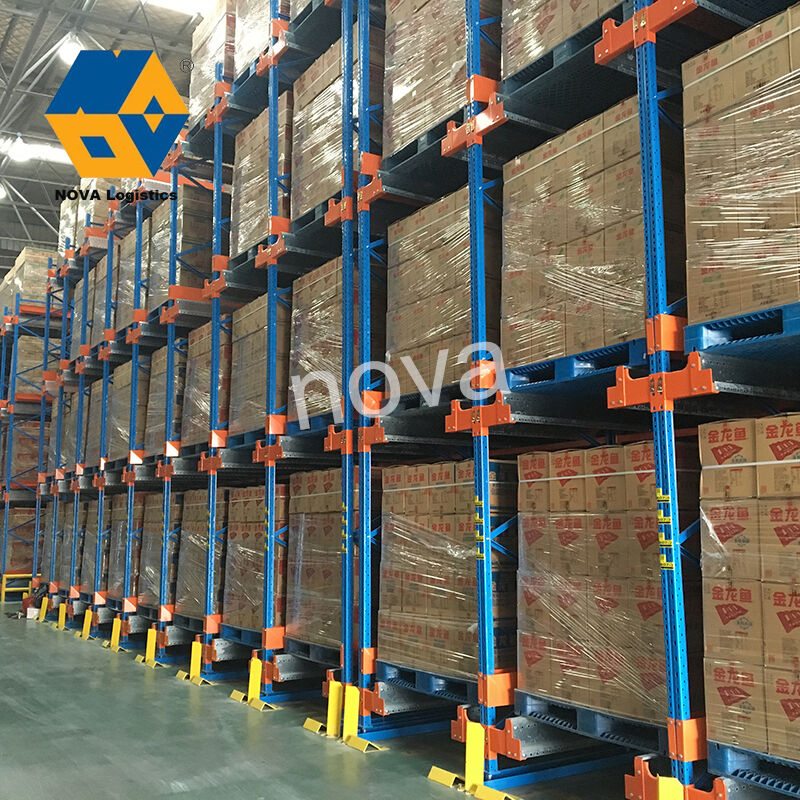
Effective warehouse space planning is one of the most persistent challenges facing logistics managers and distribution center operators today. As SKU counts grow, inventory volumes expand, and pressure mounts to maximize every square meter of available floor space, facilities need storage solutions that go beyond conventional racking. A shuttle rack has emerged as one of the most powerful tools available for transforming how warehouses are organized, accessed, and utilized. Understanding how it contributes to space planning requires looking closely at the system's mechanics, its structural logic, and the measurable impact it has on storage density.

A shuttle rack system replaces the traditional need for multiple access aisles by using a motorized cart — the shuttle — that travels autonomously within the racking lanes. This eliminates the requirement for forklifts to enter every storage lane, which is the core reason why the shuttle rack delivers such significant space efficiency gains. For warehouse planners, this means the ratio of productive storage space to wasted aisle space shifts dramatically in favor of storage. The result is a facility that can hold more pallets in the same footprint, or the same pallet count in a significantly smaller footprint, depending on operational goals.
The Structural Mechanism Behind Shuttle Rack Space Efficiency
How the Shuttle Cart Eliminates Redundant Aisles
Traditional selective racking requires a forklift aisle in front of every bay, which means a large portion of the warehouse floor is consumed by movement corridors rather than actual storage. The shuttle rack fundamentally disrupts this model by housing a remote-controlled cart inside the rack channel itself. The cart moves pallets horizontally along the full depth of the lane, meaning operators only need a single working aisle at the front of each rack bay to deposit and retrieve goods.
Because the shuttle rack removes the need for forklifts to penetrate deep into the storage structure, lane depths can extend much further than in conventional systems. A shuttle rack installation can support lanes that run ten, twenty, or even thirty pallets deep, which means one aisle services an enormous volume of stored product. This geometry is the primary driver of storage density gains and is what makes the shuttle rack fundamentally different from standard drive-in racking solutions.
The forklift's role is reduced to loading pallets at the lane entrance and retrieving them from the lane exit, leaving the shuttle cart to handle all internal movement. This clean division of labor also reduces wear on the racking structure itself, since forklift mast impacts inside the lanes are eliminated. From a space planning standpoint, warehouse designers can now allocate far more floor area to actual storage than to forklift circulation paths.
Vertical and Horizontal Space Utilization Through Shuttle Rack Design
The shuttle rack does not only improve horizontal space use — it also enables better vertical exploitation of building height. Since the system operates on fixed rails within the racking structure, each level can be fully loaded with pallets without concern for variable lane depth caused by driver error or mechanical constraints. Warehouse planners can specify rack heights that bring storage much closer to the usable under-roof clearance, unlocking cubic capacity that other high-traffic systems leave untouched.
A multi-level shuttle rack configuration allows each tier to operate independently, with dedicated shuttle carts assigned per level or shared between levels depending on throughput requirements. This means that a warehouse with ten meters of clear height can run a shuttle rack system with five or six load levels, each fully packed across the entire lane depth. The total storage positions per square meter of floor space can increase by sixty to eighty percent compared to selective racking in the same building.
This three-dimensional density improvement is especially valuable for warehouses operating in urban industrial zones where real estate costs are high or where building expansion is not feasible. For warehouse space planners working within fixed building envelopes, the shuttle rack's ability to capitalize on both horizontal depth and vertical height makes it one of the most space-efficient decisions available.
How Shuttle Rack Supports High-Density Storage Planning for Specific Inventory Profiles
Matching Shuttle Rack Logic to SKU Profiles and Stock Rotation
Space planning is not just about fitting more pallets — it also involves matching storage behavior to inventory management logic. The shuttle rack is particularly well-suited to warehouses handling high-volume, low-SKU product lines where large quantities of identical pallets need to be stored and retrieved efficiently. Cold storage facilities, beverage distributors, and fast-moving consumer goods operations are classic environments where the shuttle rack excels because they regularly handle deep lanes of homogeneous product.
The shuttle rack naturally supports both FIFO (first in, first out) and LIFO (last in, first out) rotation, depending on whether the system is configured as a flow-through lane with entry and exit at opposite ends, or as a single-access accumulation lane. This configurability means warehouse planners can design the shuttle rack layout to match the stock rotation demands of the product mix, rather than forcing inventory management to adapt to the rack's limitations.
For warehouses with multiple SKU groups, space planning with a shuttle rack often involves dedicating separate zones with different lane configurations to different product categories. High-turnover goods get shorter, wider lanes for faster cycle times, while slower-moving bulk products benefit from deeper lanes that pack maximum units into minimal aisle-facing space. This zoned approach within a shuttle rack installation allows planners to fine-tune space allocation at a granular level.
Reducing Dead Space in Seasonal and Buffer Stock Operations
One of the most overlooked space planning challenges is the management of buffer stock and seasonal inventory, which tends to create dead zones in warehouses designed primarily for regular turnover. When pallets sit untouched for days or weeks in shallow selective racking, they consume aisle access space continuously. The shuttle rack addresses this by consolidating buffer stock into deep lanes, where the occupied space is contiguous and compact rather than spread across multiple shallow bays with empty pick faces.
A well-designed shuttle rack layout allows seasonal peaks to be absorbed without expanding the warehouse footprint. During high-inventory periods, additional lanes can be activated and loaded to full depth, effectively using existing racking infrastructure to hold significantly more product than the same structure could in a drive-in or selective configuration. During low-inventory periods, the shuttle rack simply operates at partial lane depth without creating the disorganized, hard-to-navigate appearance of a half-empty conventional racking bay.
This elastic capacity is a genuine planning advantage. Warehouse managers working with the shuttle rack can model inventory peaks and troughs more accurately because the storage system behaves predictably under varying load conditions. The result is space planning that holds up in practice across the full range of operational scenarios, not just at theoretical maximum capacity.
Operational Workflow Integration and Its Impact on Space Planning Decisions
How Shuttle Rack Changes Aisle Layout and Traffic Flow Planning
Introducing a shuttle rack into a warehouse redesign or greenfield project fundamentally changes how aisle networks are structured. Because the shuttle cart handles internal lane transport, the warehouse floor plan can shift from a grid of narrow bays and intervening forklift aisles to a more compressed block of deep storage lanes served by a minimal number of main working aisles. This transition opens new possibilities for traffic flow planning that would not exist in conventional racking environments.
With fewer aisles to design around, warehouse planners gain more flexibility in positioning goods-in and goods-out areas, staging zones, and cross-docking spaces. The shuttle rack frees up floor area that can then be assigned to value-adding functions like quality control stations, repackaging areas, or outbound consolidation lanes. This means the space planning benefits of the shuttle rack extend beyond pure pallet storage density and into the broader operational layout of the facility.
Forklift traffic patterns also become simpler and safer when a shuttle rack is implemented. Because forklifts travel shorter distances and never enter deep lanes, vehicle routing is more predictable, congestion points are reduced, and the risk of rack damage from mast strikes or pallet overhangs is minimized. Planners can design narrower working aisles for the shuttle rack system than they would need for a comparable drive-in racking installation, squeezing additional efficiency from the available space.
Integration with Warehouse Management Systems and Dynamic Space Allocation
A modern shuttle rack system is typically compatible with warehouse management system (WMS) integration, allowing operators to track pallet positions within individual lanes in real time. This data-driven visibility is a significant advantage for dynamic space planning, where storage slot allocation changes in response to live inventory levels, incoming orders, and replenishment cycles rather than following a fixed map that quickly becomes outdated.
When WMS data is connected to shuttle rack operations, planners can identify underutilized lanes, reallocate them to faster-moving SKUs, and adjust pick-face assignments without physical restructuring of the racking itself. This capability means the shuttle rack becomes not just a static space-saving structure, but a dynamic planning tool that actively responds to inventory behavior. The space planning benefits compound over time as the system learns the patterns of the operation and enables increasingly precise slot utilization.
For operations running automated replenishment cycles, the shuttle rack's compatibility with control software also supports batch loading and retrieval sequences that minimize unnecessary cart movements and maximize lane throughput. This operational efficiency directly reinforces the space planning objective, since a more efficiently managed shuttle rack can serve more product volume in the same physical footprint without requiring additional racking investment.
Long-Term Space Planning Value and Return on Investment
Comparing Space Costs Before and After Shuttle Rack Implementation
A rigorous space planning evaluation must account not only for the upfront cost of a shuttle rack installation but also for the ongoing space savings it generates over the life of the system. When warehouses calculate the cost per pallet position across different storage system options, the shuttle rack consistently demonstrates a lower cost per position than selective racking when density is factored in. A shuttle rack system that doubles pallet capacity in the same building effectively halves the real estate cost per stored pallet, which is a compelling long-term financial argument.
For operations that would otherwise need to lease additional warehouse space or fund a building expansion to meet growing inventory demands, the shuttle rack represents a direct capital avoidance opportunity. The cost of a well-specified shuttle rack installation is typically a fraction of the cost of expanding or relocating a warehouse facility, making it one of the highest-value investments available in industrial storage planning. Decision-makers should evaluate the shuttle rack not purely as a racking purchase but as a real estate optimization strategy.
Facilities that have implemented a shuttle rack often report immediate and measurable improvements in storage utilization rates, typically moving from sixty to seventy percent effective utilization with conventional racking to eighty-five to ninety-five percent utilization with a shuttle rack system. These figures reflect real gains in space planning effectiveness that translate directly to operational cost reduction and business scalability.
Scalability and Future-Proofing Through Shuttle Rack Configuration Flexibility
One of the most practical advantages of the shuttle rack from a long-term space planning perspective is its scalability. Unlike fixed automation systems that require complete redesign to accommodate volume changes, the shuttle rack can be extended by adding lanes, adding levels, or increasing the number of shuttle carts in operation. This modular growth path allows warehouse planners to scale storage capacity in line with actual business growth rather than committing to maximum capacity from the outset.
As business needs evolve, the shuttle rack also supports reconfiguration for different lane depths or height profiles without requiring the entire installation to be scrapped. This adaptability is a significant planning advantage in industries where product mix, seasonal patterns, and volume profiles change over time. Warehouses that invest in a shuttle rack today are building a storage infrastructure that can adapt to future space planning challenges rather than locking themselves into a rigid layout.
The combination of high initial density gains, dynamic capacity management, WMS integration capability, and modular scalability makes the shuttle rack a uniquely valuable asset in long-term warehouse space planning. For facilities committed to maximizing the productive use of every available cubic meter, the shuttle rack is not simply a storage upgrade — it is a strategic infrastructure investment that reshapes how space is understood, allocated, and managed.
FAQ
What types of warehouses benefit most from a shuttle rack system?
A shuttle rack is most beneficial in warehouses that handle high-volume, homogeneous product lines with limited SKU variation. Cold storage facilities, food and beverage distribution centers, and fast-moving consumer goods warehouses are ideal environments because they regularly move large quantities of identical pallets. The shuttle rack's deep-lane design delivers the greatest space efficiency gains when many pallets of the same product need to be stored together in a compact, organized structure.
How does a shuttle rack differ from a traditional drive-in rack in terms of space planning?
A traditional drive-in rack requires forklifts to physically enter the racking lanes, which limits lane depth due to practical maneuvering constraints and increases the risk of structural damage. A shuttle rack uses a motorized cart to handle all internal lane movement, allowing lanes to extend much further and eliminating forklift penetration into the structure. This fundamental difference means the shuttle rack achieves significantly higher storage density per square meter of floor space compared to conventional drive-in racking systems.
Can a shuttle rack support both FIFO and LIFO inventory rotation?
Yes, a shuttle rack can be configured to support both FIFO and LIFO inventory management depending on the lane design. A flow-through configuration with separate entry and exit points enables FIFO rotation, which is essential for perishable goods or time-sensitive products. A single-access accumulation lane configuration supports LIFO rotation, which is suitable for stable, non-perishable bulk products. Warehouse planners can mix both configurations within the same installation to match different product requirements across different storage zones.
Is a shuttle rack compatible with existing warehouse management systems?
Most modern shuttle rack systems are designed with WMS compatibility in mind and can be integrated with existing warehouse management platforms through standard communication protocols. This integration allows operators to track pallet positions in real time, manage slot allocation dynamically, and schedule batch retrieval sequences automatically. The ability to connect shuttle rack operations with WMS data significantly enhances space planning decisions by providing live visibility into lane utilization, inventory levels, and pick-face efficiency across the entire storage system.