
 EN
EN
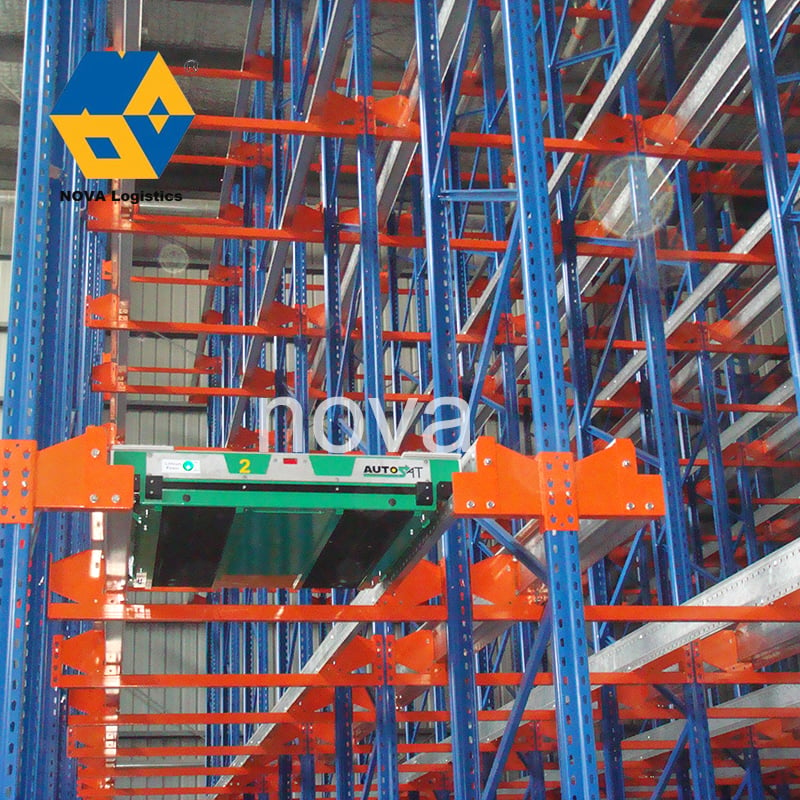
Cold storage facilities operate under some of the most demanding conditions in the logistics industry. Every square meter of refrigerated space carries a significant energy and infrastructure cost, which means storage density, operational efficiency, and equipment reliability are not just priorities — they are survival factors. In this context, the shuttle rack has emerged as one of the most strategically important storage systems that modern cold warehouses can adopt. Its growing popularity is not a passing trend; it is a direct response to the real operational pressures that cold storage operators face every day.
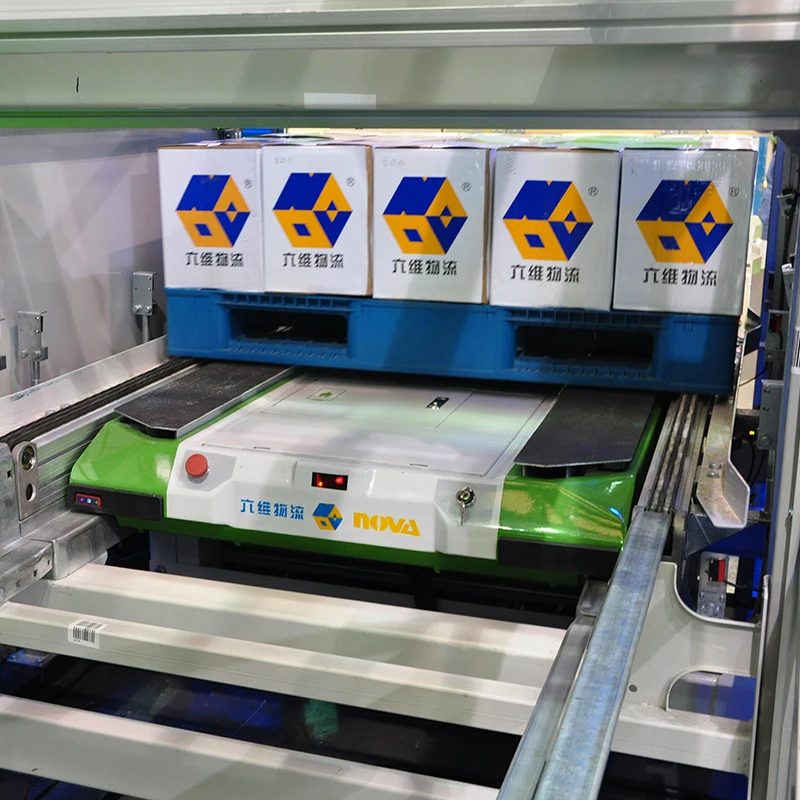
Understanding why the shuttle rack has become so widely adopted in cold warehouse environments requires looking beyond simple storage capacity numbers. It involves examining how this system aligns with the unique operational, thermal, and safety requirements of low-temperature facilities. From pharmaceutical cold chains to frozen food distribution centers, the shuttle rack is increasingly the preferred choice for warehouse designers and logistics managers who need a system that performs under pressure — literally and figuratively.
The Cold Storage Challenge That Shuttle Rack Systems Solve
Why Cold Warehouses Demand a Different Storage Approach
Standard ambient warehouses can afford a degree of inefficiency in their storage layouts. When energy costs are low and space is relatively cheap, operators can tolerate wide aisles, underutilized vertical space, and slower throughput cycles. Cold storage facilities enjoy none of these luxuries. Every additional aisle represents refrigerated air that must be maintained at significant energy cost. Every underused pallet position represents wasted investment in refrigeration infrastructure.
This is precisely the environment where the shuttle rack delivers its strongest value proposition. By dramatically reducing the number of working aisles needed and enabling deep-lane pallet storage, a shuttle rack system allows cold warehouse operators to store significantly more pallets within the same refrigerated footprint. This is not a minor operational improvement — it directly reduces the cost per pallet stored and shortens the energy payback period on refrigeration investments.
Cold storage operators who have transitioned from traditional drive-in racking or static shelving systems to a shuttle rack configuration consistently report improved space utilization rates. The ability to store pallets deep into the rack structure without requiring a forklift to enter each lane removes a key physical limitation that older systems imposed.
Forklift-Free Deep Lane Access and Its Thermal Advantage
One of the most underappreciated advantages of the shuttle rack in a cold storage context is the elimination of forklift entry into the storage lanes. In traditional drive-in racking, a forklift must physically enter each lane to deposit or retrieve pallets. This process requires the cold room door to remain open for extended periods, and the warm air intrusion that results is a persistent thermal management problem.
With a shuttle rack system, the semi-autonomous shuttle cart handles all pallet movement inside the deep lanes. The forklift operator only interacts with the front face of the rack, completing loading and unloading tasks much faster and with minimal door opening time. This thermal discipline is especially valuable in blast freezers or ultra-low-temperature environments where even brief temperature fluctuations can affect product quality and regulatory compliance.
The reduction in cold chain interruptions also translates into better product preservation, fewer temperature excursion records, and lower risk of regulatory non-compliance for temperature-sensitive goods such as vaccines, dairy products, meat, and frozen meals.
Operational Efficiency Gains That Drive Shuttle Rack Adoption
Higher Throughput Without Expanding the Facility Footprint
Throughput speed is a critical metric for any warehouse, but in cold storage it has additional implications. Operators want to move products in and out of the cold zone as quickly as possible to maintain temperature integrity and reduce the dwell time of workers in uncomfortable low-temperature environments. The shuttle rack system directly supports faster throughput by allowing a single shuttle cart to cycle through multiple pallet movements in rapid succession while the forklift remains at the aisle end.
In a conventional racking setup, the forklift must travel the full depth of a storage lane for every pallet movement, which is time-consuming and physically taxing on both the equipment and the operator. With a shuttle rack, the shuttle cart handles that internal travel autonomously, and the forklift can be repositioned to serve the next lane immediately. This parallel operation model significantly increases the number of pallet movements achievable per hour.
For distribution centers that operate under tight delivery windows or process high daily pallet volumes, this throughput advantage of the shuttle rack translates directly into better service levels and the ability to handle volume growth without immediate capital investment in facility expansion.
Reduced Forklift Wear and Labor Efficiency in Cold Environments
Operating forklifts inside cold rooms creates unique maintenance challenges. Cold temperatures affect battery performance in electric forklifts, hydraulic fluid viscosity in all types of equipment, and the physical comfort and focus of operators working in sub-zero conditions. Each of these factors increases operational cost and safety risk.
The shuttle rack system minimizes forklift time inside the cold zone. Because the forklift only needs to place or retrieve pallets at the rack face rather than driving deep into lanes, the overall forklift operating hours in cold environments are substantially reduced. This extends maintenance intervals, reduces battery consumption in electric units, and improves operator safety and productivity.
Labor efficiency improvements are also notable. Cold storage workers operating in challenging thermal conditions fatigue faster and require rotation schedules that impact overall warehouse productivity. By reducing the time each worker must spend physically inside the cold zone to complete pallet movements, the shuttle rack system supports a healthier, more sustainable working environment.
Structural and Technical Suitability of Shuttle Rack for Cold Environments
Materials and Engineering Designed for Low-Temperature Performance
Not every storage rack system is engineered to withstand the thermal stresses present in cold storage facilities. Standard carbon steel components can experience changes in mechanical properties at very low temperatures, including reduced impact resistance and increased brittleness at weld points. Purpose-built shuttle rack systems designed for cold room applications use steel grades and surface treatments specifically selected for performance in sub-zero conditions.
The shuttle cart itself — the motorized component that travels inside the rack lanes — must also function reliably in cold environments. Cold-rated shuttle carts are built with batteries, motors, and control systems capable of consistent performance even in freezer environments operating at minus 25 degrees Celsius or lower. This engineering specificity is a key reason why the shuttle rack has gained credibility with cold chain operators who cannot afford equipment failures during peak operational periods.
The rack profiles used in shuttle rack systems are typically heavier gauge than standard pallet racking to accommodate the dynamic loads generated by shuttle cart movement and the lateral forces inherent in deep-lane storage configurations. This structural robustness adds to the long-term reliability and safety profile of the system in demanding cold storage environments.
Compatibility with FIFO and FILO Inventory Management Models
Cold storage warehouses often handle perishable goods with strict shelf life requirements. The ability to manage inventory on a First In, First Out (FIFO) basis is frequently a regulatory and quality management requirement rather than an optional operational preference. The shuttle rack system is capable of supporting FIFO operation through appropriate lane configuration and warehouse management system integration.
In a FIFO shuttle rack configuration, pallets are loaded from one end of the lane and retrieved from the opposite end. This ensures that older stock is always picked first, reducing the risk of product expiry and associated waste. For facilities handling frozen meats, dairy, fresh produce, or pharmaceutical products, this capability is not a luxury — it is a compliance requirement.
Equally, for some cold storage applications such as bulk frozen goods where rotation by date is less critical, the shuttle rack can operate in a First In, Last Out (FILO) mode, which simplifies lane management and maximizes storage density. This flexibility makes the shuttle rack adaptable to a wide range of cold storage product categories and business models.
Economic Justification for Shuttle Rack Investment in Cold Storage
Long-Term Cost Savings Against Energy and Space Costs
The capital cost of a shuttle rack system is typically higher than that of static pallet racking or drive-in racking alternatives. This cost premium is one of the first objections raised by warehouse operators evaluating their storage options. However, when total cost of ownership is calculated across a realistic operational lifespan — typically ten years or more — the shuttle rack consistently demonstrates compelling economic returns in cold storage environments.
The primary savings driver is space efficiency. A shuttle rack system can achieve storage density improvements of thirty percent or more compared to conventional pallet racking within the same floor area. In a cold storage facility where the fully loaded cost of refrigerated space — including construction, insulation, refrigeration plant, energy, and maintenance — can be extremely high per square meter, this density improvement represents a very significant reduction in cost per pallet stored annually.
Energy savings also contribute meaningfully to the economic case. Fewer door openings, reduced forklift operation inside the cold zone, and higher pallet density per cubic meter of refrigerated space all reduce the thermal load on the refrigeration system, leading to measurable reductions in electricity consumption over time.
Scalability and Future-Proofing Through Modular Design
Cold storage demand is growing globally, driven by e-commerce, food safety regulation, pharmaceutical cold chains, and consumer preference for fresh and frozen products. Operators investing in storage infrastructure today need systems that can scale alongside their business growth rather than requiring complete replacement as volumes increase.
The shuttle rack system's modular design supports incremental expansion. Additional shuttle carts can be deployed as throughput demands grow, and rack structures can be extended within the available building envelope without requiring a full system redesign. This scalability reduces the risk of infrastructure over-investment in the early stages of a facility's lifecycle and provides a clear upgrade path as the business matures.
Warehouse management system integration capabilities also future-proof the shuttle rack investment. Modern shuttle rack systems are designed to communicate with WMS platforms, enabling real-time inventory tracking, automated lane assignment, and data-driven operational optimization — all capabilities that will become more important as cold chain logistics continue to digitize.
FAQ
What types of products are best suited for storage in a shuttle rack system within a cold warehouse?
A shuttle rack system is best suited for homogeneous product categories stored on standard pallets, such as frozen meats, dairy products, beverages, frozen meals, and pharmaceutical goods requiring temperature-controlled storage. Products that are stored in large quantities of the same SKU benefit most from the deep-lane storage model that shuttle rack systems enable, as this maximizes density while maintaining organized inventory management.
How does a shuttle rack differ from a traditional drive-in rack in a cold storage setting?
The key difference is that a traditional drive-in rack requires a forklift to physically enter the storage lane to deposit or retrieve pallets, which is slow, carries collision risk, and requires extended cold room door opening. A shuttle rack uses a motorized cart that travels inside the lane independently, so the forklift only works at the lane entrance. This results in faster operation, less cold air loss, reduced forklift wear, and improved safety — all critical advantages in a cold storage environment.
Can a shuttle rack system operate reliably in extreme freezer temperatures below minus 20 degrees Celsius?
Yes, purpose-engineered shuttle rack systems are designed to operate in temperatures as low as minus 25 degrees Celsius or lower. The shuttle carts used in cold room applications are built with cold-rated batteries, insulated electronics, and low-temperature lubricants that maintain consistent performance in extreme freezer conditions. It is important to specify the intended operating temperature when commissioning a shuttle rack system to ensure all components are appropriately rated for the environment.
What is the typical payback period for a shuttle rack investment in a cold storage facility?
Payback periods vary depending on facility size, energy costs, throughput volume, and the cost of refrigerated space in the specific market. However, many cold storage operators report that the improved space utilization, energy savings, and labor efficiency gains associated with a shuttle rack system generate a return on the additional investment premium within three to six years compared to conventional racking alternatives. Facilities with high pallet volumes and high energy costs typically achieve faster payback periods.
Table of Contents
- The Cold Storage Challenge That Shuttle Rack Systems Solve
- Operational Efficiency Gains That Drive Shuttle Rack Adoption
- Structural and Technical Suitability of Shuttle Rack for Cold Environments
- Economic Justification for Shuttle Rack Investment in Cold Storage
-
FAQ
- What types of products are best suited for storage in a shuttle rack system within a cold warehouse?
- How does a shuttle rack differ from a traditional drive-in rack in a cold storage setting?
- Can a shuttle rack system operate reliably in extreme freezer temperatures below minus 20 degrees Celsius?
- What is the typical payback period for a shuttle rack investment in a cold storage facility?