
 EN
EN
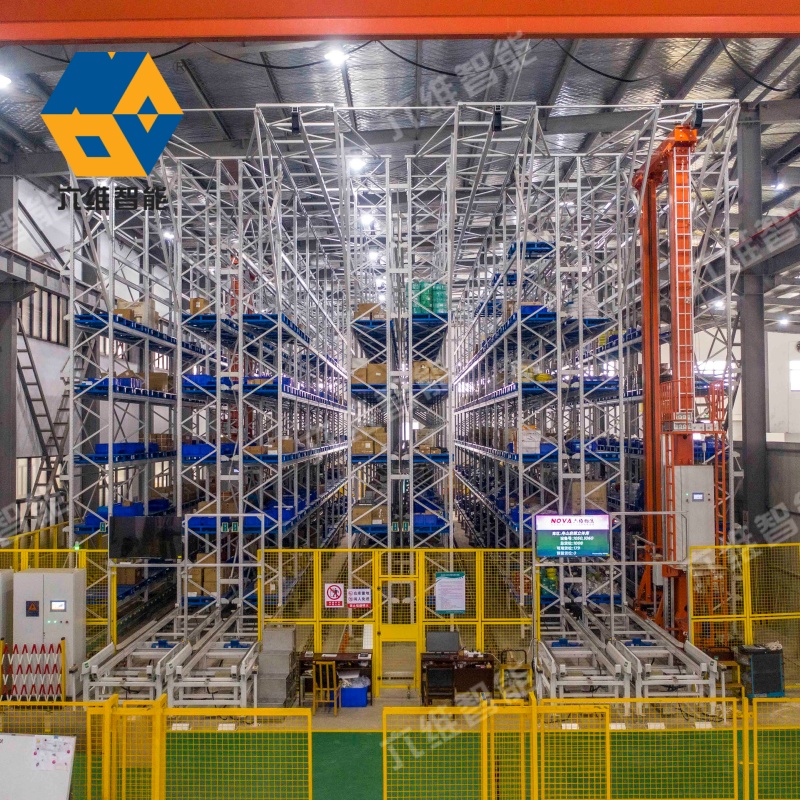
Space is one of the most expensive and finite resources in any distribution or manufacturing facility. As inventory volumes grow and real estate costs rise, warehouse managers face mounting pressure to fit more into less. An asrs warehouse addresses this challenge directly by replacing conventional floor-level racking with a vertically integrated, automated system that dramatically improves storage density without requiring a larger footprint. Understanding how this works requires a closer look at the mechanisms, layout logic, and operational changes that an asrs warehouse brings to the floor.
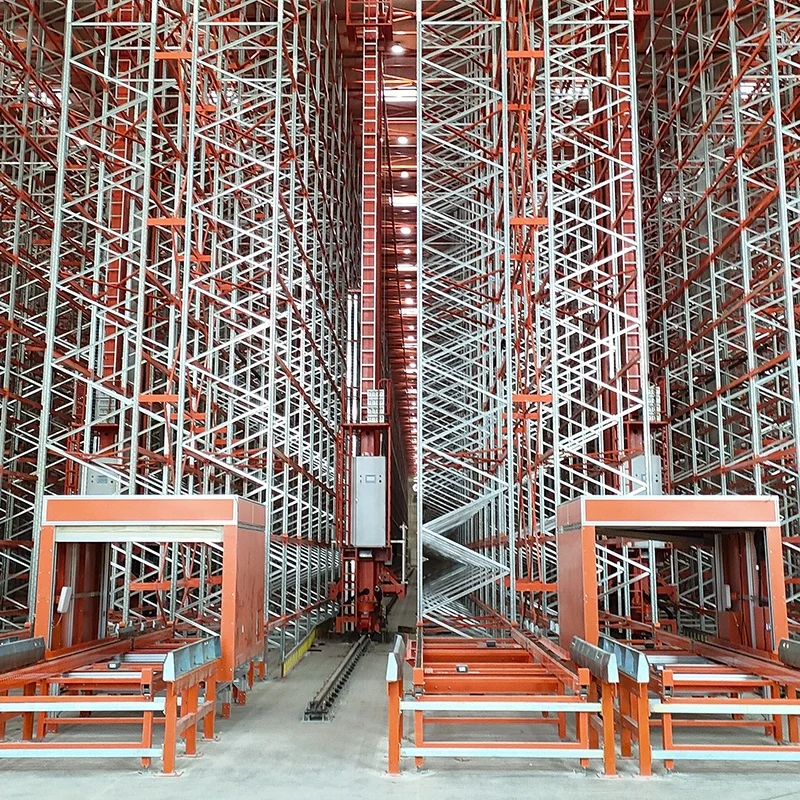
An asrs warehouse is defined by its use of automated cranes, shuttles, or robotic carriers that move goods through a tightly structured racking system with precision. Unlike manual warehouses, where wide aisles are required for forklift movement, an asrs warehouse eliminates those spatial inefficiencies. The result is a storage environment that can hold significantly more inventory within the same square footage, or even within a smaller building, while also improving retrieval speed and inventory accuracy. This article explores the specific ways an asrs warehouse reduces space pressure at the structural, operational, and strategic level.
Vertical Space Utilization in an ASRS Warehouse
Building Height as a Storage Asset
One of the most immediate ways an asrs warehouse reduces space pressure is by exploiting vertical height that conventional systems leave unused. Standard forklift-dependent racking is typically limited to heights that operators can safely reach, often capping at eight to ten meters. An asrs warehouse can extend storage structures to twenty meters or beyond, using automated stacker cranes that operate precisely at any height without safety constraints. Every additional meter of vertical capacity in an asrs warehouse translates directly into more pallet positions without expanding the building's ground area.
In an asrs warehouse, structural design is planned around the full usable height of the facility. Engineers configure racking lanes to match the lift range of the cranes, ensuring no vertical space is wasted. This approach means an asrs warehouse can sometimes achieve three to five times more storage positions than a comparable manually operated facility of the same floor area. For businesses facing lease renewal decisions or construction cost pressures, this vertical efficiency is one of the strongest financial arguments for adopting an asrs warehouse model.
Aisle Reduction Through Automation
In a conventional warehouse, aisle space can consume thirty to fifty percent of the total floor area. Forklifts require wide turning radii, and safety regulations demand clear zones between racking rows. An asrs warehouse eliminates the need for manned vehicle access within the storage zone entirely. The automated carriers in an asrs warehouse travel along fixed rails or guided paths, requiring only minimal clearance between racking rows. This structural difference allows an asrs warehouse to recover a substantial portion of floor area that would otherwise be dedicated purely to vehicle movement.
Layout Optimization and Flow Design
Slot Assignment and Dynamic Slotting
An asrs warehouse does not simply store items in fixed positions the way a static rack system does. The warehouse management software integrated with an asrs warehouse continuously analyzes inventory movement patterns and assigns storage locations based on retrieval frequency, weight distribution, and picking sequence logic. High-turnover goods in an asrs warehouse are positioned closer to input-output stations, while slower-moving items occupy deeper or higher positions. This dynamic slotting reduces unnecessary crane travel, increases throughput, and prevents any one area of the asrs warehouse from becoming a bottleneck.
For facilities managing thousands of SKUs, this intelligent layout management in an asrs warehouse removes the manual effort of periodic reorganization. The system recalibrates automatically as demand patterns shift. This means an asrs warehouse remains optimized without requiring dedicated labor resources to physically rearrange stock, which is a recurring cost burden in traditional operations. The space savings compound over time because the asrs warehouse consistently places goods where they generate the most operational value.
Dedicated Zones for High-Density Storage
An asrs warehouse also enables precise zone separation between different categories of goods. Temperature-controlled sections, hazardous material areas, and high-value inventory can each occupy dedicated zones within the asrs warehouse without creating the sprawl typical of manually managed multi-zone facilities. Because access to each zone in an asrs warehouse is controlled programmatically, physical buffer zones and safety corridors can be minimized. The result is a tighter, more controlled facility layout where every square meter of the asrs warehouse carries a defined storage purpose.
Strategic Space Pressure Relief for Growing Operations
Scalability Without Facility Expansion
For operations experiencing inventory growth, the traditional solution is to lease additional warehouse space or build new facilities. An asrs warehouse offers an alternative path. By maximizing existing cubic volume and reducing unused space, an asrs warehouse can absorb significant inventory growth within the current building footprint. Adding cranes, extending racking lanes vertically, or reconfiguring the asrs warehouse layout can often yield the storage capacity equivalent of a facility expansion at a fraction of the capital and timeline cost.
This scalability makes an asrs warehouse particularly valuable for businesses in competitive markets where rapid response to demand changes is critical. Rather than committing to long-term real estate decisions, operators can configure the asrs warehouse to match current and near-future capacity requirements. The asrs warehouse becomes a flexible asset that grows with the business rather than a fixed infrastructure constraint.
Reducing Dependency on External Storage
Many warehouses under space pressure resort to offsite storage facilities, which add transportation costs, inventory visibility gaps, and handling complexity. An asrs warehouse reduces or eliminates this dependency by enabling denser in-house storage. When an asrs warehouse consolidates inventory that was previously spread across multiple locations, the operational savings extend well beyond square footage. Lead times shorten, order accuracy improves, and the asrs warehouse becomes a true central inventory hub rather than one node in a fragmented storage network.
FAQ
What types of facilities benefit most from an asrs warehouse?
Facilities with high SKU counts, fast inventory turnover, or significant vertical clearance benefit most from an asrs warehouse. Distribution centers, cold storage operations, and e-commerce fulfillment sites are especially strong candidates because an asrs warehouse directly addresses their density and speed requirements.
Does an asrs warehouse require a specially constructed building?
Not necessarily. While new builds can be designed from the ground up to optimize an asrs warehouse layout, many existing facilities can be retrofitted. The key factors are available ceiling height, floor load capacity, and column spacing, which determine how extensively an asrs warehouse system can be installed within the current structure.
How does an asrs warehouse affect overall operating costs beyond space savings?
An asrs warehouse reduces labor costs associated with picking, putaway, and inventory auditing. It also lowers damage rates since automated handling in an asrs warehouse is more consistent than manual forklift operation. Over time, these combined savings often justify the initial capital investment of the asrs warehouse system.