
 EN
EN
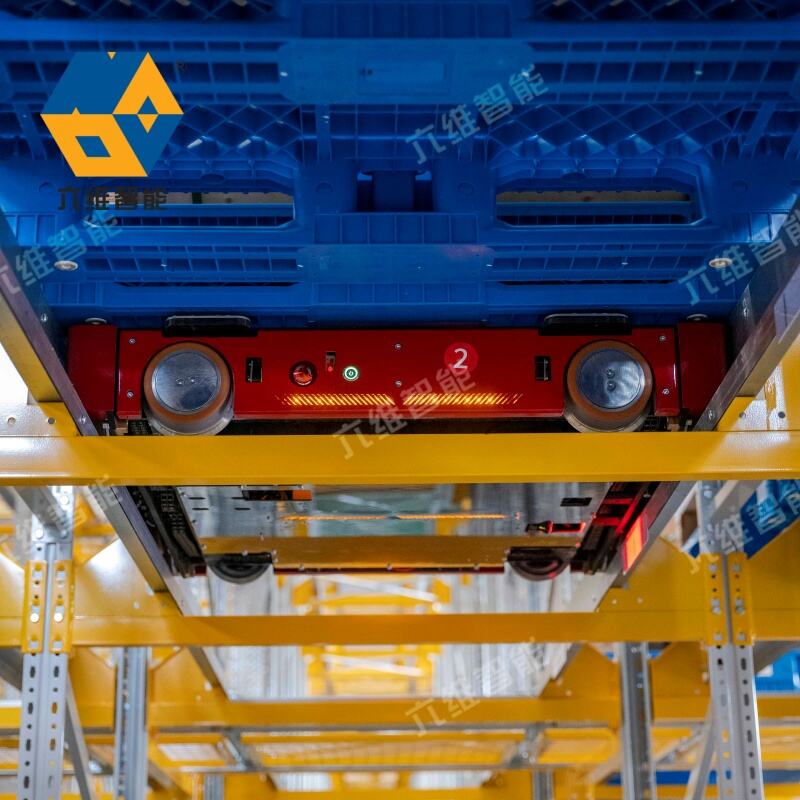
Modern warehouses face relentless pressure to store more products, process orders faster, and minimize costly errors — all while managing limited floor space and labor. This is precisely where ASRS technology has transformed the landscape of inventory storage management. An ASRS, or Automated Storage and Retrieval System, is an engineered warehouse solution that uses mechanical systems, software controls, and intelligent racking structures to automatically place and retrieve inventory without relying solely on manual labor. As supply chains grow more complex, understanding how ASRS technology improves inventory storage management has become essential for logistics managers, warehouse operators, and operations directors alike.
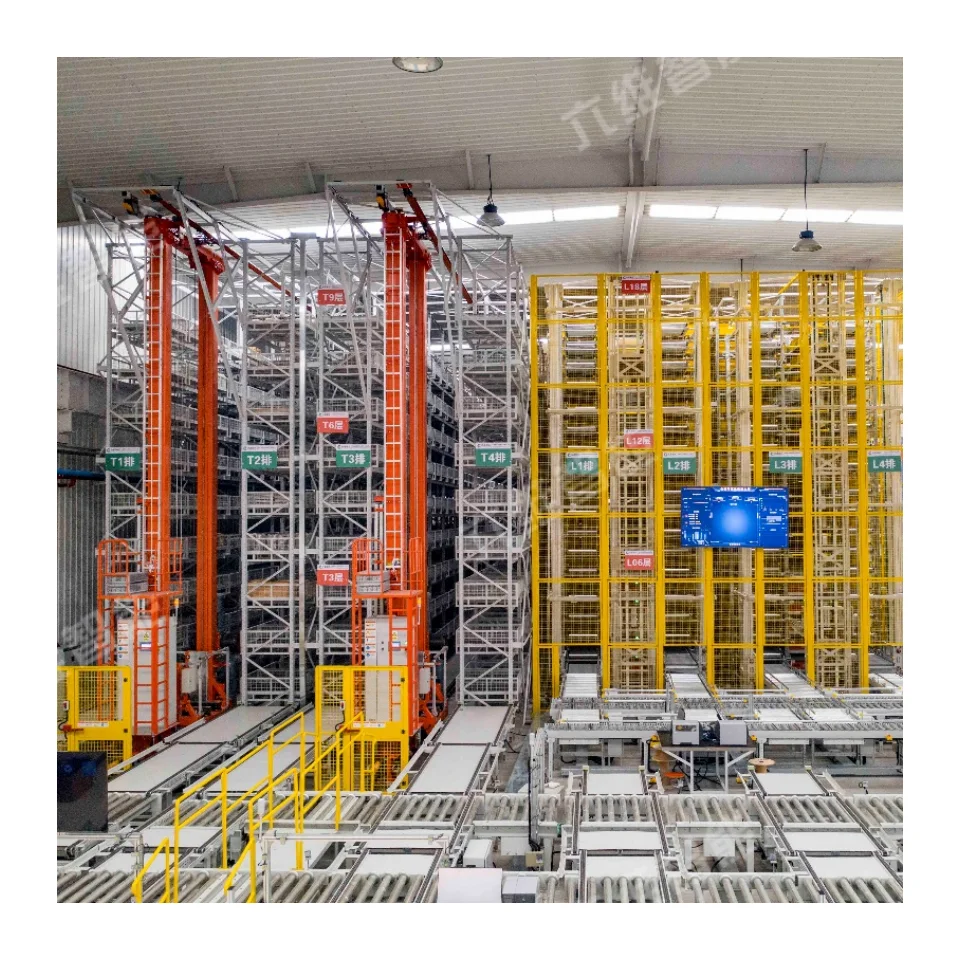
At its core, ASRS technology reimagines how goods are stored, accessed, and tracked within a facility. Rather than relying on fixed shelving and manual forklift operations, a well-designed asrs system integrates radio shuttle vehicles, robotic mechanisms, and intelligent software to create a seamless, high-density storage environment. The improvements this technology delivers — in accuracy, speed, space utilization, and operational cost — are measurable and significant, making it one of the most impactful investments a warehouse operation can make today.
The Fundamental Mechanism Behind ASRS and Inventory Control
How ASRS Systems Are Structurally Designed
An ASRS system is not a single piece of equipment but rather an integrated network of hardware and software components working in concert. Structurally, it typically consists of high-density racking systems, automated carriers or shuttle vehicles, conveyors or transfer systems, and a warehouse management system (WMS) or warehouse control system (WCS) that acts as the operational brain. The racking is engineered to maximize vertical height, allowing facilities to store far more inventory per square foot than conventional shelving configurations allow.
The automated carriers within an ASRS — whether rail-guided shuttles, stacker cranes, or robotic arms — move along predefined paths to place and retrieve pallets or totes with precision. Each storage location is catalogued digitally, and the control system tracks exactly what is stored where at all times. This structural design is what gives ASRS its foundational advantage: inventory is never misplaced, always accessible, and continuously monitored without requiring a human to physically walk the aisles and check.
The modular nature of modern ASRS installations also means that systems can be scaled as business volume grows. Additional aisles, higher racking, or additional shuttle vehicles can be added without completely redesigning the warehouse layout, making the technology both a short-term efficiency gain and a long-term infrastructure investment.
The Role of Software in ASRS Inventory Management
The physical hardware of an ASRS system would be far less effective without the sophisticated software that governs it. Warehouse management software integrated with ASRS controls handles inventory assignments, storage location optimization, retrieval sequencing, and real-time reporting. Every item that enters the system is assigned a location based on a set of configurable rules — including product velocity, expiration date, weight, or order frequency — ensuring that the most-needed items are always the most accessible.
Inventory data within an ASRS environment is updated in real time. When a pallet is placed into a rack position, that transaction is logged immediately. When it is retrieved, the system updates inventory levels without manual scanning or data entry. This continuous, automated data loop dramatically reduces inventory discrepancies and supports more accurate demand planning. For businesses that rely on just-in-time inventory practices or multi-channel fulfillment, this level of visibility is operationally critical.
Advanced ASRS platforms can also integrate with enterprise resource planning (ERP) systems, e-commerce platforms, and transportation management software, creating a unified operational ecosystem. This interconnectedness means that an incoming purchase order can trigger automated retrieval instructions before a picker even receives the task, significantly compressing the time between order receipt and shipment.
Space Utilization Improvements Enabled by ASRS
Vertical Storage Density and Floor Space Reduction
One of the most immediate and quantifiable improvements that ASRS technology delivers is a dramatic increase in storage density. Traditional racking systems are limited by the height that forklifts can safely reach and the aisle width required for their operation. An ASRS eliminates these constraints entirely. Because the automated carriers are purpose-built for the racking structure, aisles can be made significantly narrower, and racking can be installed to the full structural height of the building — often reaching 10 to 40 meters in large distribution centers.
This vertical and horizontal optimization means that the same warehouse footprint can often hold two to four times the inventory volume compared to a conventional setup. For businesses operating in urban areas where real estate is expensive, or for those who have exhausted their expansion options, deploying ASRS technology can effectively double or triple usable storage capacity without acquiring additional space. The financial implication of delaying or avoiding a warehouse expansion is substantial.
Beyond simply fitting more product, the density improvements of ASRS also contribute to better environmental conditions within the facility. With automated systems handling movement, there is less need for wide temperature-variable zones associated with extensive forklift activity, which is particularly relevant for cold chain and temperature-sensitive inventory management applications.
Optimized Slotting and Dynamic Location Assignment
In a manual warehouse, slotting — the process of deciding where each product should be stored — is often done infrequently and imprecisely. Products end up stored based on available space rather than strategic logic, leading to inefficient pick paths, congested zones, and slower order processing. An ASRS system solves this problem through dynamic, algorithm-driven slotting that continuously optimizes storage locations based on real operational data.
When the ASRS software detects that a particular SKU is being retrieved frequently, it can automatically reassign that product to a more accessible location within the system. Conversely, slow-moving items are placed in deeper storage positions where access time is longer but space efficiency is maintained. This intelligent location management, impossible to replicate manually at scale, ensures the entire inventory profile is stored in its most efficient configuration at any given time.
For warehouses managing thousands or tens of thousands of SKUs — a common scenario in manufacturing supply, e-commerce fulfillment, and distribution — this dynamic slotting capability translates directly into faster order cycle times and reduced labor hours per order, both of which improve profitability.
Accuracy and Error Reduction in Inventory Operations
Eliminating Manual Picking and Placement Errors
Human error is an unavoidable reality in manual warehouse operations. Mis-picks, mislabeled storage locations, incorrect inventory counts, and lost or damaged products are persistent problems that generate costs through returns, re-work, and customer dissatisfaction. ASRS technology fundamentally reduces these error sources by replacing manual placement and retrieval with precisely controlled automated movements governed by verified software instructions.
Every transaction in an ASRS environment is authenticated by the control system before execution. A retrieval command must match an existing inventory record at a confirmed location before the shuttle or stacker is dispatched. This verification layer means that the system cannot retrieve a product that does not exist at a stated location, nor can it place a product in an already-occupied slot without triggering an exception alert. The structural enforcing of accuracy is one of the most valuable operational benefits of ASRS technology.
In industries where inventory accuracy is a compliance requirement — pharmaceuticals, food and beverage, electronics, and aerospace components, for example — the precision of an ASRS system is not just operationally beneficial but often a regulatory necessity. Audit trails, batch tracking, and FIFO/FEFO inventory rotation are all manageable within a properly configured ASRS platform.
Real-Time Inventory Visibility and Cycle Counting
Traditional warehouses rely on periodic physical inventory counts — often disruptive, labor-intensive processes that halt operations for hours or days. With ASRS, inventory accuracy is maintained continuously rather than corrected periodically. Because every movement into and out of the system is recorded in real time, the inventory ledger is always current, and discrepancies are identified immediately rather than discovered weeks later during a count.
Many ASRS implementations support automated cycle counting, where the system periodically verifies stored quantities during regular operational cycles without requiring any additional labor or downtime. If a discrepancy is detected between the physical count and the digital record, the system flags it immediately for investigation. This continuous verification approach transforms inventory accuracy from a periodic project into an ongoing operational standard.
The result for businesses is dramatically improved confidence in their inventory data, which cascades into better purchasing decisions, reduced safety stock requirements, fewer stockouts, and more reliable customer service levels. The ASRS system essentially acts as a perpetual inventory auditor that never takes a day off.
Labor Efficiency and Operational Cost Management Through ASRS
Reducing Labor Dependency Without Sacrificing Throughput
Labor costs represent one of the largest and most variable expenses in warehouse operations. Skilled forklift operators, pickers, and inventory counters command increasingly competitive wages in tight labor markets, and the cost of recruiting, training, and retaining warehouse staff is significant. By automating the storage and retrieval functions, ASRS technology allows facilities to process higher inventory volumes without proportional increases in headcount.
This does not mean eliminating the human workforce entirely. Rather, ASRS redeploys human effort away from repetitive, physically demanding, and error-prone tasks toward supervisory, quality control, exception handling, and value-adding roles. Workers in an ASRS-enabled facility typically operate in safer conditions, with less physical exertion and lower injury risk, which also reduces absenteeism and workers' compensation costs over time.
The throughput capacity of an ASRS system can far exceed what a comparable manual workforce can achieve, especially during peak periods. Because automated carriers operate continuously without fatigue, break times, or shift-change interruptions, the system maintains consistent performance around the clock. For operations with 24/7 requirements or significant seasonal demand swings, this operational consistency is a major competitive advantage.
Long-Term Cost Benefits and Return on Investment
The initial capital investment in an ASRS system is substantial, and this can be a barrier to adoption for some operations. However, when evaluated across a multi-year timeframe, the return on investment for ASRS technology is typically compelling. The combination of reduced labor costs, avoided real estate expansion costs, lower inventory carrying costs due to improved accuracy, and reduced damage and loss costs creates a financial case that often justifies the investment within three to seven years, depending on the scale and application.
Energy efficiency is another cost consideration that favors ASRS. Automated facilities require fewer lighting zones at full intensity, lower HVAC loads in operational areas, and smaller powered equipment fleets than their manual counterparts. Over a decade of operations, these energy savings can represent meaningful cost reductions that add to the financial benefits of adopting ASRS technology.
For operations planning growth, the scalability of ASRS means that expansion costs are incremental rather than disruptive. Adding capacity to an existing ASRS installation is far less costly per storage position than constructing new warehouse space, making the technology an economically rational choice for growing businesses.
FAQ
What types of inventory are best suited for ASRS systems?
ASRS systems are well-suited for a wide range of inventory types, including standard palletized goods, boxed products, totes, and cases. Industries such as automotive parts, consumer goods, pharmaceuticals, food and beverage, and electronics manufacturing commonly deploy ASRS due to the high SKU counts, accuracy requirements, and throughput volumes involved. However, very large, irregularly shaped, or extremely heavy items may require specialized configurations or may not be suitable for all ASRS designs.
How does ASRS technology handle FIFO inventory rotation?
Most ASRS control software natively supports FIFO (First In, First Out) and FEFO (First Expired, First Out) inventory rotation rules. When a retrieval request is issued, the system automatically selects the oldest or earliest-expiring unit matching the product code and routes the automated carrier to retrieve it. This systematic enforcement of rotation rules is far more reliable than manual processes and is especially valuable in food, beverage, and pharmaceutical inventory management.
Can ASRS systems integrate with existing warehouse management software?
Yes, modern ASRS systems are generally designed with integration capability as a core feature. Most platforms support standard communication protocols and APIs that allow connection with widely used warehouse management systems (WMS), ERP platforms, and order management systems. A proper integration ensures seamless data exchange between the ASRS control layer and the broader operational software ecosystem, enabling real-time inventory updates and automated order processing without manual intervention.
Is ASRS technology practical for smaller warehouse operations?
While large distribution centers have historically been the primary adopters of ASRS, the technology has become increasingly accessible for mid-sized and growing operations. Modular ASRS configurations, including compact radio shuttle systems and smaller-scale automated racking solutions, allow facilities with moderate inventory volumes to benefit from the accuracy, space, and labor advantages without committing to enterprise-scale systems. The key is matching the system design to the specific operational profile and growth trajectory of the business.