
 EN
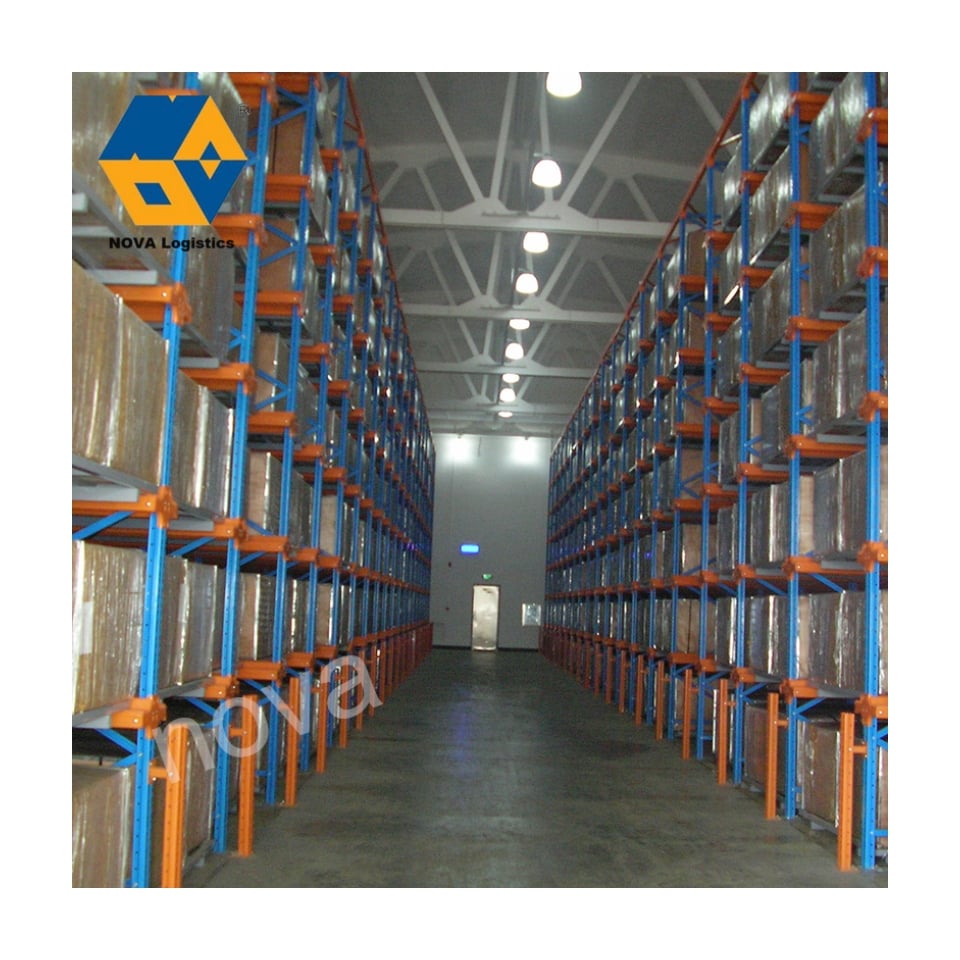
Drive in pallet racking represents one of the most effective solutions for warehouses facing space constraints and seeking to maximize vertical storage capacity. Unlike traditional selective racking systems that prioritize accessibility, drive in pallet racking is engineered to deliver significantly higher storage density by allowing forklifts to drive directly into the rack structure. This design innovation fundamentally transforms how facilities approach space planning, enabling businesses to store more pallets in the same footprint while maintaining operational efficiency. Understanding how drive in pallet racking supports better space planning is essential for any warehouse manager or facility director evaluating storage optimization strategies.
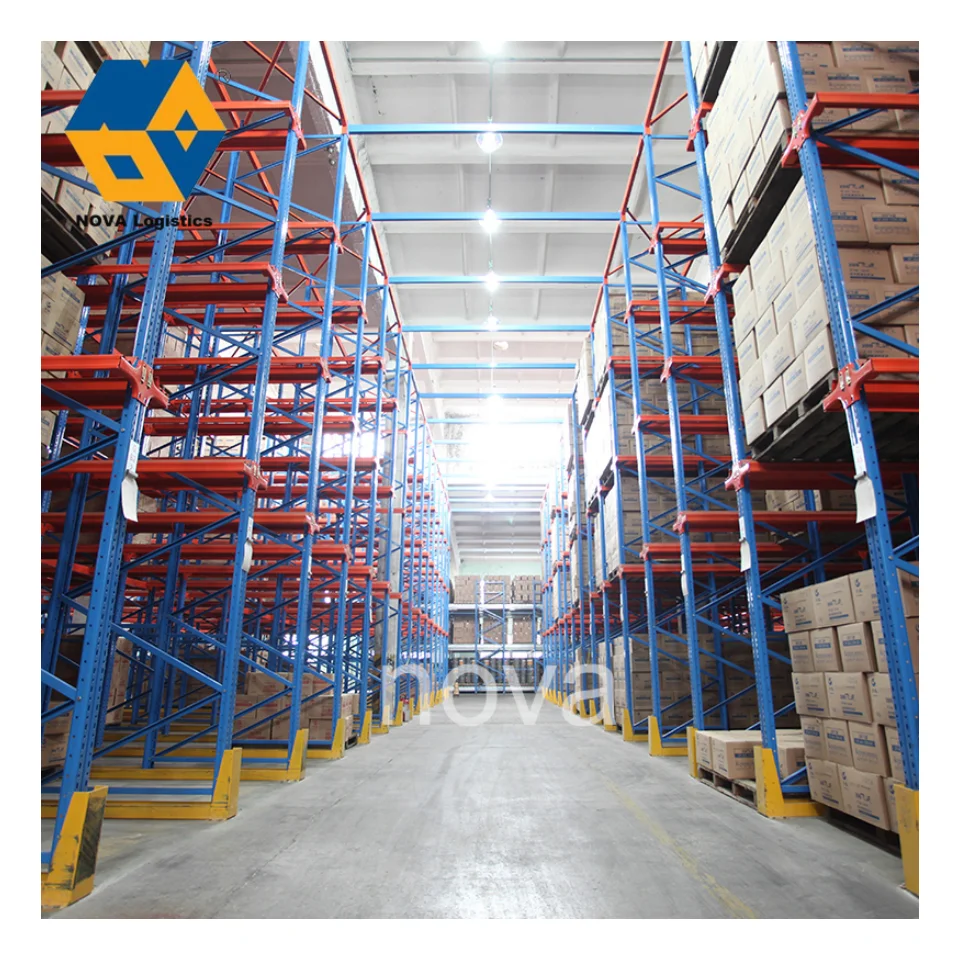
The fundamental advantage of drive in pallet racking lies in its ability to eliminate much of the aisle space required by conventional storage systems. In standard selective racking, each row requires its own access aisle, which consumes valuable floor space that generates no direct revenue. Drive in pallet racking consolidates multiple rows into deep storage lanes, dramatically reducing wasted aisle space and allowing businesses to pack pallets much more densely. This structural efficiency directly translates to better space planning outcomes, as facilities can accommodate 40 to 60 percent more inventory in the same warehouse footprint compared to traditional systems.
Understanding Drive In Pallet Racking Design and Density Benefits
How Drive In Pallet Racking Maximizes Storage Footprint
Drive in pallet racking achieves exceptional storage density through a straightforward but highly effective design principle. The system consists of rails and support beams that create lanes running deep into the storage area, typically ranging from 5 to 12 pallet positions deep depending on warehouse specifications. Forklifts enter these lanes, deposit or retrieve pallets following last-in-first-out (LIFO) principles, and exit in a single continuous motion. This lane-based approach eliminates the need for the multiple access aisles required by drive in pallet racking alternatives, allowing warehouse operators to use nearly every square foot of available floor space for actual storage. The vertical dimension further amplifies capacity, as drive in pallet racking systems scale to heights of 20, 25, or even 30 feet in many industrial facilities, creating truly three-dimensional storage that transforms space planning economics.
Calculating Space Efficiency Gains with Drive In Pallet Racking
The space planning benefits of drive in pallet racking become quantifiable when comparing specific warehouse scenarios. A 50,000-square-foot warehouse using traditional selective racking might accommodate 10,000 to 12,000 pallets depending on aisle width and rack height. The same facility using drive in pallet racking can often store 15,000 to 18,000 pallets by dramatically reducing aisle requirements and maximizing vertical utilization. This 40 to 50 percent increase in storage capacity directly translates to significantly lower cost per pallet stored, improved inventory turns in many applications, and better utilization of expensive real estate. When warehouse rents range from $5 to $15 per square foot annually in major metropolitan areas, the space planning advantages of drive in pallet racking deliver measurable financial returns that often justify system implementation within 2 to 4 years.
Strategic Space Planning Considerations for Drive In Pallet Racking Implementation
Inventory Rotation and LIFO Workflow in Drive In Pallet Racking Systems
While drive in pallet racking delivers exceptional density benefits, effective space planning requires understanding its operational workflow. Drive in pallet racking systems operate on last-in-first-out (LIFO) principles, meaning the most recently stored pallet in any lane is the first one retrieved. This operational model works exceptionally well for certain inventory types, particularly products with stable demand, long shelf lives, or where first-expired-first-out protocols are not critical. However, businesses handling perishable goods, pharmaceuticals, or time-sensitive inventory must carefully evaluate whether drive in pallet racking fits their space planning needs. In many mixed-inventory environments, warehouses deploy both drive in pallet racking for stable stock items and selective racking for first-in-first-out (FIFO) products, creating a hybrid space planning approach that balances density with operational flexibility.
Forklift Operations and Drive In Pallet Racking Safety Integration
Successful space planning with drive in pallet racking depends on integrating safe forklift operations into the system design. Drive in pallet racking lanes require precision driving, clear sightlines, and well-trained operators to prevent collisions, pallet damage, and structural stress. Space planning must therefore account for adequate lane width, proper lighting, and distance markers that guide forklifts safely into deep storage positions. Many facilities implement one-way traffic flow in drive in pallet racking lanes, guide rails, or painted directional markings to enhance safety and operational efficiency. These safety considerations are not simply regulatory requirements but integral to effective space planning that maximizes both capacity and long-term system integrity. When drive in pallet racking is integrated with proper safety protocols and operator training, facilities achieve the full density benefits while maintaining accident rates well within industry standards.
Drive In Pallet Racking for Different Warehouse Environments and Product Types
Drive In Pallet Racking Applications in Food, Beverage, and Logistics Networks
Drive in pallet racking proves particularly valuable for large-scale food and beverage distribution centers where density directly impacts profitability. Cold storage warehouses frequently utilize drive in pallet racking to maximize capacity in expensive climate-controlled spaces, where every square foot commands premium costs. Beverage distribution networks, frozen food logistics, and produce warehousing benefit from drive in pallet racking because inventory typically consists of standardized, uniform pallet loads with predictable storage duration. Third-party logistics (3PL) providers frequently incorporate drive in pallet racking into space planning strategies, achieving higher density that directly translates to increased revenue per square foot of storage space. The high-density characteristics of drive in pallet racking make it especially suitable for environments where product homogeneity and stable demand enable LIFO workflows without creating operational constraints.
Drive In Pallet Racking in Manufacturing and Bulk Storage Scenarios
Manufacturing facilities and bulk storage operations represent another strong use case for drive in pallet racking in comprehensive space planning. Automotive suppliers, building material distributors, and manufacturing plants that maintain large inventories of standardized components often find drive in pallet racking delivers exceptional efficiency. These environments typically feature consistent product dimensions, high-volume inventory, and long dwell times that align well with drive in pallet racking operational principles. Space planning in manufacturing environments can incorporate multiple drive in pallet racking sections dedicated to different product families, each optimized for specific SKU profiles. The reliability and predictability of drive in pallet racking performance in these controlled environments makes it an increasingly popular choice for facility expansion and modernization projects aimed at supporting growth without expanding the physical warehouse footprint.
FAQ
What is the primary advantage of drive in pallet racking for space planning?
The primary advantage of drive in pallet racking for space planning is dramatically increased storage density through reduced aisle requirements. Traditional selective racking systems require an access aisle for each row, consuming significant floor space that generates no revenue. Drive in pallet racking consolidates multiple rows into deep lanes where forklifts can store and retrieve pallets, eliminating most aisle space and allowing 40 to 60 percent more inventory storage in the same warehouse footprint. This fundamental space planning advantage directly reduces cost per pallet stored and improves facility utilization economics.
How does drive in pallet racking handle inventory rotation requirements?
Drive in pallet racking operates on last-in-first-out (LIFO) principles, meaning the most recently stored pallet in any lane is retrieved first. This workflow is ideal for products with stable demand, long shelf lives, and where inventory age is not a critical factor. However, for items requiring first-in-first-out (FIFO) rotation like perishable goods or time-sensitive products, drive in pallet racking must be used selectively. Many facilities employ hybrid space planning strategies, combining drive in pallet racking for stable inventory with selective racking for FIFO products, allowing them to achieve both density and operational flexibility.
What safety considerations affect drive in pallet racking space planning decisions?
Safety in drive in pallet racking requires proper aisle width, clear sightlines, adequate lighting, and well-trained forklift operators who can navigate deep lanes precisely. Effective space planning must account for these safety requirements by incorporating guidance systems, directional markings, and often one-way traffic flow in drive in pallet racking lanes. When safety protocols are properly integrated into space planning and facility design, drive in pallet racking systems operate efficiently while maintaining accident rates within industry standards, making safety considerations essential to system success rather than obstacles to implementation.