
 EN
EN
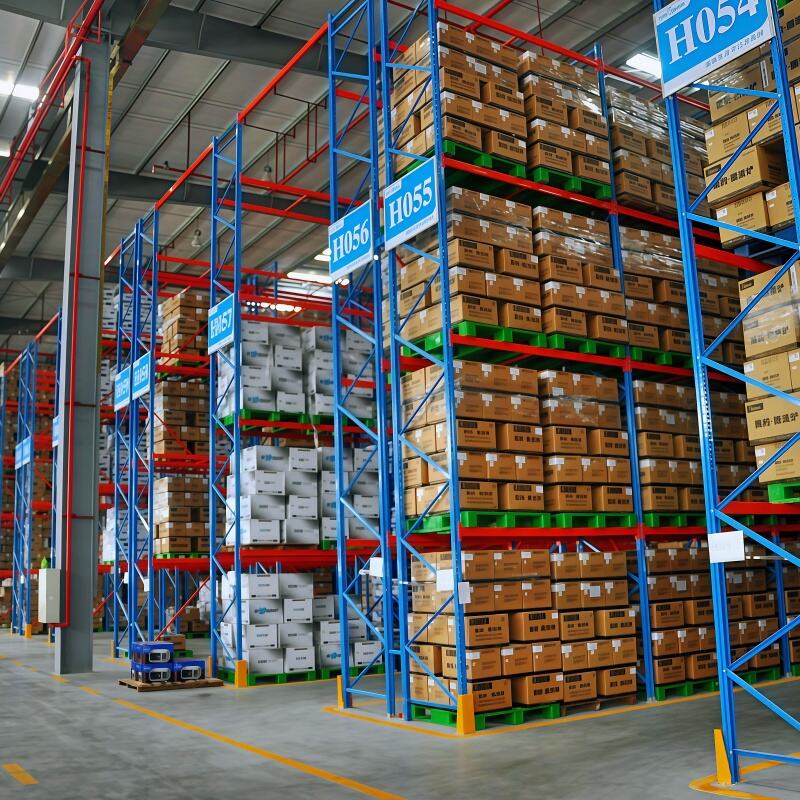
In the fast-evolving landscape of supply chain management and industrial logistics, warehouse racks have become far more than a simple storage solution. They are the structural backbone of every high-functioning distribution center, manufacturing plant, and retail fulfillment hub. As product volumes grow and operational timelines shrink, the physical organization of inventory directly influences a facility's throughput, safety record, and bottom line. Without properly engineered warehouse racks, even the most sophisticated warehouse management software cannot compensate for chaotic, inefficient floor layouts.
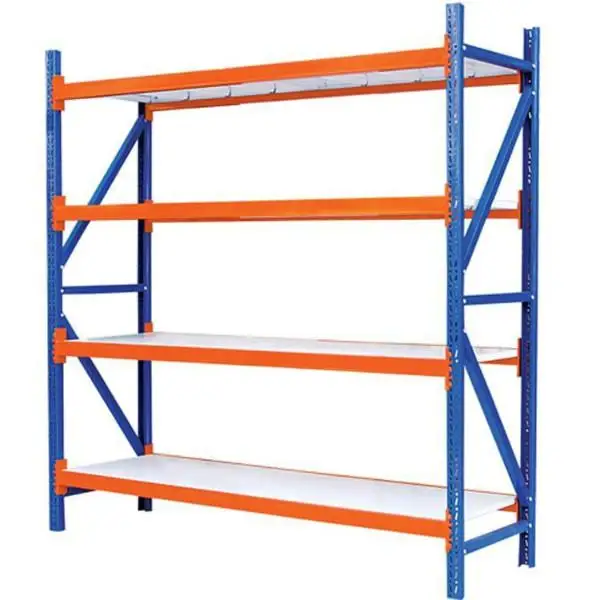
The growing emphasis on vertical space utilization, inventory accuracy, and worker safety has elevated warehouse racks to a mission-critical asset in modern storage strategy. Whether a facility handles automotive spare parts, consumer electronics, food and beverage products, or industrial components, the right racking configuration determines how efficiently the entire operation runs. This article explores the compelling reasons why warehouse racks are absolutely essential for today's storage facilities — and why investing in the right system pays dividends across every dimension of warehouse performance.
The Role of Warehouse Racks in Maximizing Storage Capacity
Vertical Space Utilization as a Competitive Advantage
Floor space in a modern facility is expensive, and acquiring additional square footage is rarely a practical short-term solution. Warehouse racks solve this constraint by enabling facilities to exploit vertical height — transforming underutilized airspace into productive storage zones. A well-designed racking system can multiply effective storage capacity two to five times compared to floor-level stacking alone. This vertical expansion is what makes warehouse racks one of the highest-return infrastructure investments a storage facility can make.
Industrial facilities dealing with high SKU counts and fast inventory turnover benefit particularly from tall racking configurations paired with appropriate material handling equipment. When warehouse racks are engineered to interface with reach trucks, order pickers, or automated guided vehicles, the vertical dimension becomes fully accessible. The result is a dramatically denser, more organized storage environment without the cost or disruption of facility expansion.
Beyond raw capacity, vertical racking also supports cleaner floor layouts. Wider aisles can be maintained for pedestrian safety and equipment navigation, while storage density remains high. This balance between accessibility and space efficiency is a core reason why modern storage facilities prioritize warehouse racks in their infrastructure planning.
Longspan and Medium-Duty Racking for Diverse Product Profiles
Not all stored products are uniform in size, weight, or handling requirements. warehouse racks in medium-duty and longspan configurations are specifically designed to accommodate bulky, awkwardly shaped, or mixed-category inventory that does not fit neatly into standard pallet systems. Automotive spare parts, for example, come in highly varied dimensions and require accessible, structured storage that allows workers to identify and retrieve items without disrupting surrounding stock.
Longspan shelving systems extend shelf lengths to accommodate larger items while maintaining structural integrity under substantial loads. Medium-duty warehouse racks bridge the gap between light retail shelving and heavy pallet racking, providing a practical solution for facilities managing mixed inventory weight classes. This flexibility in configuration is a key reason why warehouse racks are indispensable across industries ranging from manufacturing to e-commerce fulfillment.
The ability to modularly adjust beam heights, shelf depths, and load capacities means that warehouse racks can evolve alongside changing inventory profiles. As product lines shift or storage demands increase, racking systems can be reconfigured rather than replaced — a significant operational and financial advantage that underscores their essential status in modern facilities.
Warehouse Racks as a Foundation for Operational Efficiency
Inventory Organization and Faster Order Fulfillment
Operational efficiency in a warehouse hinges on how quickly and accurately workers can locate, retrieve, and dispatch inventory. Warehouse racks impose logical structure on storage zones, enabling systematic product placement that aligns with picking sequences, velocity categories, or product families. This organized approach eliminates the time wasted searching for items in disorganized stacks and reduces error rates during order fulfillment.
Facilities that integrate warehouse racks with barcode labeling or RFID systems gain an even greater efficiency advantage. Each rack bay becomes a precisely defined location in the warehouse management system, enabling digital inventory visibility down to the individual shelf level. This granularity supports faster receiving, cycle counting, and replenishment — all of which directly reduce labor hours per order processed.
In high-volume distribution environments, the difference between a racked and an un-racked facility can be measured in hours of labor per day. Warehouse racks that support first-in, first-out (FIFO) or last-in, first-out (LIFO) inventory rotation strategies give facilities direct control over product freshness and expiration compliance — a critical operational requirement in food, pharmaceutical, and chemical storage.
Supporting Workflow Design and Zone Differentiation
Modern warehouses are not simply rooms full of shelves. They are engineered workflow environments where different zones serve distinct functions: receiving, quality control, bulk storage, pick zones, packing, and dispatch. Warehouse racks define the boundaries and logic of these zones, allowing facility managers to design workflows that minimize travel distances and eliminate operational bottlenecks.
By positioning the right types of warehouse racks in each zone — whether drive-in racks for bulk reserve areas, medium-duty shelving for pick stations, or longspan configurations for oversized components — operations managers can align physical infrastructure with process design. The result is a facility where workers move purposefully through a logical sequence rather than navigating unpredictable inventory arrangements.
This zone-based approach, made possible by structured warehouse racks, also simplifies staff training and reduces reliance on individual worker knowledge. When storage locations are fixed, labeled, and visually consistent, new employees reach competency faster and experienced workers make fewer errors during high-pressure peak periods.
Safety and Compliance Reasons That Make Warehouse Racks Indispensable
Preventing Structural and Physical Hazards
Unstructured storage — goods stacked on floors, leaning against walls, or balanced precariously — is one of the leading causes of workplace injuries in warehousing environments. Warehouse racks eliminate these hazards by providing stable, load-rated surfaces for every stored item. Industrial metal racking systems are engineered to distribute weight evenly, resist lateral forces from forklift impacts, and maintain structural integrity under the dynamic conditions of a busy facility.
Properly installed warehouse racks are anchored to the floor and, in some configurations, braced to walls or ceiling structures to prevent tipping or collapse. Load capacity labels on each bay ensure that workers and supervisors can maintain safe loading practices without relying on guesswork. This combination of engineering and clear labeling is a fundamental element of occupational health and safety compliance in regulated industries.
Regular inspection protocols for warehouse racks — checking for beam deflection, upright damage, and anchor bolt integrity — are now a standard component of warehouse safety management systems. Facilities that treat their racking infrastructure as a maintained asset rather than a set-and-forget installation consistently achieve better safety outcomes and lower incident rates over time.
Meeting Regulatory and Insurance Requirements
Storage facility operators in most jurisdictions face regulatory obligations regarding racking safety, load ratings, and installation standards. Compliance with these frameworks is not optional — failure to meet racking safety standards can result in facility shutdowns, significant fines, and invalidated insurance coverage. Investing in certified, load-tested warehouse racks is therefore both a legal and financial imperative.
Insurance underwriters increasingly scrutinize the quality and condition of warehouse racks as part of commercial property and liability assessments. Facilities that can demonstrate certified racking systems, documented inspection schedules, and proper load management practices are often rewarded with lower premium rates. In this context, quality warehouse racks are not merely an operational tool — they are a risk management investment.
Beyond external compliance, many large retailers and third-party logistics clients impose their own supplier standards that include racking safety audits as a qualification criterion. Facilities seeking to serve major B2B clients or enter regulated supply chains must be able to demonstrate that their warehouse racks meet recognized safety and quality benchmarks.
The Strategic Value of Warehouse Racks in Modern Facility Design
Supporting Automation and Smart Warehouse Integration
The warehousing industry is undergoing a profound technological transformation, with automation, robotics, and data-driven systems reshaping how storage operations function. Warehouse racks are not peripheral to this transformation — they are the physical framework within which these technologies operate. Automated storage and retrieval systems (AS/RS), for example, depend entirely on precisely engineered racking structures with consistent dimensional tolerances.
Even in facilities that have not yet deployed full automation, warehouse racks serve as the foundation for future scalability. Modular racking systems that are designed to interface with semi-automated conveyor systems, robotic picking arms, or inventory scanning drones represent a strategic infrastructure choice. Facilities that invest in high-quality, dimensionally consistent warehouse racks today are positioning themselves for smoother technology integration tomorrow.
The integration of IoT-enabled sensors within racking bays to monitor weight loads, detect structural stress, and track inventory movement in real time is an emerging capability that leading facilities are already piloting. These smart warehouse racks blur the boundary between physical infrastructure and digital operations — reinforcing their status as a central component of modern storage facility strategy rather than a commodity product.
Long-Term Cost Efficiency and Return on Investment
The initial capital investment in quality warehouse racks is often viewed through a short-term cost lens, but this perspective misses the substantial long-term value these systems deliver. Metal industrial racking systems are designed for decades of service life under normal operating conditions. When properly maintained, they outlast multiple generations of warehouse management software, material handling equipment, and even the products they store.
The return on investment from warehouse racks is realized across multiple dimensions simultaneously: reduced labor costs from faster picking, higher storage density from vertical utilization, lower insurance premiums from improved safety, and avoided facility expansion costs. When these compounding benefits are aggregated over a five to ten-year horizon, the financial case for quality racking infrastructure becomes compelling even in cost-sensitive operations.
Facilities that attempt to defer racking investment often face higher long-term costs through increased workplace incident rates, inventory damage, slower fulfillment times, and eventual emergency replacement of inferior systems. The strategic facilities that recognize warehouse racks as essential infrastructure rather than optional equipment consistently outperform their peers on key performance metrics.
FAQ
What types of warehouse racks are most suitable for storing automotive spare parts?
For automotive spare parts, longspan shelving and medium-duty warehouse racks are typically the most practical choice. These configurations accommodate the wide variety of shapes, sizes, and weights common in automotive parts inventory, while providing accessible storage without requiring pallet-handling equipment. Adjustable beam heights and shelf depths allow facilities to customize each bay for specific part categories, improving retrieval speed and inventory accuracy.
How do warehouse racks contribute to worker safety in a busy distribution center?
Warehouse racks reduce safety risks by eliminating unstable floor stacking, providing clearly defined and load-rated storage locations, and establishing physical boundaries that guide forklift and pedestrian traffic. Properly anchored racking systems resist tipping and collapse, and when combined with regular structural inspections and load management protocols, they significantly reduce the likelihood of inventory falls and equipment collision incidents.
Can warehouse racks be reconfigured as storage needs change over time?
Yes, most industrial warehouse racks — particularly modular metal shelving and pallet racking systems — are designed for reconfiguration. Beam heights can be adjusted, additional bays can be added to existing frames, and entire rack runs can be relocated within a facility. This adaptability makes warehouse racks a long-term infrastructure investment that can evolve alongside changes in product mix, storage volume, and operational workflow without requiring complete system replacement.
What should facility managers look for when selecting warehouse racks for a new storage facility?
Facility managers should evaluate warehouse racks based on load capacity ratings, material quality, dimensional compatibility with existing handling equipment, and compliance with applicable safety standards. The specific product profile — including typical SKU dimensions, weight ranges, and turnover velocity — should guide the selection between pallet racking, longspan shelving, or medium-duty configurations. Sourcing from suppliers who provide certified load testing documentation and technical installation support ensures that the chosen warehouse racks perform safely and reliably over their intended service life.
Table of Contents
- The Role of Warehouse Racks in Maximizing Storage Capacity
- Warehouse Racks as a Foundation for Operational Efficiency
- Safety and Compliance Reasons That Make Warehouse Racks Indispensable
- The Strategic Value of Warehouse Racks in Modern Facility Design
-
FAQ
- What types of warehouse racks are most suitable for storing automotive spare parts?
- How do warehouse racks contribute to worker safety in a busy distribution center?
- Can warehouse racks be reconfigured as storage needs change over time?
- What should facility managers look for when selecting warehouse racks for a new storage facility?