
 EN
EN
When floor space runs out and operational demands continue to grow, businesses face a critical decision: relocate to a larger facility or find a smarter way to use what they already have. A warehouse mezzanine offers a compelling answer to this challenge by transforming underused vertical space into productive, accessible storage or workspace. Rather than committing to the high costs and operational disruption of moving facilities, companies are increasingly turning to mezzanine systems as a cost-effective and scalable solution for capacity expansion.
The popularity of the warehouse mezzanine is not accidental. It reflects a broader shift in how modern distribution centers, manufacturing plants, and retail storage operations think about space utilization. By adding an intermediate floor between the ground level and the ceiling, a warehouse mezzanine can effectively double or even triple usable floor area without expanding the building's footprint. This article explores why the warehouse mezzanine is widely regarded as one of the most practical and efficient tools for expanding storage capacity in industrial and commercial environments.
Understanding the Core Value of a Warehouse Mezzanine
Vertical Space as an Untapped Asset
Most warehouses are built with ceiling heights that far exceed what is occupied by conventional shelving or racking at ground level. This gap between the tops of standard storage units and the ceiling represents enormous wasted potential. A warehouse mezzanine directly addresses this issue by constructing a structural platform that occupies this otherwise idle vertical space. The result is a significant increase in usable square footage without any need for external construction or facility relocation.
The logic behind this approach is straightforward: if a warehouse has a 10-meter ceiling but standard floor-level racking only reaches 3 meters, a mezzanine installed at 4 or 5 meters effectively creates an entirely new storage tier. This makes the warehouse mezzanine not just a storage solution but a genuine space optimization strategy. Businesses can store more product, manage more SKUs, and handle greater inventory volumes without changing their lease or building footprint.
Unlike horizontal expansion, which requires additional land or building extensions, a warehouse mezzanine exploits existing cubic volume. This vertical-first thinking aligns with lean operational principles and is especially valuable in urban or industrial areas where available land is scarce or prohibitively expensive. The mezzanine essentially reclaims space that was always there but never converted into productive use.
The Structural Logic Behind Mezzanine Platforms
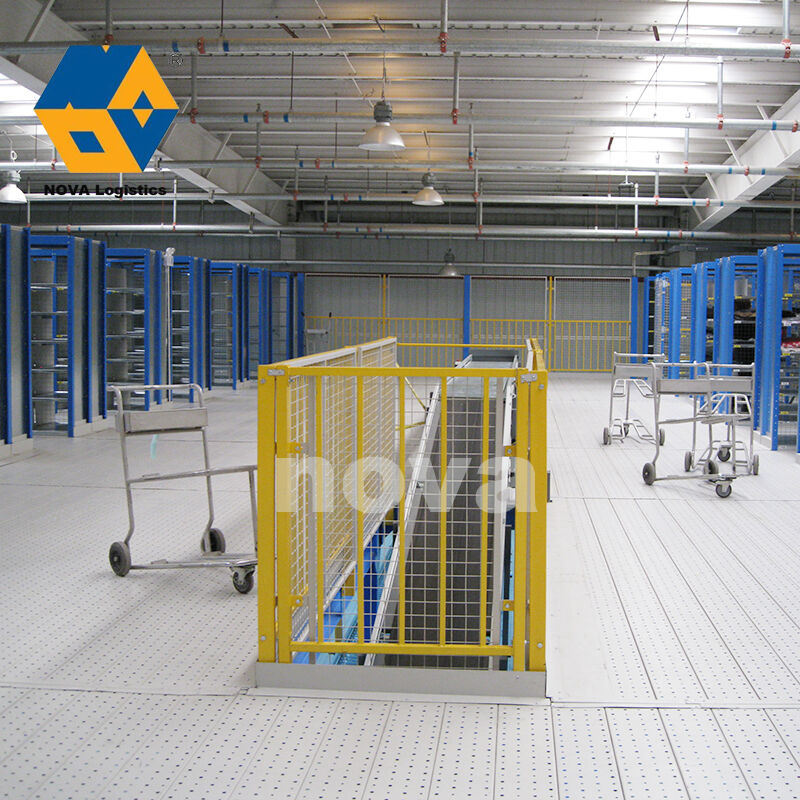
A warehouse mezzanine is engineered as a freestanding or building-integrated elevated platform. Freestanding versions are supported by their own columns and do not transfer significant load to the existing building structure, making them highly adaptable across a range of facility types. The decking is typically made from steel grating, solid plate, or composite materials, depending on the load requirements and the nature of items being stored or processed.
The load-bearing capacity of a warehouse mezzanine can be designed to accommodate heavy palletized goods, dense archive storage, or even light manufacturing equipment. This structural versatility is one reason why the mezzanine is suitable for such a wide variety of industries. Whether the application involves e-commerce fulfillment, pharmaceutical storage, automotive parts distribution, or food production, the engineering parameters of a warehouse mezzanine can be adjusted to match the operational demands.
Access to the mezzanine level is typically provided through integrated staircases, and goods movement is handled via pallet gates, vertical conveyors, or goods lifts. These access solutions are engineered to meet safety and efficiency standards, ensuring that the warehouse mezzanine functions not just as storage space but as a fully operational working level within the facility.
Why a Warehouse Mezzanine Outperforms Alternative Expansion Options
Cost Comparison with Relocation and New Construction
Relocating a warehouse operation is one of the most disruptive and expensive decisions a business can make. The costs associated with a new lease or property purchase, fit-out, equipment relocation, staff transitions, and operational downtime can easily run into millions of dollars. In contrast, installing a warehouse mezzanine represents a fraction of those costs while delivering a comparable increase in usable space. This cost efficiency is one of the primary reasons businesses consistently choose the mezzanine route over facility changes.
New construction or building extensions also carry significant cost burdens, including planning permissions, structural engineering work, groundwork, and extended project timelines. A warehouse mezzanine, by contrast, can often be designed, fabricated, and installed within a matter of weeks. Because the structure is modular and pre-engineered, on-site construction time is minimized, which means warehouse operations can continue with limited disruption during installation. This speed-to-benefit ratio makes the warehouse mezzanine especially attractive for businesses experiencing rapid growth.
From a capital expenditure perspective, the warehouse mezzanine also offers favorable depreciation treatment compared to permanent building investments. In many jurisdictions, mezzanine structures are classified as plant and equipment rather than permanent fixtures, which can provide tax advantages. This financial flexibility adds another layer of value to an already cost-efficient solution.
Operational Continuity and Minimal Disruption
One of the frequently overlooked advantages of a warehouse mezzanine is its ability to be installed while warehouse operations continue. Unlike relocation or major construction, a phased mezzanine installation can be coordinated around active picking, packing, and dispatch workflows. Experienced installation teams work in designated zones, minimizing interference with ongoing logistics activity. This means businesses do not have to absorb lost productivity or delayed order fulfillment during the expansion process.
The modular nature of a warehouse mezzanine also enables future scalability. Sections can be added or reconfigured as the business continues to evolve. If storage needs shift over time, the mezzanine can be adapted to accommodate new racking layouts, altered access points, or expanded floor areas. This adaptability ensures that the initial investment in a warehouse mezzanine continues to deliver returns over the long term, rather than becoming outdated as operational requirements change.
Key Applications That Make a Warehouse Mezzanine Ideal for Storage Expansion
Multi-Tier Racking and Dense Storage Configurations
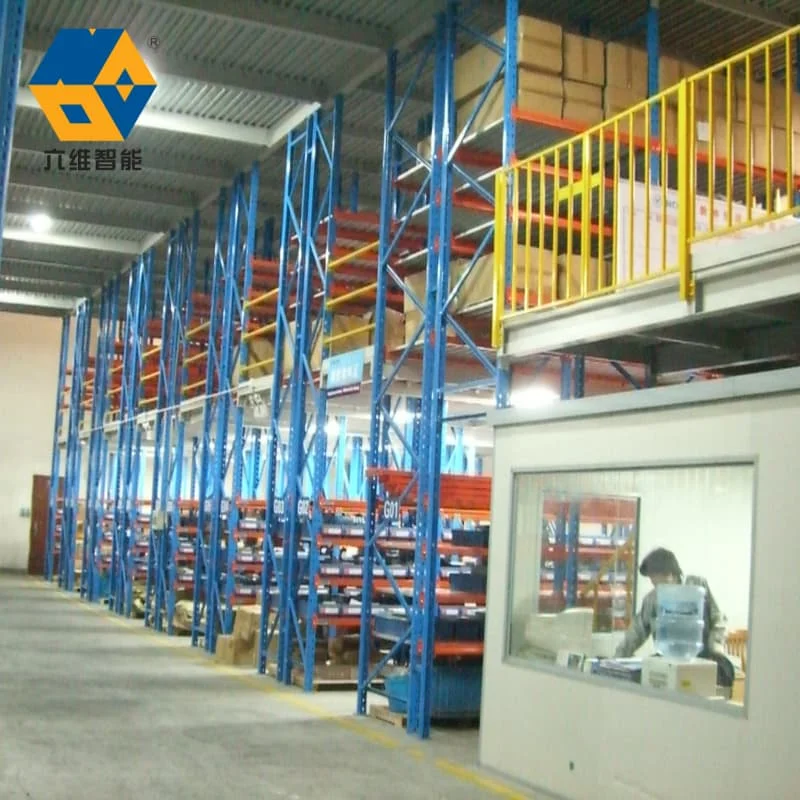
The warehouse mezzanine is particularly well suited to multi-tier racking configurations where products need to be stored in high volumes across multiple levels. By combining a mezzanine platform with shelving or pallet racking on both the ground floor and the mezzanine level, warehouse operators can dramatically increase storage density within the same building envelope. This approach is commonly used in spare parts warehouses, e-commerce fulfillment centers, and pharmaceutical distribution facilities where a large number of individual SKUs must be stored and retrieved efficiently.
Multi-tier warehouse mezzanine systems are engineered so that every level functions as an independent operational floor. Personnel can walk, pick, and transport goods on both levels simultaneously, which improves throughput and reduces congestion. Goods lifts and integrated conveyor systems ensure that products can move vertically between levels without bottlenecks, maintaining the flow efficiency that is essential in high-volume distribution environments.
The ability to stack storage in this way means that a warehouse mezzanine does not simply add storage—it multiplies it. In facilities where ground floor space is fully committed to existing operations, the mezzanine becomes the logical next step before any more disruptive expansion measures are considered. Operators gain new capacity while retaining the full functionality of their existing floor-level infrastructure.
Combining Storage with Workspace on the Mezzanine Level
A warehouse mezzanine does not need to serve exclusively as storage space. Many businesses use the mezzanine level to create additional workspaces such as packing stations, quality control areas, offices, or break rooms. This dual-purpose use of the mezzanine is especially valuable in operations where ground floor space is needed entirely for active storage and picking, while administrative or support functions require their own dedicated area.
By relocating office functions or processing areas to the warehouse mezzanine level, ground floor space can be fully reallocated to storage racking. This reorganization often yields a net gain in storage capacity simply by eliminating space conflicts between storage and non-storage functions. The mezzanine in this context acts as a vertical organizer, separating operational functions by level and optimizing each zone for its specific purpose.
The flexibility to mix storage and workspace on a single warehouse mezzanine platform reflects the adaptability that makes this solution so popular across industries. Whether the mezzanine is used entirely for goods storage, entirely for workspace, or some combination of both, it delivers measurable gains in facility utilization without requiring any expansion of the building itself.
Design and Safety Considerations for Warehouse Mezzanine Systems
Structural Engineering and Load Planning
Designing a warehouse mezzanine correctly requires careful load analysis to ensure that the platform can safely support the intended storage density and personnel traffic. Engineers must calculate the point loads generated by racking systems, the distributed loads from product weight, and the dynamic loads from forklift operations or goods lifting equipment. Getting these calculations right is critical not only for structural safety but also for regulatory compliance, as most industrial jurisdictions require mezzanine structures to meet specific load and safety standards.
Column spacing is another key design variable in a warehouse mezzanine. Wider column spacing increases the clear span beneath the platform, which can be important if forklifts or automated guided vehicles need to pass under the mezzanine without obstruction. Closer column spacing may be acceptable in manual picking environments where pedestrian access is the primary concern. Balancing structural requirements with operational workflow is part of what makes professional mezzanine design both an engineering and an operational planning discipline.
Material selection also plays a role in the performance and longevity of a warehouse mezzanine. Hot-rolled steel sections are commonly used for the primary structure due to their strength and durability. Decking materials vary by application, with open steel grating preferred in environments where drainage or ventilation is important, and solid plate or composite panels used where a stable walking surface is required. Selecting appropriate materials from the outset ensures that the mezzanine meets both safety standards and operational needs over its full service life.
Safety Features and Compliance Requirements
Safety is a non-negotiable aspect of any warehouse mezzanine installation. Handrail systems, edge protection, and anti-slip decking surfaces are standard features that protect personnel working at height. Pallet gates and kick plates at the mezzanine edge prevent materials from falling to the floor below, reducing the risk of injury to workers operating on both levels. Emergency lighting, fire protection integration, and clear egress routes are also mandatory considerations in most jurisdictions.
Compliance with local building codes, workplace safety regulations, and fire safety standards is essential when installing a warehouse mezzanine. Reputable mezzanine suppliers work with certified structural engineers and provide documentation to support planning applications and safety inspections. Businesses should ensure that their mezzanine installation is accompanied by full engineering certification and that all modifications to fire suppression, lighting, and emergency systems are completed before the structure is put into service.
Regular inspection and maintenance of the warehouse mezzanine are equally important. Structural connections, decking integrity, handrail condition, and access point functionality should be reviewed periodically to confirm ongoing compliance and safety. A well-maintained mezzanine not only protects personnel but also preserves the structural investment over the long operational lifespan of the system.
FAQ
What is the typical load capacity of a warehouse mezzanine?
The load capacity of a warehouse mezzanine depends on the specific structural design and engineering calculations for each installation. Standard configurations typically range from 300 to 1,000 kilograms per square meter, but custom designs can exceed this depending on the application. It is essential to work with a qualified structural engineer to determine the correct load specification for your intended use, whether that involves pallet storage, archive materials, or light industrial operations.
How long does it take to install a warehouse mezzanine?
Installation timelines for a warehouse mezzanine vary based on the size and complexity of the structure. Smaller modular systems can be installed within one to two weeks, while larger multi-tier configurations may take three to six weeks. Because the components are pre-fabricated off-site, on-site installation is generally fast and can be phased to minimize disruption to ongoing warehouse operations. Lead times for fabrication should also be factored into project planning.
Can a warehouse mezzanine be relocated or modified after installation?
Yes, one of the significant practical advantages of a freestanding warehouse mezzanine is that it can typically be dismantled, relocated, and reinstalled in a new facility. This makes it a more flexible long-term asset compared to permanent building additions. Modifications such as extending the platform, adding additional access points, or reconfiguring racking layouts are also possible, though any structural changes should be reviewed and certified by a qualified engineer to ensure ongoing compliance and safety.
Is planning permission required to install a warehouse mezzanine?
Planning permission requirements for a warehouse mezzanine vary by location and the specific nature of the installation. In many cases, freestanding mezzanine structures within existing buildings do not require formal planning permission, but they may need to comply with building regulations and fire safety codes. It is always advisable to consult with local authorities and a professional mezzanine supplier before proceeding, as compliance requirements differ across regions and facility types. Proper documentation and engineering certification should be obtained regardless of whether formal planning approval is required.