Automated Parts Storage and Retrieval Systems: Advanced Solutions for Efficient Inventory Management

All Categories

Get a Free Quote

Our representative will contact you soon.
Email
Name
Company Name
Message
0/1000

automated parts storage and retrieval

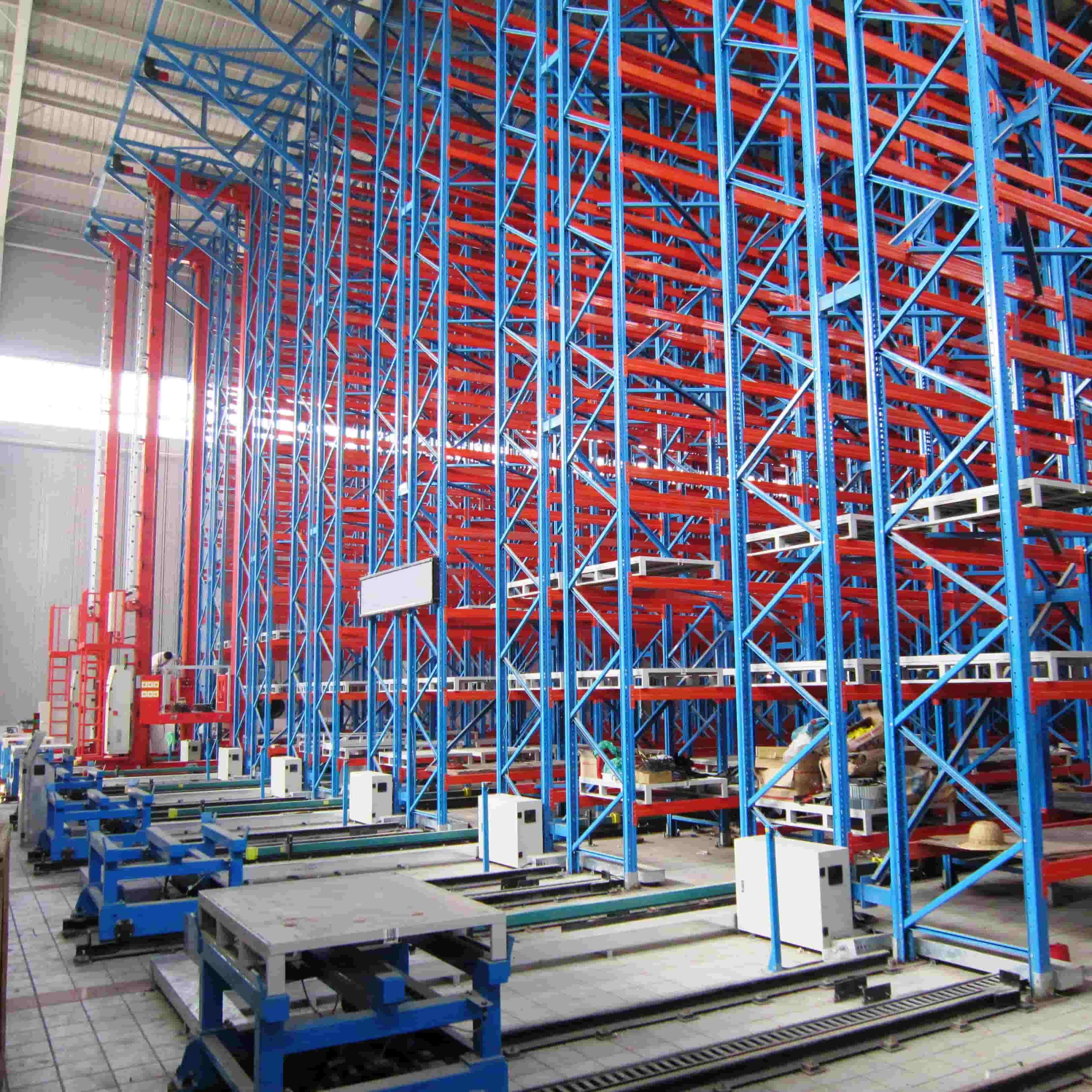
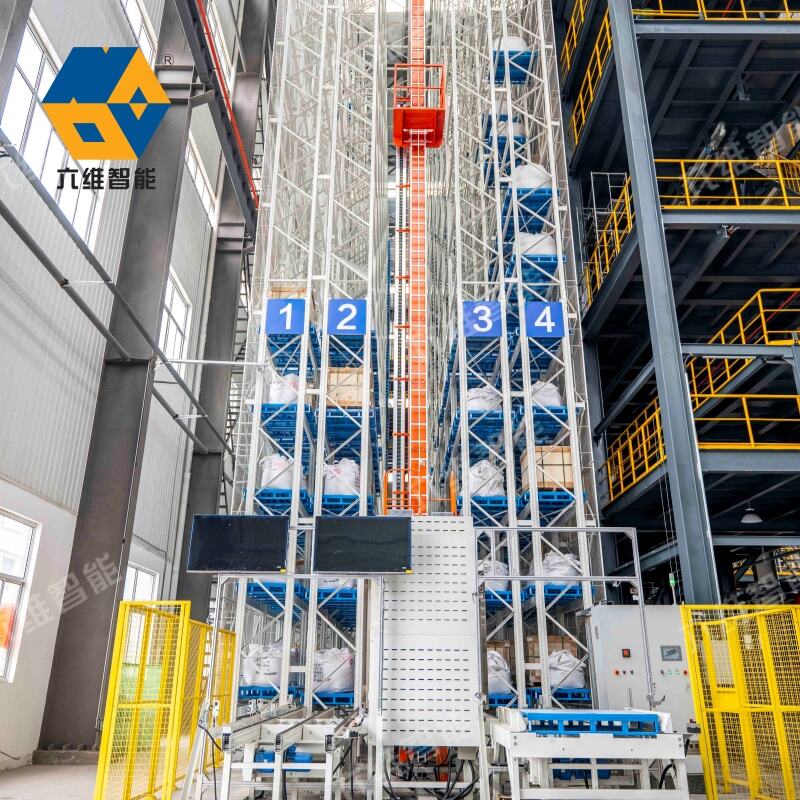
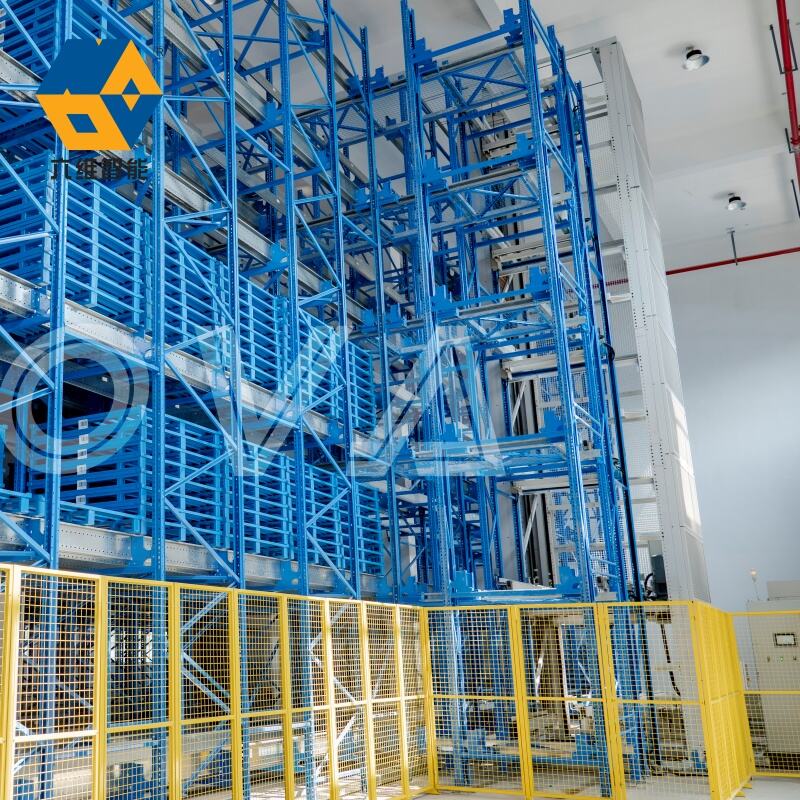
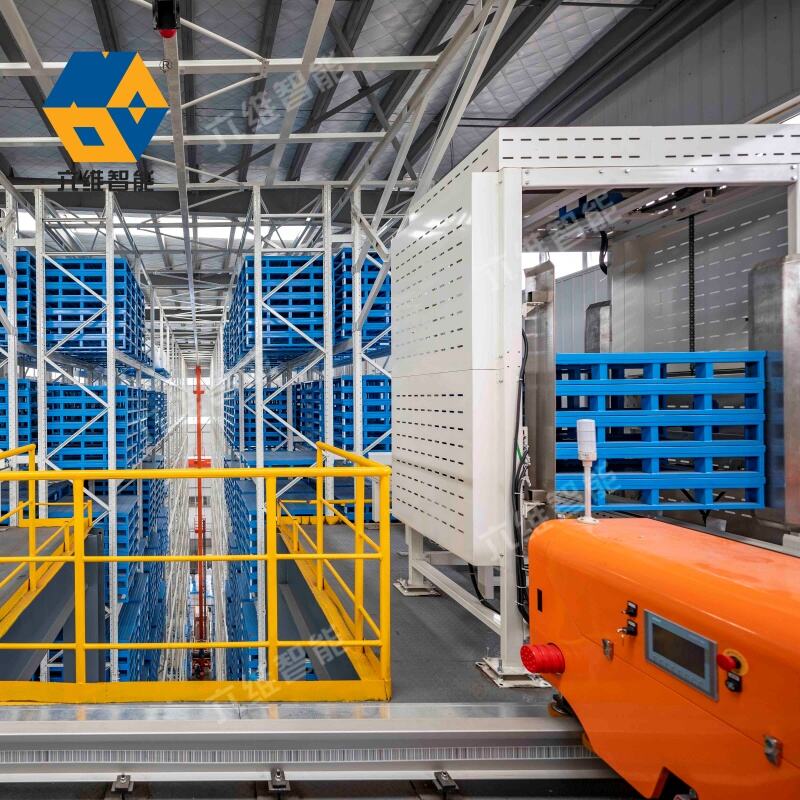
Automated parts storage and retrieval systems represent a revolutionary approach to warehouse management and inventory control in modern manufacturing and distribution facilities. These sophisticated systems utilize advanced robotics, computerized controls, and intelligent software to store, organize, and retrieve components with minimal human intervention. The primary function of automated parts storage and retrieval is to maximize storage density while significantly reducing the time required to locate and access specific items. By implementing vertical storage solutions and optimized space utilization algorithms, these systems can store exponentially more parts in a smaller footprint compared to traditional shelving methods. The technological features include robotic arms, conveyor systems, automated guided vehicles, and sophisticated warehouse management software that tracks every item's location in real-time. Sensors and cameras work together to ensure precise positioning and inventory accuracy. The system integrates seamlessly with enterprise resource planning software, enabling automatic reordering when stock levels reach predetermined thresholds. Applications span across numerous industries including automotive manufacturing, aerospace engineering, electronics assembly, pharmaceutical production, and e-commerce distribution centers. In automotive facilities, automated parts storage and retrieval systems manage thousands of components required for vehicle assembly lines. Aerospace companies use these systems to maintain strict traceability requirements for critical aircraft parts. Electronics manufacturers benefit from the systems' ability to handle small, delicate components with precision. The pharmaceutical industry relies on these solutions to maintain proper storage conditions and batch tracking for regulatory compliance. Modern automated parts storage and retrieval solutions feature modular designs that allow businesses to scale their storage capacity as operations grow. The systems can operate continuously, providing twenty-four-hour access to inventory without fatigue or errors. Advanced versions incorporate artificial intelligence to predict demand patterns and position frequently accessed items in optimal retrieval locations, further enhancing operational efficiency and throughput rates throughout the facility.

New Products

Businesses implementing automated parts storage and retrieval systems experience dramatic improvements in operational efficiency that directly impact their bottom line. The most immediate benefit comes from space savings, as these systems utilize vertical space that typically goes unused in conventional warehouses. Companies often reclaim up to seventy percent of their floor space, which can be repurposed for production expansion or eliminated to reduce real estate costs. Labor costs decrease substantially because fewer workers are needed to manage inventory operations. Instead of employees spending hours searching for parts or traveling through massive warehouse facilities, the system delivers requested items directly to an ergonomic workstation within seconds. This transformation allows staff to focus on value-adding activities rather than repetitive retrieval tasks. Accuracy rates improve dramatically with automated parts storage and retrieval, typically exceeding ninety-nine percent compared to manual picking accuracy of eighty to ninety-five percent. This precision eliminates costly shipping errors, reduces customer complaints, and minimizes the expense of processing returns. Inventory visibility becomes crystal clear as the system maintains real-time data on every item's quantity and location. Management can access comprehensive reports showing inventory levels, movement patterns, and usage trends, enabling data-driven decisions about purchasing and stocking strategies. The systems enhance workplace safety by reducing the need for workers to climb ladders, operate forklifts, or manually handle heavy items. Fewer physical interactions with inventory mean fewer opportunities for workplace injuries, lowering insurance premiums and workers' compensation claims. Speed represents another compelling advantage, as automated parts storage and retrieval systems can locate and deliver items in a fraction of the time required for manual retrieval. This rapid access keeps production lines running smoothly without delays caused by parts shortages. During peak seasons, the system maintains consistent performance levels without requiring overtime or temporary staff. Security improves because controlled access prevents unauthorized removal of valuable components, and the system maintains detailed logs of every transaction. Environmental benefits emerge through reduced energy consumption in climate-controlled facilities, as the compact footprint requires less heating and cooling. The systems also support lean manufacturing principles by facilitating just-in-time inventory practices that minimize excess stock and associated carrying costs. Customer satisfaction increases when orders ship faster and more accurately, building loyalty and generating positive reputation in competitive markets. The return on investment typically occurs within two to four years, after which the ongoing operational savings contribute directly to profitability and competitive advantage in the marketplace.

Practical Tips

Which Pallet Rack Designs Fit Different Warehouse Applications Best?

20

May

Which Pallet Rack Designs Fit Different Warehouse Applications Best?

Selecting the right pallet rack design is one of the most consequential decisions a warehouse manager or logistics planner can make. The wrong configuration leads to wasted vertical space, inefficient picking workflows, and even serious safety risks....
View More
How Does a Rack System Support Better Warehouse Safety Standards?

20

May

How Does a Rack System Support Better Warehouse Safety Standards?

Warehouse safety is a critical operational priority for any facility that handles significant volumes of inventory, equipment, or materials. At the center of most modern warehouse safety strategies is the rack system — a structural solution that orga...
View More
How Does Automation Transform Storage and Retrieval Processes?

05

Feb

How Does Automation Transform Storage and Retrieval Processes?

Modern warehouses and distribution centers are experiencing a revolutionary transformation through advanced technology solutions that streamline operations and maximize efficiency. The implementation of sophisticated automated storage and retrieval s...
View More
Maintenance Tips for Long-Lasting Heavy Duty Pallet Racks

16

Mar

Maintenance Tips for Long-Lasting Heavy Duty Pallet Racks

Industrial warehouses rely heavily on robust storage solutions to maintain efficient operations and maximize space utilization. Heavy duty pallet racks form the backbone of modern warehouse infrastructure, supporting thousands of pounds of inventory ...
View More

Get a Free Quote

Our representative will contact you soon.
Email
Name
Company Name
Message
0/1000

automated parts storage and retrieval

Unmatched Storage Density and Space Optimization

Unmatched Storage Density and Space Optimization

The revolutionary design of automated parts storage and retrieval systems fundamentally transforms how businesses utilize their available facility space. Traditional storage methods leave substantial gaps between shelves for aisle access, consume valuable floor space with wide forklift corridors, and fail to leverage vertical height effectively. In contrast, automated parts storage and retrieval eliminates these inefficiencies through intelligent three-dimensional storage matrices that maximize every cubic foot of warehouse volume. The systems employ narrow aisles measured in inches rather than feet, as robotic retrievers require minimal clearance compared to human operators or material handling equipment. Vertical storage extends upward to ceiling heights of forty feet or more, accessing areas that would be impractical or dangerous for manual operations. This vertical emphasis proves particularly valuable in urban locations where real estate costs are premium and horizontal expansion is impossible. The storage density achieved by automated parts storage and retrieval allows companies to house two to five times more inventory in the same building envelope compared to conventional methods. For growing businesses, this capacity increase delays or eliminates the need for costly facility expansions or secondary warehouse locations. The financial implications extend beyond construction savings to include reduced property taxes, lower utility bills for heating and cooling smaller areas, and decreased maintenance expenses. The modular nature of modern automated parts storage and retrieval means companies can start with configurations matching current needs and add storage modules incrementally as inventory requirements grow. This scalability protects the initial investment while providing flexibility for future business evolution. The systems accommodate diverse part sizes and weights through adjustable storage bin configurations, handling everything from tiny electronic components to bulky automotive assemblies within the same structure. Intelligent software optimizes storage locations based on item dimensions, weight distribution, and retrieval frequency, ensuring structural stability while maximizing capacity utilization. Fast-moving items are positioned in easily accessible locations, while slower-turning inventory occupies less convenient positions, creating an inherently efficient organization system. The space reclaimed through automated parts storage and retrieval implementation provides companies with strategic options: expanding production capacity without relocating, adding new product lines within existing facilities, or downsizing to smaller premises and reducing overhead costs. This flexibility delivers competitive advantages in dynamic markets where adaptability determines success.
Lightning-Fast Retrieval Speed and Operational Throughput

Lightning-Fast Retrieval Speed and Operational Throughput

The operational tempo of automated parts storage and retrieval systems surpasses manual processes by orders of magnitude, creating transformative impacts on production efficiency and customer service capabilities. Traditional retrieval methods involve workers receiving pick lists, traveling to storage locations, searching for specific items, and transporting them to packaging or assembly areas. This process typically requires five to fifteen minutes per item, depending on warehouse size and organization quality. Automated parts storage and retrieval compresses this timeline to thirty seconds or less for most retrievals, representing a tenfold to thirtyfold improvement in speed. The system receives electronic requests from warehouse management software, instantly locates the required item using its comprehensive database, dispatches the nearest available retrieval mechanism, and delivers the part to a designated workstation without human intervention. Multiple retrievals occur simultaneously as different robotic units operate independently within the storage matrix, creating throughput capabilities impossible with manual methods. During peak operational periods, an automated parts storage and retrieval can process hundreds of transactions per hour from a single access point, with performance remaining consistent regardless of shift length or time of day. This reliability eliminates bottlenecks that plague manual operations during high-volume periods, seasonal rushes, or staff shortages. Manufacturing operations benefit enormously from this speed as production lines receive required components precisely when needed, eliminating costly downtime caused by parts unavailability. Just-in-time manufacturing philosophies become practical realities rather than aspirational goals when automated parts storage and retrieval provides predictable, rapid component access. Order fulfillment operations ship products faster, often enabling same-day processing for orders received before cutoff times. This quick turnaround creates competitive differentiation in markets where delivery speed influences purchasing decisions. The velocity advantage compounds throughout business processes: purchasing departments receive accurate stock information instantly for reordering decisions, quality control teams quickly access samples for inspection, and engineering departments retrieve prototypes for testing without delays. The time savings extend to inventory counting, as automated parts storage and retrieval systems conduct cycle counts automatically during normal operations without disrupting workflow. This continuous verification maintains inventory accuracy without dedicating staff to periodic physical counts that interrupt productive activities. The speed benefits translate directly into labor cost reductions, as fewer personnel accomplish more work in less time, improving per-unit handling costs and overall operational profitability while maintaining superior service levels that strengthen customer relationships and market position.
Enhanced Accuracy and Complete Inventory Traceability

Enhanced Accuracy and Complete Inventory Traceability

Automated parts storage and retrieval systems deliver unprecedented accuracy levels that fundamentally improve inventory management and operational reliability across organizations. Human error represents an inevitable factor in manual storage operations, with mispicks, miscounts, and location mistakes occurring despite best efforts and training programs. Research indicates manual picking accuracy typically ranges from eighty to ninety-five percent, meaning five to twenty errors per hundred transactions. These mistakes cascade through operations, causing production delays, incorrect shipments, customer dissatisfaction, and costly correction processes. Automated parts storage and retrieval eliminates human error from storage and retrieval transactions, achieving accuracy rates exceeding ninety-nine point nine percent through precise computerized control and verification systems. Barcode scanners, RFID readers, and weight sensors confirm correct item selection before delivery, creating multiple verification checkpoints that catch rare errors before they impact operations. This accuracy proves especially critical in industries with regulatory requirements for component traceability, such as aerospace, medical device manufacturing, and pharmaceutical production. The systems maintain comprehensive transaction logs recording exactly when each item entered storage, its specific location coordinates, who retrieved it, and when it left inventory. This detailed history supports compliance audits, warranty claim investigations, and quality control initiatives requiring complete component genealogy. Batch tracking becomes effortless as automated parts storage and retrieval links specific serial numbers to production runs, enabling rapid identification of affected products if supplier defects emerge. The financial impact of improved accuracy manifests in multiple ways: reduced inventory write-offs from lost or misplaced items, elimination of safety stock maintained to buffer against counting errors, and decreased costs associated with expedited shipping to correct picking mistakes. Customer relationships strengthen when orders consistently arrive complete and correct, building trust and loyalty that translates into repeat business and positive referrals. Internal operations flow smoothly when production teams receive correct components reliably, eliminating frustrating delays and rework caused by wrong parts. The automated parts storage and retrieval system's inventory visibility empowers better business decisions through accurate data about stock levels, turnover rates, and demand patterns. Purchasing departments optimize reorder quantities and timing using reliable information rather than estimates padded for uncertainty. Financial reporting improves as inventory valuations reflect actual on-hand quantities rather than theoretical amounts adjusted for expected discrepancies. The combination of speed, accuracy, and traceability provided by automated parts storage and retrieval creates operational excellence that competitors using manual methods cannot match.


Get a Free Quote

Our representative will contact you soon.
Email
Name
Company Name
Message
0/1000

Get a Free Quote

Our representative will contact you soon.
Email
Name
Company Name
Message
0/1000