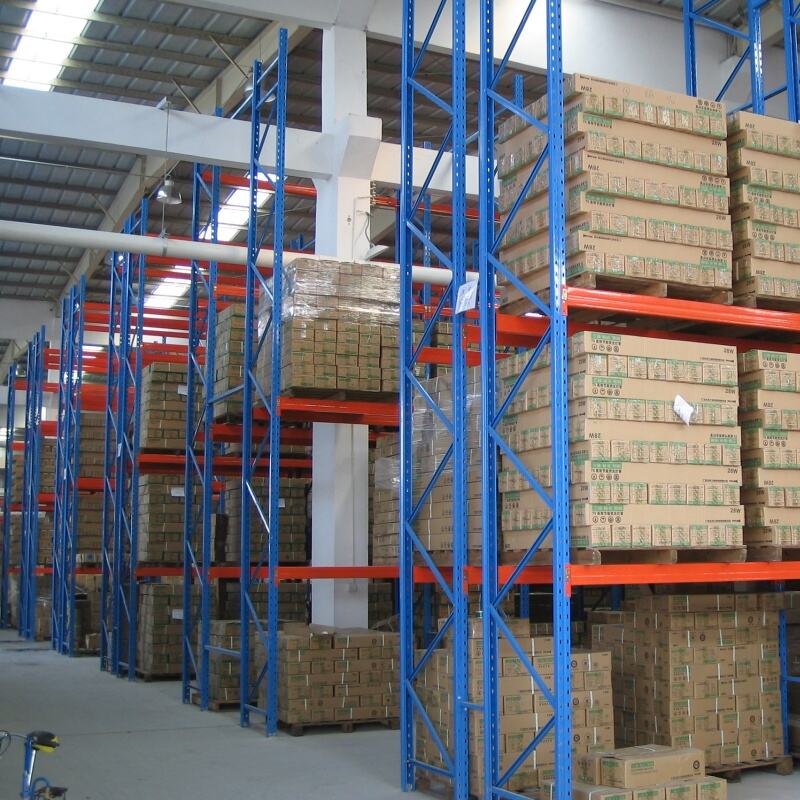
Automated Warehouse Racking Solutions - Maximize Storage Efficiency and Productivity

All Categories

Get a Free Quote

Our representative will contact you soon.
Email
Name
Company Name
Message
0/1000

automated warehouse racking

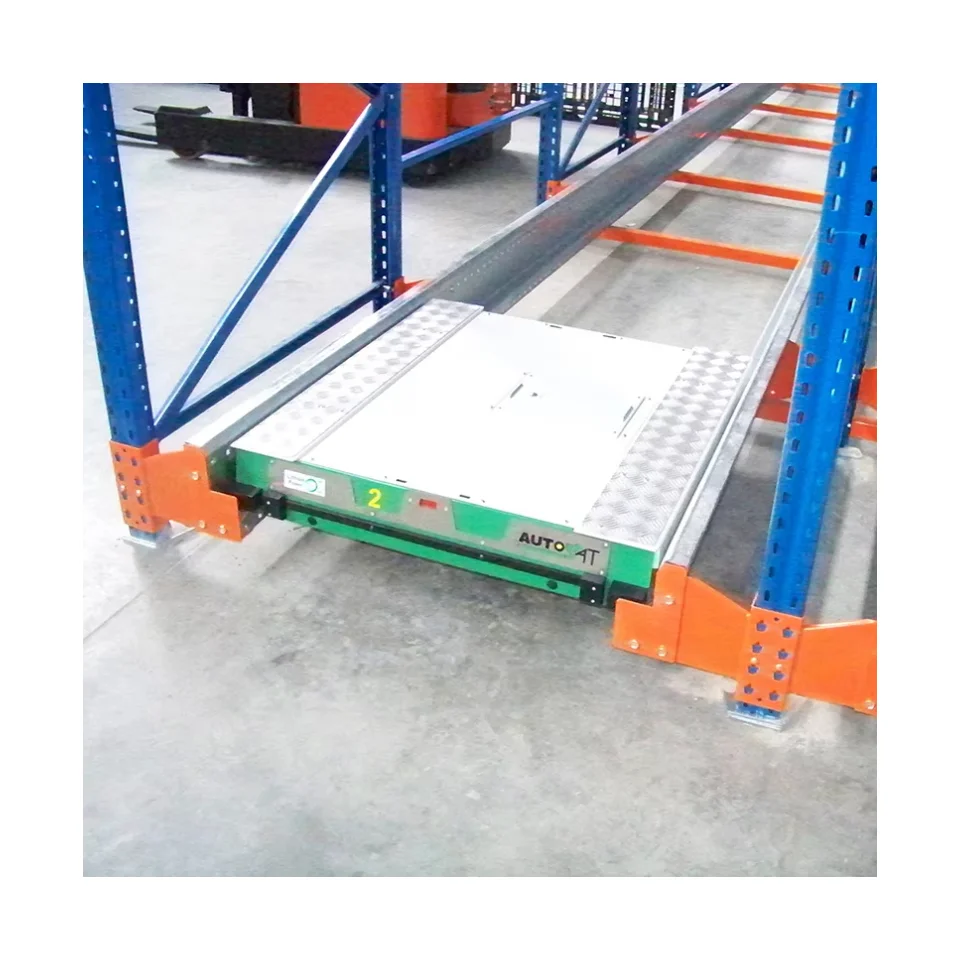
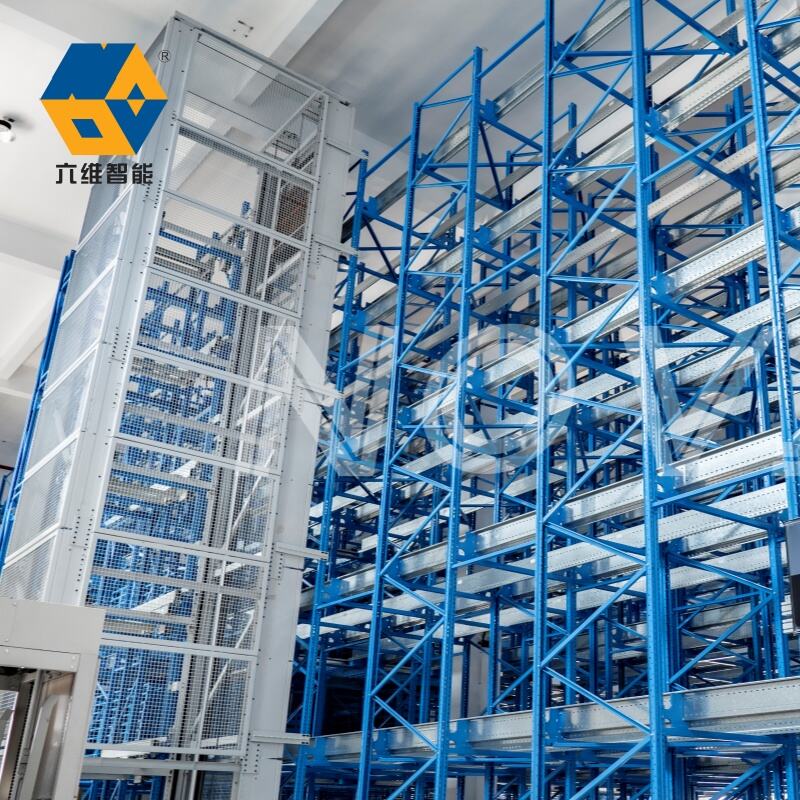
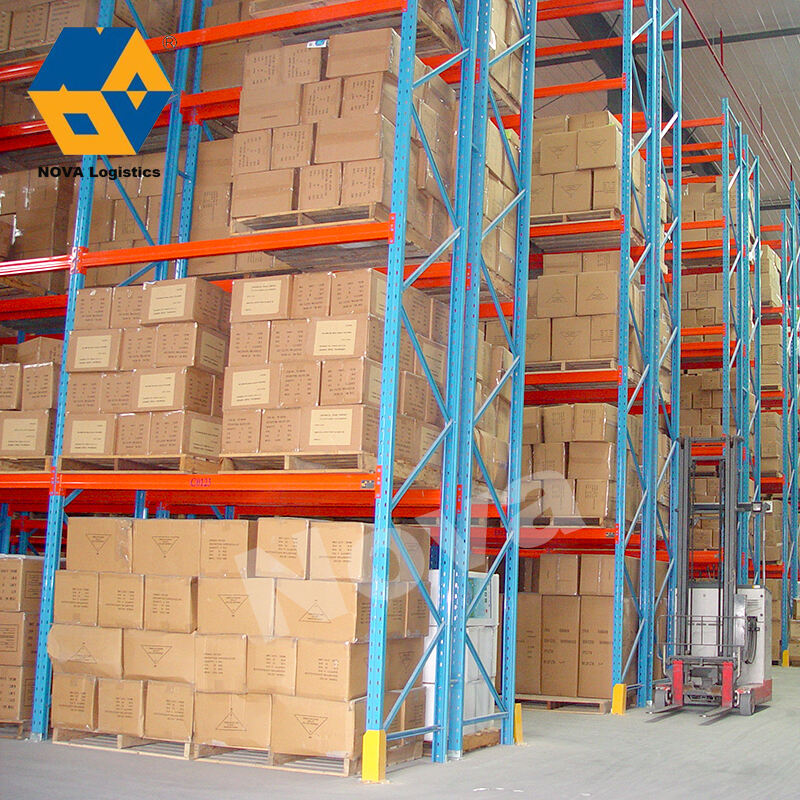
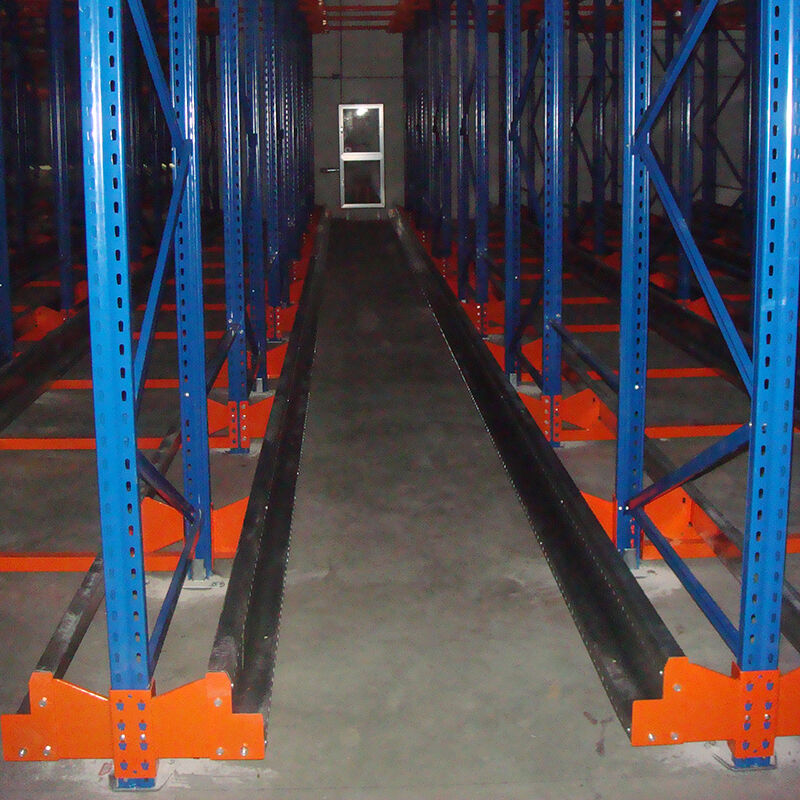
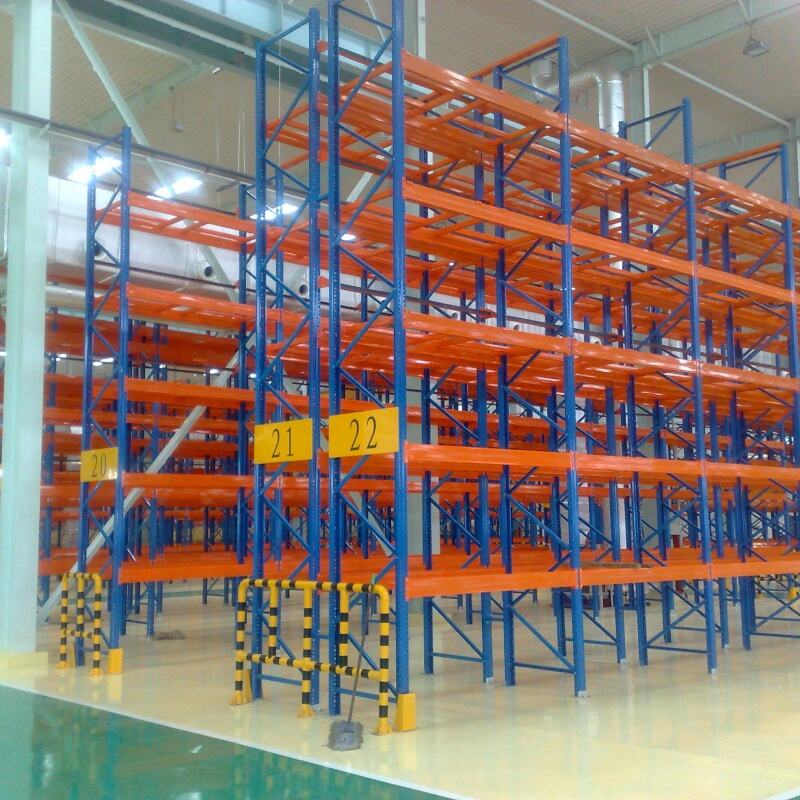
Automated warehouse racking represents a revolutionary advancement in modern storage and logistics management, combining intelligent technology with robust structural engineering to create highly efficient inventory systems. These sophisticated storage solutions integrate automated storage and retrieval systems (AS/RS) with precision-engineered racking structures, enabling businesses to maximize their warehouse space while dramatically improving operational efficiency. The primary functions of automated warehouse racking include high-density storage, rapid product retrieval, real-time inventory tracking, and seamless integration with warehouse management software. By utilizing computer-controlled mechanisms, automated warehouse racking systems can store and retrieve products with minimal human intervention, reducing labor costs and virtually eliminating picking errors. The technological features of these systems are impressive, incorporating advanced sensors, programmable logic controllers, sophisticated software algorithms, and precision mechanical components that work in perfect harmony. Modern automated warehouse racking solutions employ various configurations such as shuttle systems, vertical lift modules, horizontal carousels, and robotic picking mechanisms, each designed to address specific warehousing challenges. These systems can handle diverse product types ranging from small components to large pallets, adapting to different weight capacities and dimensional requirements. The applications of automated warehouse racking span numerous industries including e-commerce fulfillment centers, pharmaceutical distribution, automotive parts storage, food and beverage logistics, manufacturing facilities, and cold storage operations. Companies implementing automated warehouse racking benefit from accelerated order processing times, enhanced inventory accuracy, improved safety standards, and the ability to operate continuously without fatigue-related inefficiencies. The scalability of these systems allows businesses to expand their storage capacity incrementally as their operations grow, making automated warehouse racking a future-proof investment that adapts to changing business needs and market demands.

New Product Releases

Implementing automated warehouse racking delivers substantial practical benefits that directly impact your bottom line and operational capabilities. First, these systems dramatically increase storage density by utilizing vertical space more effectively than traditional shelving methods, often doubling or tripling storage capacity within the same footprint. This space optimization eliminates the need for costly facility expansions, allowing you to accommodate growing inventory without relocating or constructing additional buildings. Second, automated warehouse racking significantly reduces labor expenses by minimizing the workforce required for storage and retrieval operations. Instead of employing numerous workers to manually locate and move products, you can redeploy your team to higher-value activities while the automated system handles repetitive tasks with consistent speed and accuracy. Third, these systems enhance order fulfillment speed, enabling your business to process more orders in less time and meet increasingly demanding customer expectations for rapid delivery. The precision of automated warehouse racking eliminates time wasted searching for products, as the system knows exactly where every item resides and retrieves it within minutes. Fourth, inventory accuracy improves dramatically because the automated system tracks every movement and location change in real-time, reducing discrepancies that plague manual inventory management. This accuracy prevents stockouts, reduces excess inventory carrying costs, and provides reliable data for business planning. Fifth, workplace safety improves substantially since automated warehouse racking reduces the need for workers to operate forklifts, climb ladders, or handle heavy products manually, decreasing accident risks and workers' compensation claims. Sixth, the systems operate reliably around the clock without breaks or shift changes, maximizing productivity during peak periods and maintaining consistent performance regardless of time or day. Seventh, automated warehouse racking protects your products better than conventional storage by controlling environmental conditions, minimizing handling damage, and securing high-value items from theft or loss. Eighth, the detailed operational data these systems generate provides valuable insights into inventory turnover, storage patterns, and workflow efficiency, enabling continuous improvement and informed decision-making. Finally, implementing automated warehouse racking positions your company as a technologically advanced operation, enhancing your reputation with customers and partners while attracting quality employees who value working with modern equipment and systems.

Practical Tips

Which Heavy Duty Rack Configurations Suit Different Industries?

20

May

Which Heavy Duty Rack Configurations Suit Different Industries?

Choosing the right heavy duty rack configuration is one of the most consequential decisions a warehouse manager or operations director can make. The wrong choice leads to wasted floor space, inefficient picking workflows, and safety risks that compou...
View More
What Makes Automated Storage and Retrieval Systems Ideal for Modern Warehouses?

05

Feb

What Makes Automated Storage and Retrieval Systems Ideal for Modern Warehouses?

Modern warehouses face unprecedented challenges in managing inventory efficiently while meeting growing customer demands for faster delivery times. The implementation of an automated storage and retrieval system represents a transformative solution t...
View More
How Can Automated Storage Systems Boost Supply Chain Performance?

05

Feb

How Can Automated Storage Systems Boost Supply Chain Performance?

Modern supply chains face unprecedented challenges in managing inventory, reducing costs, and maintaining operational efficiency. Companies worldwide are turning to advanced warehouse automation technologies to address these growing demands. An autom...
View More
Comparing Heavy Duty Racks with Standard Pallet Rack Systems

16

Mar

Comparing Heavy Duty Racks with Standard Pallet Rack Systems

When it comes to optimizing warehouse storage capacity and operational efficiency, selecting the right pallet racking system becomes a critical decision that impacts both immediate functionality and long-term profitability. The choice between heavy d...
View More

Get a Free Quote

Our representative will contact you soon.
Email
Name
Company Name
Message
0/1000

automated warehouse racking

Maximum Space Utilization Through Intelligent Vertical Storage

Maximum Space Utilization Through Intelligent Vertical Storage

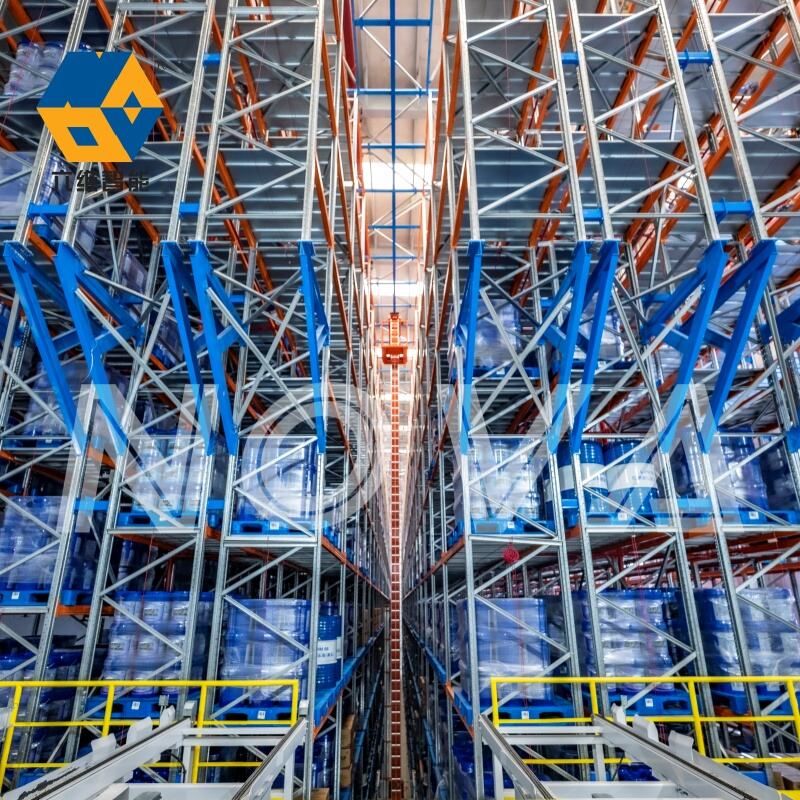
Automated warehouse racking transforms how businesses approach storage capacity by leveraging sophisticated vertical storage strategies that traditional warehousing simply cannot match. Unlike conventional pallet racking that wastes significant overhead space and requires wide aisles for forklift operation, automated warehouse racking systems build upward, often reaching heights of 40 meters or more while maintaining narrow aisle configurations that maximize every cubic meter of your facility. This vertical approach proves particularly valuable for businesses operating in urban areas where real estate costs are prohibitive and expansion options are limited. The intelligent design of automated warehouse racking allows for precise placement of storage locations at varying heights, with computer-controlled retrieval mechanisms accessing any position quickly and safely without human operators needing to climb or maneuver equipment at dangerous elevations. The system density achieves remarkable results, with some installations storing three to five times more products than traditional layouts within identical square footage. This space multiplication effect delivers immediate financial benefits by deferring or eliminating expensive building expansions, reducing rental costs per stored unit, and freeing up warehouse areas for value-added activities like quality control stations, packaging areas, or cross-docking operations. Furthermore, automated warehouse racking accommodates irregular building features that typically create dead zones in conventional warehouses, utilizing spaces under low ceilings, around support columns, or in awkward corners that would otherwise remain empty. The modular nature of these systems means you can configure storage zones for different product categories, segregating fast-moving items in accessible locations while placing slower-turning inventory in deeper storage positions. Environmental control becomes easier with automated warehouse racking because the compact storage footprint requires less climate-controlled space, reducing energy consumption for heating, cooling, and humidity management in temperature-sensitive applications. The structural integrity of modern automated warehouse racking systems supports impressive weight capacities while maintaining stability, engineered to withstand seismic events and operational stresses that would compromise lesser systems, protecting both your inventory investment and facility infrastructure for decades of reliable service.
Enhanced Operational Efficiency Through Intelligent Automation

Enhanced Operational Efficiency Through Intelligent Automation

The operational transformation that automated warehouse racking brings to logistics operations extends far beyond simple mechanization, representing a fundamental shift toward intelligent, data-driven inventory management that responds dynamically to real-time business demands. At the heart of this efficiency revolution lies sophisticated warehouse management software that orchestrates every movement within the automated warehouse racking system, optimizing storage locations based on product velocity, dimensional characteristics, retrieval frequency, and order patterns. This intelligent software continuously analyzes operational data to position frequently accessed items in the most accessible locations while moving slower products to deeper storage, a dynamic slotting strategy that manual operations cannot practically implement. The retrieval speed of automated warehouse racking systems dramatically outperforms human workers, with many configurations capable of completing picks in under two minutes regardless of storage location, compared to the ten or fifteen minutes a worker might require to locate, travel to, and retrieve the same item from a conventional warehouse. This acceleration compounds throughout the workday, enabling facilities to process significantly higher order volumes with the same or smaller physical footprint. The precision of automated warehouse racking eliminates the picking errors that plague manual operations, where workers might select incorrect items, wrong quantities, or damaged products under time pressure or fatigue. By removing human error from the retrieval equation, automated warehouse racking systems achieve accuracy rates exceeding 99.9 percent, virtually eliminating costly returns, customer dissatisfaction, and the labor required to correct mistakes. Integration capabilities represent another crucial efficiency dimension, as modern automated warehouse racking connects seamlessly with enterprise resource planning systems, order management platforms, and shipping software, creating an information flow that synchronizes inventory movements with business transactions in real-time. This integration enables advanced capabilities like wave picking optimization, where the system batches orders strategically to minimize travel distances and maximize throughput, or cross-docking operations where incoming products move directly to outbound shipments without intermediate storage. The continuous operation capability of automated warehouse racking proves invaluable during peak seasons or when serving global markets across multiple time zones, as the systems work tirelessly through nights, weekends, and holidays without performance degradation, overtime costs, or scheduling complications that constrain human workforces.

Superior Product Protection and Quality Assurance

Superior Product Protection and Quality Assurance

Automated warehouse racking delivers exceptional product protection capabilities that safeguard inventory value while maintaining quality standards that manual handling simply cannot guarantee consistently. The controlled environment within automated warehouse racking systems shields products from the multiple damage risks present in conventional warehouses, where forklifts collide with racking, pallets fall from excessive heights, and products suffer contamination from dust, pests, or environmental exposure. Within automated warehouse racking, products remain secure in designated locations, accessed only by precision-controlled mechanisms that handle items gently and consistently according to programmed parameters that account for weight, fragility, and handling requirements. This controlled handling proves particularly crucial for delicate products, pharmaceuticals, electronics, or luxury goods where even minor damage creates significant financial losses. The enclosed nature of many automated warehouse racking configurations creates a clean environment that meets stringent hygiene standards required for food storage, medical supplies, or semiconductor components, with some systems featuring sealed compartments that maintain specific temperature and humidity levels for individual product categories. Security enhancement represents another vital protection dimension, as automated warehouse racking systems restrict physical access to inventory, requiring authorized credentials and creating detailed audit trails of every product movement. This access control virtually eliminates theft, a persistent problem in conventional warehouses where products remain exposed and accountability proves difficult to establish. The structural stability of automated warehouse racking protects against earthquake damage, as properly engineered systems incorporate seismic design features that prevent collapse and product loss during ground motion events that would devastate conventional racking. Fire protection integrates more effectively with automated warehouse racking through coordinated suppression systems, early detection capabilities, and compartmentalization strategies that contain incidents and minimize damage. Product rotation capabilities within automated warehouse racking ensure proper first-in-first-out inventory management for perishable goods, with the system automatically retrieving older stock before newer arrivals, preventing expiration losses that occur when manual workers inadvertently access the most convenient rather than oldest products. Climate monitoring throughout automated warehouse racking enables immediate alerts when temperature or humidity deviations threaten sensitive inventory, allowing corrective action before damage occurs rather than discovering problems during routine inspections after losses have accumulated.

Get a Free Quote

Our representative will contact you soon.
Email
Name
Company Name
Message
0/1000

Get a Free Quote

Our representative will contact you soon.
Email
Name
Company Name
Message
0/1000