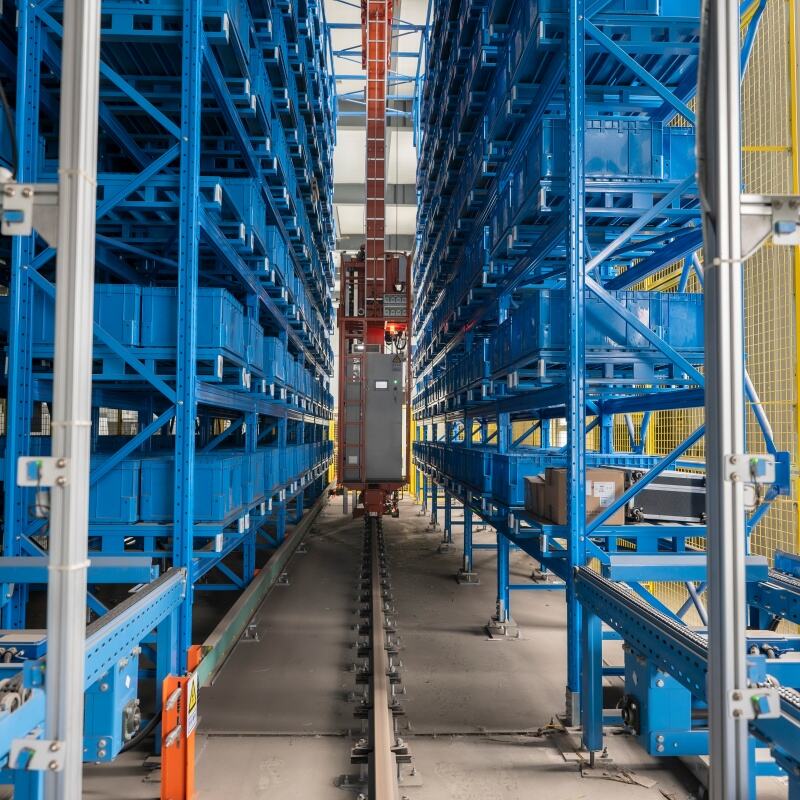
Automatic Warehouse Racking System: Advanced Storage Solutions for Modern Logistics

All Categories

Get a Free Quote

Our representative will contact you soon.
Email
Name
Company Name
Message
0/1000

automatic warehouse racking system

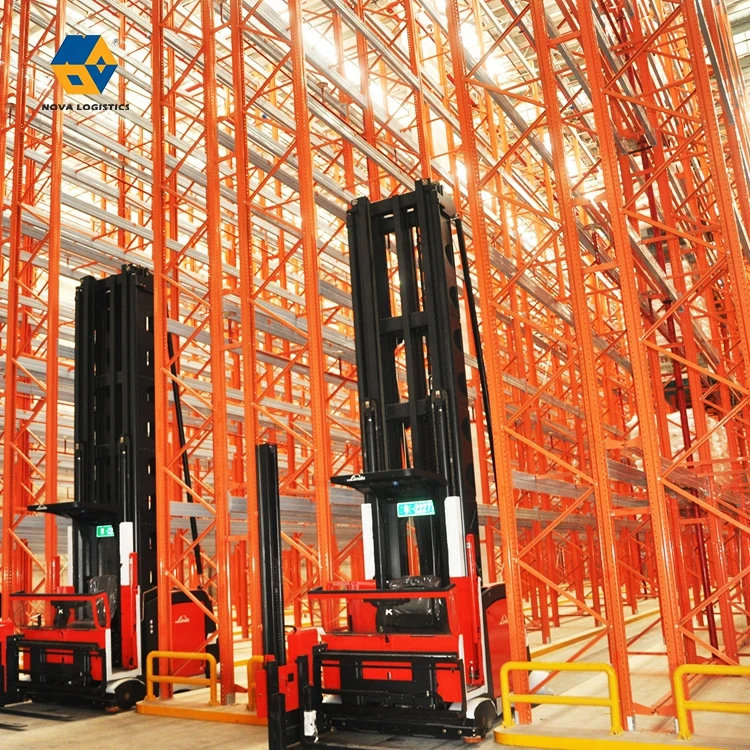
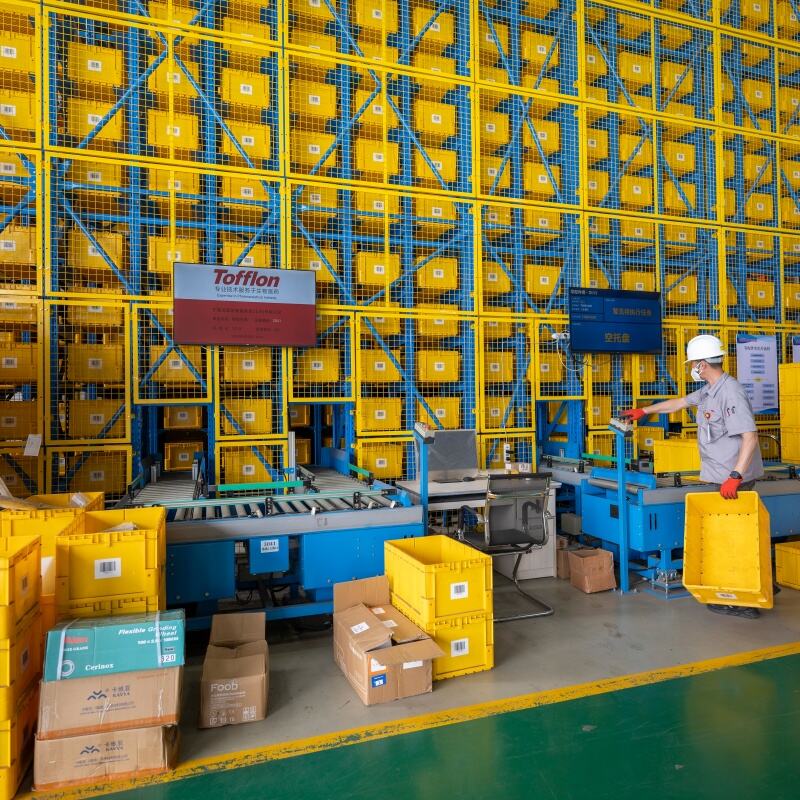
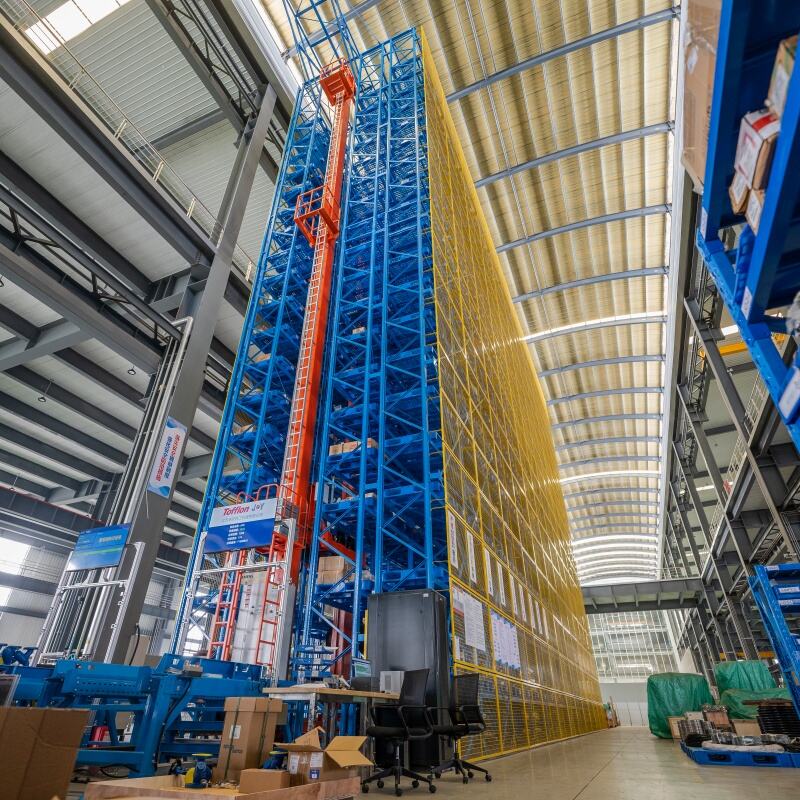
An automatic warehouse racking system represents a sophisticated storage solution that integrates advanced mechanical equipment, intelligent control technology, and precision warehouse management software to create a highly efficient material handling environment. This innovative system transforms traditional warehousing operations by automating the storage and retrieval processes, eliminating manual intervention, and maximizing vertical space utilization. The automatic warehouse racking system consists of several core components including high-rise steel racking structures, automated stacker cranes, conveyor systems, warehouse management software, and safety monitoring devices that work together seamlessly. The main functions of this system encompass automated goods receiving, intelligent inventory allocation, rapid order picking, precise location tracking, and real-time data management. The technological features that distinguish an automatic warehouse racking system include computer-controlled positioning accuracy, variable frequency drive technology for smooth operation, barcode or RFID identification systems for inventory tracking, and integrated safety mechanisms including obstacle detection sensors and emergency stop functions. Modern systems incorporate artificial intelligence algorithms that optimize storage locations based on product characteristics, retrieval frequency, and order patterns. The applications of automatic warehouse racking systems span numerous industries including e-commerce fulfillment centers, automotive parts distribution, pharmaceutical storage facilities, food and beverage warehouses, retail distribution centers, and manufacturing plants requiring just-in-time inventory management. These systems prove particularly valuable in environments demanding high throughput rates, strict inventory accuracy, temperature-controlled storage, or operations running extended hours with minimal staffing. The scalability of an automatic warehouse racking system allows businesses to start with basic configurations and expand capabilities as operational demands grow, making it a future-proof investment for companies committed to operational excellence and competitive advantage in their respective markets.

New Product Releases

Implementing an automatic warehouse racking system delivers transformative benefits that directly impact your bottom line and operational capabilities. First and foremost, these systems dramatically increase storage capacity by utilizing vertical space that traditional warehousing methods leave unused. Buildings equipped with an automatic warehouse racking system can store up to five times more inventory in the same footprint, reducing real estate costs and eliminating the need for facility expansion. The precision and speed of automated operations mean your business can process significantly more orders each day compared to manual methods. Where human workers might retrieve 80 to 100 items hourly, an automatic warehouse racking system can handle 300 to 500 retrieval cycles in the same timeframe, directly increasing your revenue potential and customer satisfaction through faster delivery times. Labor costs represent one of the largest expenses in warehouse operations, and automation reduces this burden substantially. Your facility can operate efficiently with fewer personnel, redirecting human resources to value-added tasks like quality control, customer service, and strategic planning rather than repetitive picking and stacking. The system works continuously without fatigue, breaks, or shift changes, enabling round-the-clock operations that maximize asset utilization. Inventory accuracy improves dramatically with an automatic warehouse racking system because computer-controlled processes eliminate human counting errors, misplaced items, and picking mistakes. This precision means fewer customer complaints, reduced returns, and lower costs associated with inventory discrepancies. The system maintains real-time visibility of every item, its exact location, quantity, and status, empowering management with accurate data for informed decision-making. Safety improvements constitute another significant advantage, as automation removes workers from potentially dangerous situations involving heavy lifting, high-level retrievals, and forklift operations in congested aisles. Workplace injury rates decline substantially, reducing insurance premiums, workers compensation claims, and productivity losses. Energy efficiency represents an often-overlooked benefit, as modern systems incorporate LED lighting that activates only in working zones, optimized heating and cooling in reduced-footprint facilities, and equipment designed for minimal power consumption. The return on investment timeline for an automatic warehouse racking system typically ranges from three to seven years, depending on operation scale and labor market conditions, after which the ongoing savings contribute directly to profitability and competitive pricing advantages in your marketplace.

Latest News

What Makes a Longspan Rack Ideal for Medium- to Heavy-Duty Storage?

13

Jan

What Makes a Longspan Rack Ideal for Medium- to Heavy-Duty Storage?

Modern warehouses and industrial facilities face increasing pressure to optimize storage capacity while maintaining efficient access to inventory. The longspan rack has emerged as a versatile solution that bridges the gap between light-duty shelving ...
View More
Why Do Retail Backrooms Prefer Longspan Racks for Flexible Storage?

13

Jan

Why Do Retail Backrooms Prefer Longspan Racks for Flexible Storage?

Retail backrooms face constant pressure to maximize storage efficiency while maintaining quick access to inventory. Modern retail operations require storage solutions that adapt to changing merchandise sizes, seasonal demands, and evolving product li...
View More
How Does a Warehouse Mezzanine Increase Storage Capacity Efficiently?

13

Jan

How Does a Warehouse Mezzanine Increase Storage Capacity Efficiently?

Modern warehouse operations face mounting pressure to maximize storage capacity without expanding their physical footprint. A warehouse mezzanine represents one of the most effective solutions for increasing storage density while maintaining operatio...
View More
What Are Essential Safety Tips for Installing a Steel Platform?

16

Mar

What Are Essential Safety Tips for Installing a Steel Platform?

Industrial facilities worldwide rely on steel platforms to maximize vertical storage space and improve operational efficiency. These robust structures serve as elevated work areas, storage solutions, and access points in warehouses, manufacturing pla...
View More

Get a Free Quote

Our representative will contact you soon.
Email
Name
Company Name
Message
0/1000

automatic warehouse racking system

Revolutionary Space Optimization Through Vertical Integration

Revolutionary Space Optimization Through Vertical Integration

The space optimization capabilities of an automatic warehouse racking system fundamentally transform how businesses approach facility planning and real estate strategy. Traditional warehouses typically utilize only 25 to 40 percent of available cubic space because manual operations require wide aisles for forklifts, height limitations based on human reach capabilities, and safety clearances that consume valuable storage areas. In contrast, an automatic warehouse racking system engineers every cubic meter for maximum efficiency, with racking structures extending 30 meters or higher and aisle widths narrowed to just slightly wider than the stored pallets themselves. This vertical integration approach allows the same ground-level footprint to accommodate three to five times the inventory volume, delivering immediate financial benefits through deferred facility expansion costs or the ability to consolidate multiple warehouse locations into a single automated facility. The stacker cranes operating within an automatic warehouse racking system navigate narrow aisles with millimeter precision, accessing storage positions at any height with equal speed and accuracy, effectively democratizing every storage location regardless of its vertical position. This capability eliminates the common problem in manual warehouses where prime ground-level locations command premium status while upper positions remain underutilized due to access difficulty. The sophisticated warehouse management software determines optimal storage locations algorithmically, considering factors including product dimensions, weight characteristics, retrieval frequency, and order patterns to maximize throughput efficiency. Fast-moving items might be positioned at mid-height locations to minimize crane travel time, while slower inventory occupies peripheral positions, all managed dynamically as demand patterns shift. The structural engineering behind an automatic warehouse racking system incorporates seismic considerations, load distribution calculations, and material specifications that ensure safety while maximizing density. The building itself often becomes an integral component of the racking structure, with the steel framework supporting both the inventory and the building envelope, further reducing construction costs compared to conventional warehouse buildings. Climate control efficiency improves dramatically in these compact footprints, as heating, cooling, and humidity management systems work within reduced volumes, cutting energy consumption substantially. The space optimization extends beyond mere storage density to include integrated work zones where the automatic warehouse racking system interfaces with value-added services like kitting, packaging, quality inspection, and cross-docking operations, creating a comprehensive material flow ecosystem within a remarkably compact facility.
Unparalleled Operational Accuracy and Inventory Intelligence

Unparalleled Operational Accuracy and Inventory Intelligence

The precision and intelligence embedded within an automatic warehouse racking system elevates inventory management from a periodic counting exercise to a continuous, real-time operational asset that drives strategic business decisions. Every transaction within the system generates data captured instantaneously, creating an unbroken chain of custody and location information for every inventory unit from receiving through storage to final dispatch. This granular visibility eliminates the inventory mysteries that plague manual warehouses, where products disappear into the facility only to be rediscovered months later during physical counts or never found at all. The automatic warehouse racking system employs multiple identification technologies including barcode scanning, RFID tags, and dimensional scanning to verify that the correct item reaches the correct location every time, with validation checkpoints at receiving, putaway, storage, retrieval, and shipping stages. Error rates in automated facilities typically measure below 0.01 percent compared to 1 to 3 percent in manual operations, a difference that translates to thousands of prevented mistakes annually in medium-sized operations. The financial impact extends beyond avoiding shipping wrong items to customers; accurate inventory enables optimized purchasing decisions, prevents stockouts of critical products, identifies slow-moving inventory requiring clearance action, and supports just-in-time manufacturing strategies that minimize working capital tied up in excess inventory. The warehouse management software component of an automatic warehouse racking system incorporates predictive analytics that forecast demand patterns, suggest reorder points, identify seasonal trends, and alert management to anomalies requiring investigation. Integration capabilities allow the system to communicate bidirectionally with enterprise resource planning systems, e-commerce platforms, transportation management solutions, and supplier networks, creating a seamless information flow that supports agile response to market conditions. The traceability features prove invaluable for industries facing regulatory compliance requirements, enabling lot tracking, expiration date management, recall capabilities, and audit trail documentation that manual systems struggle to provide consistently. Quality control processes benefit from the systematic approach of an automatic warehouse racking system, with automated inspection stations, dimensional verification, weight confirmation, and photographic documentation capabilities integrated into the material flow. The intelligence extends to predictive maintenance monitoring of the mechanical systems themselves, with sensors tracking component wear patterns, lubricant conditions, and performance metrics to schedule maintenance proactively before failures occur, maximizing uptime and preventing costly emergency repairs during peak operational periods.
Transformative Labor Dynamics and Workforce Evolution

Transformative Labor Dynamics and Workforce Evolution

The implementation of an automatic warehouse racking system fundamentally reshapes workforce requirements, shifting the labor model from physically demanding repetitive tasks to skilled technical positions that offer enhanced career development opportunities and improved workplace satisfaction. Traditional warehouse operations rely heavily on manual labor for picking, packing, loading, and inventory management, roles characterized by high turnover rates, seasonal staffing challenges, training costs, and physical demands that lead to fatigue-related errors and workplace injuries. The automatic warehouse racking system automates these repetitive functions, reducing the required workforce by 40 to 70 percent while simultaneously creating positions for system operators, maintenance technicians, data analysts, and process engineers who command higher wages but deliver substantially greater value through their specialized expertise. This workforce transformation addresses one of the most pressing challenges facing logistics operations today: the difficulty of recruiting and retaining quality warehouse personnel in tight labor markets. The remaining human workers in an automated facility transition from physically taxing roles to climate-controlled workstations where they monitor system performance, handle exception processing, manage quality control checkpoints, and focus on tasks requiring human judgment and problem-solving capabilities that automation cannot replicate. Employee satisfaction typically increases in automated environments because workers feel they are operating advanced technology rather than serving as human machinery, leading to reduced turnover, lower recruitment costs, and accumulated institutional knowledge that enhances operational efficiency over time. The safety improvements delivered by an automatic warehouse racking system cannot be overstated, as the leading causes of warehouse injuries including falls, being struck by moving equipment, overexertion from lifting, and repetitive motion disorders diminish dramatically when automation assumes these hazardous functions. Workers compensation insurance premiums decrease accordingly, and the intangible benefits of demonstrating corporate commitment to employee wellbeing enhance employer brand reputation in competitive labor markets. Training programs for automated facilities focus on technical competencies, safety protocols, and system optimization rather than basic picking techniques, creating a more engaged and capable workforce. The scalability advantages of an automatic warehouse racking system extend to labor management, as seasonal demand spikes that would require hiring and training dozens of temporary workers in manual facilities can be accommodated by extended operating hours of the automated equipment with minimal additional staffing. This flexibility proves particularly valuable for businesses experiencing rapid growth or seasonal demand variations. The data-driven nature of automated operations provides transparency into productivity metrics, enabling fair performance evaluation and creating opportunities for continuous improvement initiatives where workforce input guides system optimization, fostering a collaborative culture where employees contribute intellectually to operational excellence rather than simply executing repetitive physical tasks.

Get a Free Quote

Our representative will contact you soon.
Email
Name
Company Name
Message
0/1000

Get a Free Quote

Our representative will contact you soon.
Email
Name
Company Name
Message
0/1000