Miniload Crane Systems: Automated Storage Solutions for Efficient Warehouse Operations

All Categories

Get a Free Quote

Our representative will contact you soon.
Email
Name
Company Name
Message
0/1000

miniload crane

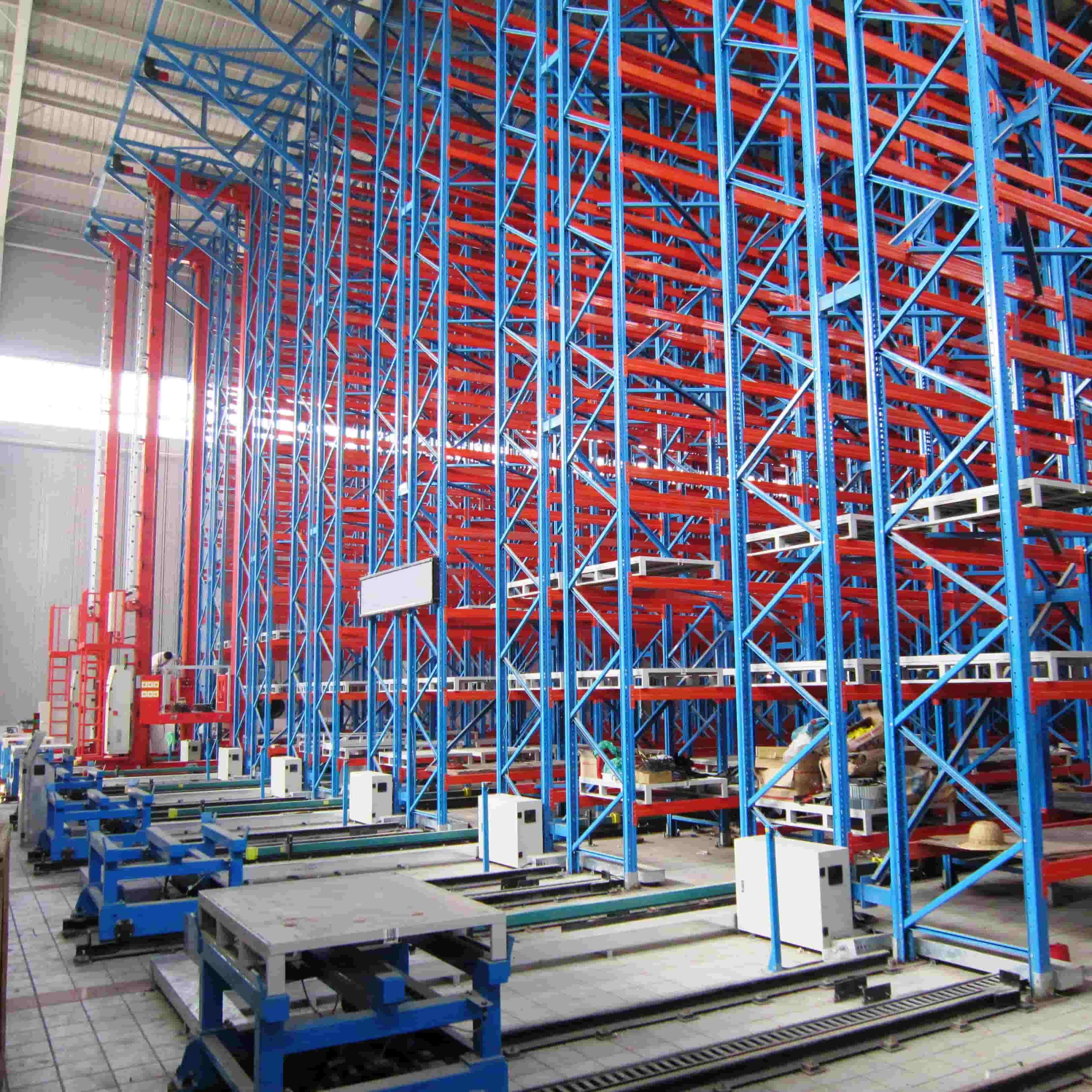
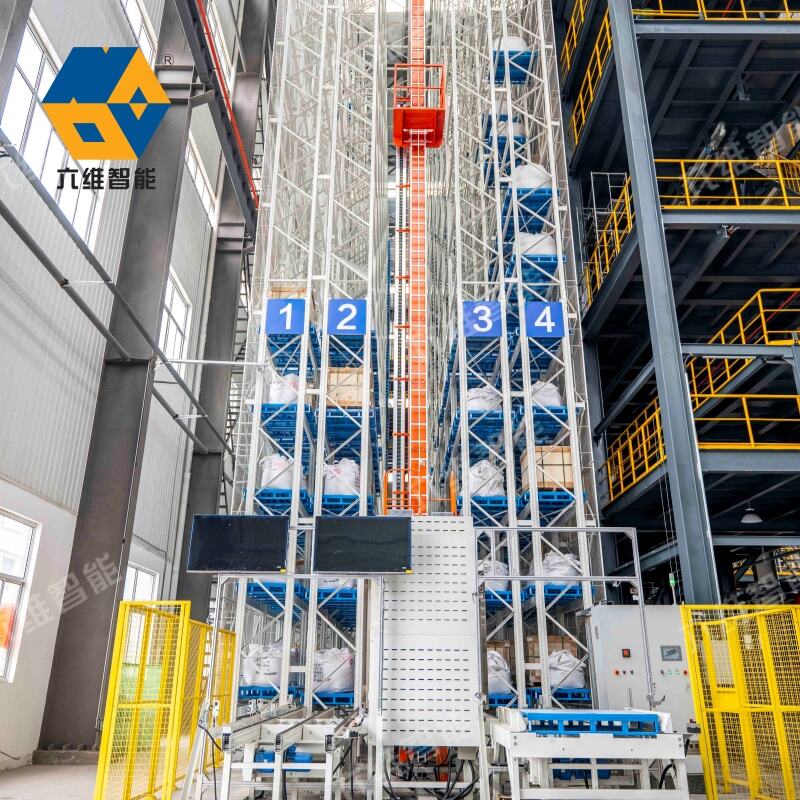
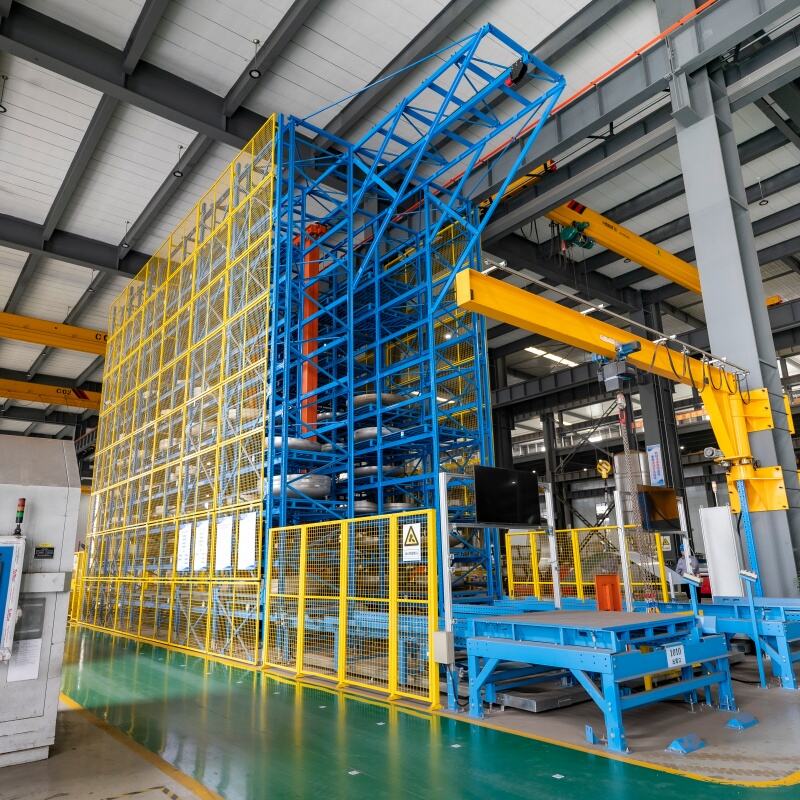
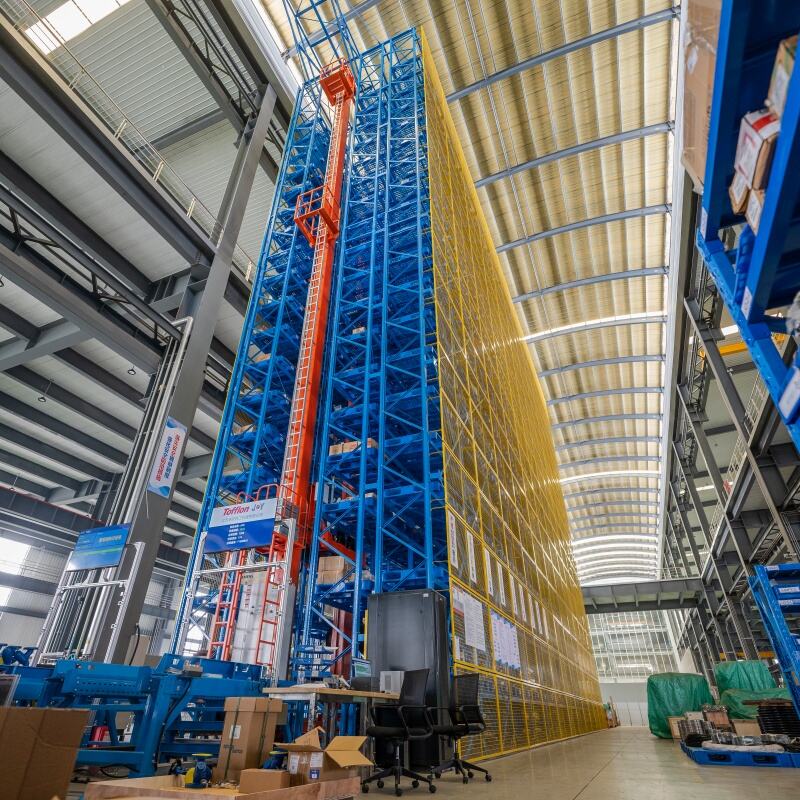
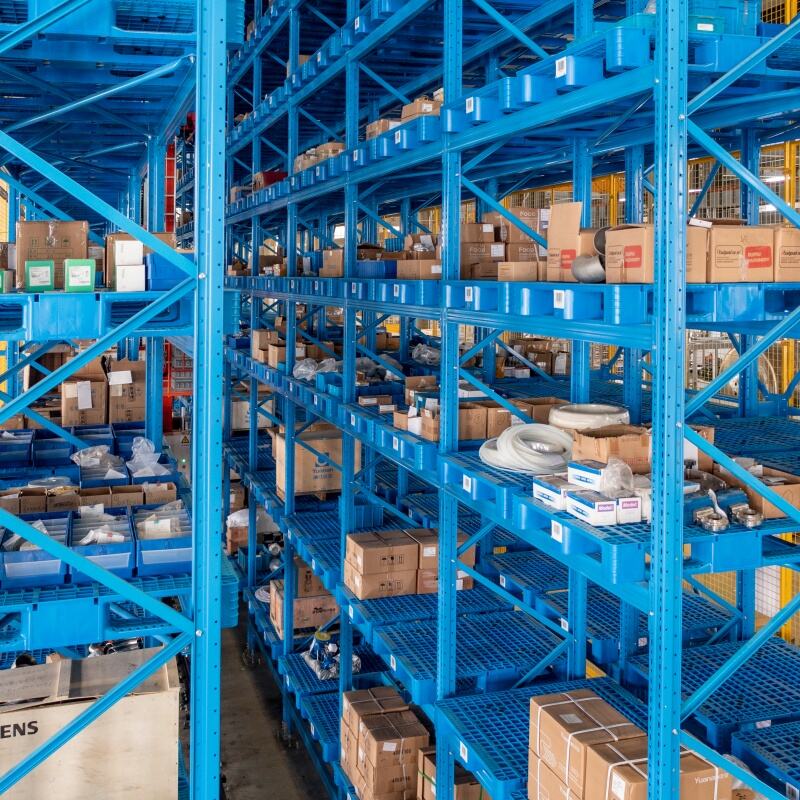
The miniload crane represents a sophisticated automated storage and retrieval system designed specifically for handling small to medium-sized items with exceptional precision and speed. This advanced warehousing solution operates within racking systems to manage containers, totes, and cartons efficiently in distribution centers and manufacturing facilities. The miniload crane functions as an integral component of modern logistics operations, seamlessly integrating with warehouse management systems to optimize inventory control and order fulfillment processes. At its core, the system consists of a stacker crane that moves vertically and horizontally along guided rails between storage racks, retrieving and depositing goods with remarkable accuracy. The technological features of the miniload crane include servo-driven motors that enable smooth acceleration and deceleration, advanced positioning sensors for precise load handling, and intelligent control software that coordinates multiple operations simultaneously. The system typically operates at speeds reaching up to 5 meters per second horizontally and 2 meters per second vertically, significantly outperforming manual picking methods. Load capacities generally range from 50 to 300 kilograms per handling cycle, accommodating various container sizes and weights. The miniload crane finds extensive applications across diverse industries including e-commerce fulfillment centers, pharmaceutical distribution, electronics manufacturing, automotive parts warehousing, and food and beverage logistics. In pharmaceutical environments, the system maintains strict temperature controls and traceability requirements while handling sensitive medical supplies. E-commerce operations benefit from rapid order processing capabilities that meet demanding delivery schedules. Manufacturing facilities utilize miniload cranes for just-in-time component delivery to production lines, reducing inventory holding costs and floor space requirements. The system architecture supports both single-deep and double-deep storage configurations, maximizing cubic space utilization in facilities with limited footprint availability. Modern miniload crane installations incorporate energy-efficient regenerative braking systems that convert kinetic energy back into usable power, reducing operational costs and environmental impact.

New Products

Implementing a miniload crane delivers substantial operational improvements that directly impact your bottom line and competitive position in the marketplace. The automation eliminates manual picking errors that typically cost businesses significant money through wrong shipments and customer dissatisfaction. Your warehouse staff can redirect their efforts from repetitive physical tasks to value-added activities such as quality control and customer service, improving employee satisfaction and retention rates. The system operates continuously for extended periods without fatigue, enabling your facility to process orders around the clock and meet tight delivery windows that manual operations simply cannot achieve. Space efficiency increases dramatically as the miniload crane accesses storage locations at heights up to 20 meters, effectively multiplying your storage capacity without expanding your building footprint or relocating to larger premises. The compact aisle widths required by automated systems, often just slightly wider than the loads themselves, free up valuable floor space compared to traditional forklift operations that need wide maneuvering room. Processing speed improvements are immediately noticeable, with typical installations handling 100 to 250 double cycles per hour, meaning the crane can complete 200 to 500 retrieval and storage movements in sixty minutes. This throughput velocity enables same-day shipping commitments and supports growing order volumes without proportional increases in labor costs. Inventory accuracy reaches near-perfect levels as the system tracks every movement and location change in real-time, eliminating the stock discrepancies that plague manual warehouses and cause expensive inventory adjustments. The miniload crane reduces product damage through gentle handling mechanisms and controlled movement patterns, protecting your valuable inventory from the drops and impacts common in manual handling environments. Safety improvements protect your workforce by removing personnel from high-traffic areas where forklifts and heavy equipment operate, substantially reducing workplace accidents and associated insurance costs. Energy consumption per handled unit decreases compared to conventional equipment, as the miniload crane optimizes travel paths and uses lightweight construction requiring less power for movement. The system scales easily as your business grows, allowing you to add storage capacity, increase crane speed, or install additional units without completely redesigning your warehouse layout. Maintenance requirements remain manageable with predictive monitoring systems that alert you to potential issues before they cause breakdowns, ensuring consistent uptime and reliable order fulfillment. Return on investment typically occurs within three to five years through combined savings in labor, space, accuracy improvements, and increased processing capacity that supports revenue growth without proportional cost increases.

Practical Tips

How Do You Choose the Right Longspan Rack for Changing Inventory Types?

13

Jan

How Do You Choose the Right Longspan Rack for Changing Inventory Types?

Modern warehouses face constant challenges in adapting their storage systems to accommodate varying inventory types and fluctuating stock levels. A longspan rack system offers the versatility and adaptability needed to handle these dynamic requiremen...
View More
How Does Automation Transform Storage and Retrieval Processes?

05

Feb

How Does Automation Transform Storage and Retrieval Processes?

Modern warehouses and distribution centers are experiencing a revolutionary transformation through advanced technology solutions that streamline operations and maximize efficiency. The implementation of sophisticated automated storage and retrieval s...
View More
Comparing Heavy Duty Racks with Standard Pallet Rack Systems

16

Mar

Comparing Heavy Duty Racks with Standard Pallet Rack Systems

When it comes to optimizing warehouse storage capacity and operational efficiency, selecting the right pallet racking system becomes a critical decision that impacts both immediate functionality and long-term profitability. The choice between heavy d...
View More
What Are Essential Safety Tips for Installing a Steel Platform?

16

Mar

What Are Essential Safety Tips for Installing a Steel Platform?

Industrial facilities worldwide rely on steel platforms to maximize vertical storage space and improve operational efficiency. These robust structures serve as elevated work areas, storage solutions, and access points in warehouses, manufacturing pla...
View More

Get a Free Quote

Our representative will contact you soon.
Email
Name
Company Name
Message
0/1000

miniload crane

Exceptional Speed and Throughput Performance

Exceptional Speed and Throughput Performance

The miniload crane revolutionizes warehouse productivity through its remarkable speed capabilities that fundamentally transform how quickly your operation can respond to customer orders and market demands. Unlike manual picking operations where workers spend considerable time walking between locations and searching for items, the miniload crane executes movements with computer-controlled precision at velocities that human workers cannot match safely or sustainably. The horizontal travel speeds reaching 5 meters per second mean the crane traverses a 100-meter aisle in just 20 seconds, while vertical speeds of 2 meters per second enable rapid access to items stored at any height within the racking system. These impressive velocities combine with acceleration and deceleration rates optimized through advanced servo motor technology that smoothly ramps up speed and gently brings loads to rest without jarring impacts that could damage products. The system intelligence coordinates multiple simultaneous operations, planning the next retrieval while completing the current deposit, eliminating wasted motion and idle time that plague less sophisticated systems. During peak demand periods such as holiday shopping seasons or promotional events, the miniload crane maintains consistent performance hour after hour without the productivity decline that affects human workers experiencing fatigue. The throughput capacity of 100 to 250 double cycles per hour translates into processing 800 to 2000 individual order lines during an eight-hour shift from a single crane unit, providing the volume handling capability that supports business growth and market expansion. This performance level enables fulfillment strategies such as same-day shipping and two-hour delivery windows that have become competitive necessities in modern commerce. The system processes batch picks efficiently by sequencing retrievals to minimize travel distance, and handles wave picking strategies that group orders by shipping schedule or geographic destination. Real-time communication between the warehouse management system and crane controls ensures priority orders receive immediate attention, jumping ahead in the processing queue when business conditions demand expedited handling. The speed advantages extend beyond pure velocity to include rapid response times, with the miniload crane beginning movement within milliseconds of receiving instructions compared to the minutes required for human workers to receive, understand, and act upon picking instructions.
Maximized Space Utilization and Facility Optimization

Maximized Space Utilization and Facility Optimization

The miniload crane delivers extraordinary space efficiency that allows you to store dramatically more inventory within your existing facility footprint, deferring or eliminating costly building expansions and real estate investments. Traditional warehouse layouts designed for forklift access require aisles measuring 3 to 4 meters wide to accommodate equipment maneuvering, consuming nearly half your available floor space for transportation corridors rather than productive storage. The miniload crane operates in aisles just slightly wider than the loads it handles, typically 1.5 to 2 meters, immediately reclaiming thousands of square meters for revenue-generating inventory storage. The vertical reach extending up to 20 meters or higher utilizes the full cubic volume of your facility, accessing ceiling heights that remain wasted space in manual operations where workers safely reach only 2 to 3 meters even with lifting equipment. This three-dimensional storage density means a facility equipped with miniload cranes can store two to three times more inventory than the same building configured for conventional material handling, effectively multiplying your capacity without adding a single square meter of building space. The storage density advantages compound through configuration flexibility, as the system supports both single-deep and double-deep racking arrangements depending on your inventory characteristics and access frequency requirements. High-velocity items occupy single-deep positions for immediate access, while slower-moving products utilize double-deep storage that further increases capacity at the expense of slightly longer retrieval times for back positions. The space savings translate directly to financial benefits through reduced facility costs, lower property taxes, decreased heating and cooling expenses in climate-controlled environments, and avoided capital expenditure for building expansion or additional warehouse locations. Companies experiencing rapid growth find the miniload crane enables them to scale inventory levels substantially before outgrowing their current facility, extending the useful life of real estate assets and postponing major capital investments. The compact footprint proves especially valuable in urban locations where land costs prohibit expansion and proximity to customers justifies premium real estate prices through reduced delivery times and transportation costs. Beyond pure storage capacity, the miniload crane improves facility organization by establishing fixed locations for every item, eliminating the chaotic conditions that develop in manual warehouses where products migrate to convenient rather than logical locations.
Enhanced Accuracy and Inventory Control Excellence

Enhanced Accuracy and Inventory Control Excellence

The miniload crane establishes unprecedented levels of inventory accuracy that eliminate the costly discrepancies, stock-outs, and overstock situations that undermine profitability in manually operated warehouses. Every movement performed by the system generates electronic records that update inventory management software in real-time, creating perfect visibility into stock locations and quantities without the errors inherent in manual tracking methods. When the crane retrieves a container from a specific location, the system automatically decrements that position and increments the destination, whether that is an order fulfillment station, quality control area, or alternative storage location. This continuous tracking eliminates the recording mistakes that occur when warehouse workers forget to scan items, scan incorrect barcodes, or enter wrong quantities into handheld devices during busy periods. The accuracy improvements typically elevate inventory correctness from the 95 to 97 percent levels common in well-managed manual operations to 99.5 percent or higher, essentially eliminating the stock discrepancies that force expensive physical inventory counts and create customer service problems when promised items cannot be located. The financial impact of enhanced accuracy extends across multiple business dimensions, starting with reduced safety stock requirements since you can trust system data rather than maintaining extra inventory as a buffer against tracking errors. Working capital decreases as you confidently operate with leaner inventory levels, freeing cash for business investment or debt reduction. Customer satisfaction improves dramatically when orders ship complete and correct the first time, eliminating the service recovery costs and relationship damage caused by wrong shipments and back-orders for items the system incorrectly reported as available. The miniload crane supports sophisticated inventory management strategies such as first-in-first-out rotation for dated products, batch tracking for quality traceability, and serial number control for high-value items requiring individual identification. The system enforces these policies automatically without relying on worker compliance, ensuring perishable goods ship before expiration dates and recalled items can be located instantly if quality issues emerge. Integration with warehouse management systems enables real-time visibility for business stakeholders, allowing sales teams to promise inventory with confidence, purchasing departments to optimize reorder timing, and finance groups to value inventory precisely for financial reporting. The data generated by miniload crane operations provides analytical insights into inventory velocity, storage location efficiency, and order profile characteristics that support continuous improvement initiatives and strategic decision-making about product assortment and stocking policies.


Get a Free Quote

Our representative will contact you soon.
Email
Name
Company Name
Message
0/1000

Get a Free Quote

Our representative will contact you soon.
Email
Name
Company Name
Message
0/1000