Pallet Flow Racking Systems: Maximize Storage Density and Efficiency with Gravity-Fed FIFO Solutions

All Categories

Get a Free Quote

Our representative will contact you soon.
Email
Name
Company Name
Message
0/1000

pallet flow racking

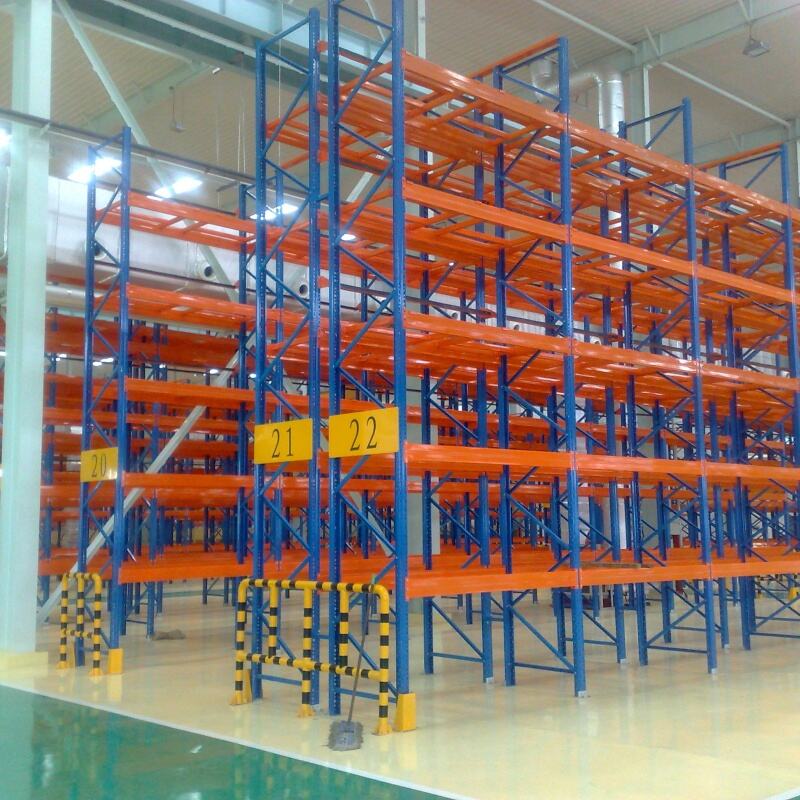
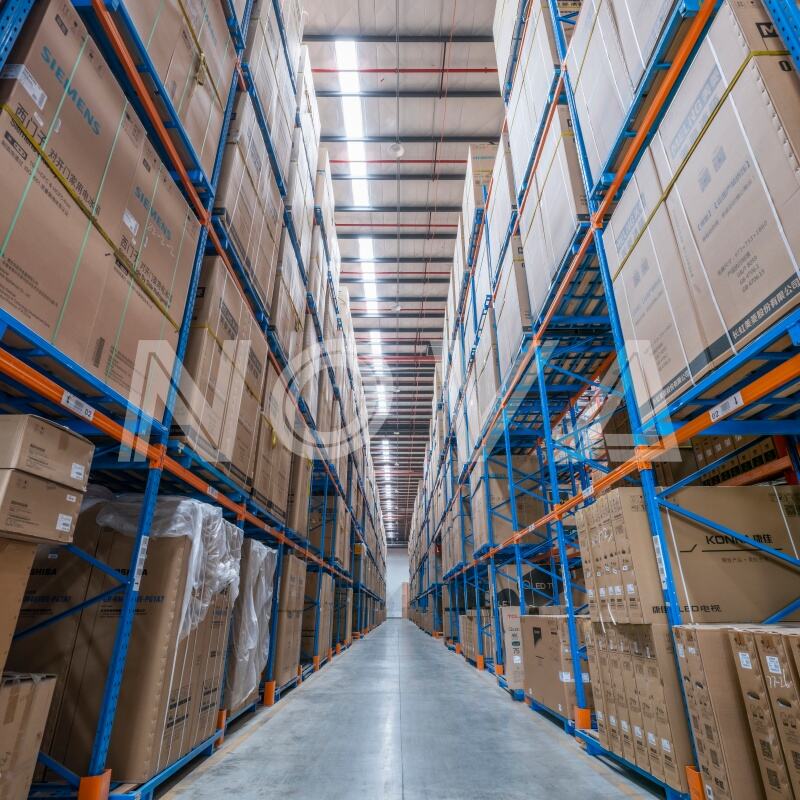
Pallet flow racking represents an innovative warehouse storage solution designed to maximize space utilization while streamlining inventory management processes. This dynamic storage system operates on a first-in, first-out principle, utilizing gravity-fed roller tracks or wheels that allow pallets to move smoothly from the loading end to the picking face. The pallet flow racking system consists of slightly inclined lanes equipped with rolling mechanisms that enable products to advance automatically toward the front position once the first pallet is removed. This technological approach eliminates the need for forklifts to enter storage lanes, significantly reducing operational time and enhancing workplace safety. The main functions of this system include high-density storage capacity, automatic stock rotation, and simplified inventory control. Technological features incorporate adjustable lane configurations, customizable incline angles, speed controllers to regulate pallet movement, and brake systems that ensure gentle stopping at the picking face. The robust steel construction provides durability and can accommodate various pallet sizes and weight capacities, typically ranging from 1,000 to 3,000 pounds per pallet position. Applications span across multiple industries including food and beverage distribution, pharmaceutical warehousing, cold storage facilities, manufacturing plants, and retail distribution centers. Companies dealing with perishable goods particularly benefit from the automatic rotation capabilities that ensure older stock is always accessed first, reducing waste and maintaining product freshness. The pallet flow racking system proves especially valuable in operations requiring high-volume order fulfillment, where quick access to products and efficient space management directly impact profitability. Modern installations often integrate with warehouse management systems, providing real-time inventory tracking and enhanced operational visibility. This storage solution effectively addresses the challenges of limited warehouse space, labor costs, and the need for improved throughput in fast-paced distribution environments.

Popular Products

Implementing a pallet flow racking system delivers substantial operational improvements that directly impact your bottom line. Space optimization stands as one of the most immediate benefits, allowing you to store significantly more products within the same footprint compared to traditional static shelving. By eliminating aisles between storage rows, you can increase storage density by up to 60 percent, effectively turning previously wasted space into productive storage capacity. This increased density means you can delay costly warehouse expansions or even downsize to smaller facilities, generating considerable real estate savings. Labor efficiency improves dramatically because workers no longer waste time traveling deep into storage lanes to retrieve pallets. The picking face remains constantly replenished through gravity, keeping products at the front position where they are easily accessible. This reduction in travel time allows your team to process more orders per shift, directly increasing productivity without adding staff. Safety improvements emerge naturally from the system design, as forklifts operate only at the loading and unloading ends rather than maneuvering through narrow aisles. This separation of loading and picking activities reduces the risk of collisions and workplace accidents, creating a safer environment for your employees while potentially lowering insurance costs. Inventory management becomes remarkably simpler with automatic first-in, first-out rotation. You eliminate the risk of products sitting too long in storage, which is particularly critical for date-sensitive items like food products, pharmaceuticals, or any goods with expiration dates. This automatic rotation reduces spoilage, minimizes waste, and ensures customers always receive the freshest products, protecting your reputation and reducing losses. Energy savings materialize in multiple ways, particularly in refrigerated warehouses where maximizing storage density within climate-controlled space directly reduces cooling costs. The gravity-fed system requires no electricity to move pallets, unlike powered conveyor systems, further reducing operational expenses. Product damage decreases because pallets move smoothly along controlled tracks rather than being repeatedly handled by forklifts. Speed controllers and brake mechanisms ensure gentle movement and stopping, protecting both products and packaging. Flexibility accommodates changing business needs through adjustable lane configurations that can be modified to handle different product lines or seasonal variations in inventory. The system scales with your growth, allowing you to add lanes or reconfigure existing setups without complete overhauls. Finally, the visual management capabilities cannot be overstated, as the open design provides clear sightlines to inventory levels, making it immediately obvious when reordering is necessary and helping prevent stockouts that frustrate customers and lose sales.

Tips And Tricks

How Do Pallet Rack Systems Support Safer Inventory Management?

20

May

How Do Pallet Rack Systems Support Safer Inventory Management?

Warehouse safety is not a matter of chance — it is a direct result of the systems, structures, and processes that organizations put in place. Among all the variables that influence how safely a facility operates, the design and organization of storag...
View More
How Do You Choose the Right Longspan Rack for Changing Inventory Types?

13

Jan

How Do You Choose the Right Longspan Rack for Changing Inventory Types?

Modern warehouses face constant challenges in adapting their storage systems to accommodate varying inventory types and fluctuating stock levels. A longspan rack system offers the versatility and adaptability needed to handle these dynamic requiremen...
View More
What Makes Automated Storage and Retrieval Systems Ideal for Modern Warehouses?

05

Feb

What Makes Automated Storage and Retrieval Systems Ideal for Modern Warehouses?

Modern warehouses face unprecedented challenges in managing inventory efficiently while meeting growing customer demands for faster delivery times. The implementation of an automated storage and retrieval system represents a transformative solution t...
View More
Why Is Automated Storage and Retrieval System Adoption Growing Globally?

05

Feb

Why Is Automated Storage and Retrieval System Adoption Growing Globally?

The global logistics landscape is experiencing a revolutionary transformation as businesses increasingly recognize the strategic importance of automated storage and retrieval system implementation. Companies across industries are embracing these soph...
View More

Get a Free Quote

Our representative will contact you soon.
Email
Name
Company Name
Message
0/1000

pallet flow racking

Maximized Storage Density Through Intelligent Space Utilization

Maximized Storage Density Through Intelligent Space Utilization

The pallet flow racking system revolutionizes how warehouses utilize available space by implementing a deep-lane storage approach that fundamentally transforms storage capacity. Traditional selective racking requires an aisle for every row of storage, consuming valuable floor space that could otherwise hold inventory. In contrast, pallet flow racking eliminates these intermediate aisles by allowing multiple pallets to store in depth, one behind another, within each lane. This configuration can typically accommodate anywhere from four to twenty pallets deep, depending on your specific operational requirements and building dimensions. The space savings become immediately apparent when you consider that a traditional system might dedicate 40 percent of warehouse floor space to aisles, whereas a pallet flow racking system reduces this to perhaps 15 percent, redirecting that recovered space toward revenue-generating inventory storage. For businesses facing capacity constraints, this means postponing or completely avoiding expensive building expansions that could cost hundreds of thousands or millions of dollars. The vertical design further maximizes cubic space utilization, taking advantage of full ceiling height that often goes underutilized in conventional storage approaches. Modern pallet flow racking installations can reach heights of 30 feet or more, multiplying storage capacity without expanding the building footprint. This three-dimensional approach to space management proves particularly valuable in urban locations where real estate costs are premium and expansion options are limited or nonexistent. The system adapts to irregular building layouts, fitting efficiently into spaces with columns, varying ceiling heights, or unusual dimensions that challenge other storage solutions. Beyond mere density, the intelligent design maintains full accessibility to every product line simultaneously, avoiding the access limitations that plague some high-density systems like drive-in racking where rear pallets become temporarily inaccessible. Each lane operates independently, ensuring you can pick any SKU at any time without rearranging other inventory. This combination of exceptional density and maintained selectivity creates a storage solution that truly maximizes both space and operational efficiency, delivering a return on investment that typically materializes within two to three years through reduced real estate costs and increased storage capacity within existing facilities.
Automatic First-In First-Out Rotation for Superior Inventory Control

Automatic First-In First-Out Rotation for Superior Inventory Control

The automatic first-in, first-out rotation capability of pallet flow racking systems provides unmatched inventory control that protects product quality and reduces waste without requiring constant monitoring or manual intervention. This inherent characteristic stems from the fundamental design where products are loaded at the elevated rear end and naturally travel forward via gravity to the picking face at the lower front end. When workers remove a pallet from the front position, the next pallet immediately advances to take its place, ensuring that the oldest inventory always remains at the front for next selection. This automatic rotation proves absolutely critical for businesses handling perishable goods, date-sensitive products, or any inventory where age affects value or usability. Food distributors, for example, must maintain strict rotation to comply with safety regulations and quality standards, preventing expired products from reaching consumers. Pharmaceutical warehouses face similar requirements where medication efficacy degrades over time and regulatory compliance demands documented rotation practices. The pallet flow racking system provides this rotation mechanically, eliminating human error from the equation and ensuring consistent compliance regardless of staff training levels or attention to detail. The financial impact of proper rotation extends beyond regulatory compliance to directly affect profitability through waste reduction. Companies regularly lose substantial revenue when products expire before sale, representing not only the lost product value but also the costs of disposal, replacement inventory, and potential damage to customer relationships. By guaranteeing that oldest stock is always picked first, pallet flow racking minimizes these losses, with many operations reporting waste reductions of 30 to 50 percent after implementation. The system also simplifies inventory tracking and auditing processes because the physical location directly corresponds to product age without requiring complex database queries or physical searches through storage areas. Warehouse managers can instantly assess stock freshness by simply observing how many pallets remain in each lane, making reordering decisions more accurate and reducing both stockouts and overstock situations. This visibility extends to quality control processes, as inspection teams can easily monitor product condition at the picking face without disrupting storage operations or requiring extensive product handling. The automatic rotation additionally supports lean inventory practices and just-in-time operations by maintaining a continuous flow of products that align with demand patterns, reducing the safety stock levels needed to buffer against uncertainty and freeing up capital that would otherwise be tied up in excess inventory.
Enhanced Operational Safety Through Separated Traffic Patterns

Enhanced Operational Safety Through Separated Traffic Patterns

Workplace safety improvements represent one of the most significant yet often underestimated benefits of implementing pallet flow racking systems in warehouse operations. The fundamental design creates a natural separation between loading activities and picking activities, establishing distinct traffic patterns that minimize the dangerous interactions between forklifts and workers that contribute to many warehouse accidents. In traditional selective racking environments, forklifts constantly travel through the same aisles where order pickers work, creating numerous opportunities for collisions, near-misses, and accidents that result in injuries, equipment damage, and operational disruptions. The pallet flow racking system eliminates this hazard by confining forklift operations to the loading side at the rear of the racking while order pickers work exclusively at the front picking face, physically separating these activities and dramatically reducing accident risks. Forklifts never need to enter the storage lanes themselves, avoiding the particularly dangerous situation of operating in confined spaces with limited visibility and maneuverability. This separation proves especially valuable during high-activity periods when multiple forklifts are replenishing stock simultaneously with multiple pickers fulfilling orders, situations where accident risks multiply in conventional layouts. The reduced forklift travel distances additionally decrease overall forklift operation hours, which statistically correlates with fewer accidents simply through reduced exposure. Speed controllers integrated into the pallet flow racking lanes ensure pallets move at controlled velocities, preventing the dangerous situations that can occur when heavy loads move too quickly on inclined surfaces. Brake mechanisms gently stop pallets at the picking face, eliminating the jarring impacts that could cause loads to shift, collapse, or injure workers. The stable, predictable movement of pallets through the system contrasts sharply with the variability and human error factors present in manual material handling operations. Ergonomic benefits extend the safety advantages by positioning products at optimal heights and locations for picking, reducing the awkward reaching, bending, and lifting that contribute to repetitive strain injuries and back problems among warehouse workers. The consistent product presentation at the picking face means workers develop efficient, ergonomically sound picking techniques rather than adapting to constantly changing product locations and heights. Improved visibility throughout the system allows supervisors to monitor operations more effectively, quickly identifying unsafe practices or potential hazards before they result in incidents. The open design eliminates blind corners and hidden areas where accidents often occur unnoticed, ensuring rapid response when issues do arise. Insurance providers often recognize these safety improvements through reduced premiums, acknowledging that pallet flow racking installations demonstrate a commitment to workplace safety that statistically reduces claims and losses.

Get a Free Quote

Our representative will contact you soon.
Email
Name
Company Name
Message
0/1000

Get a Free Quote

Our representative will contact you soon.
Email
Name
Company Name
Message
0/1000