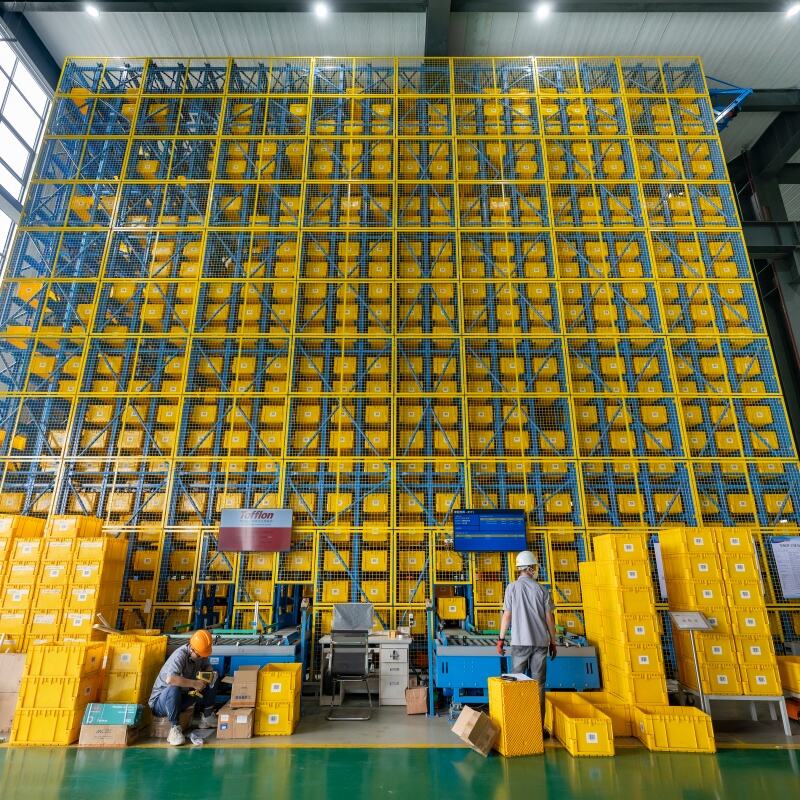
Miniload Storage System: Advanced Automated Warehousing Solution for Maximum Efficiency

All Categories

Get a Free Quote

Our representative will contact you soon.
Email
Name
Company Name
Message
0/1000

miniload storage system

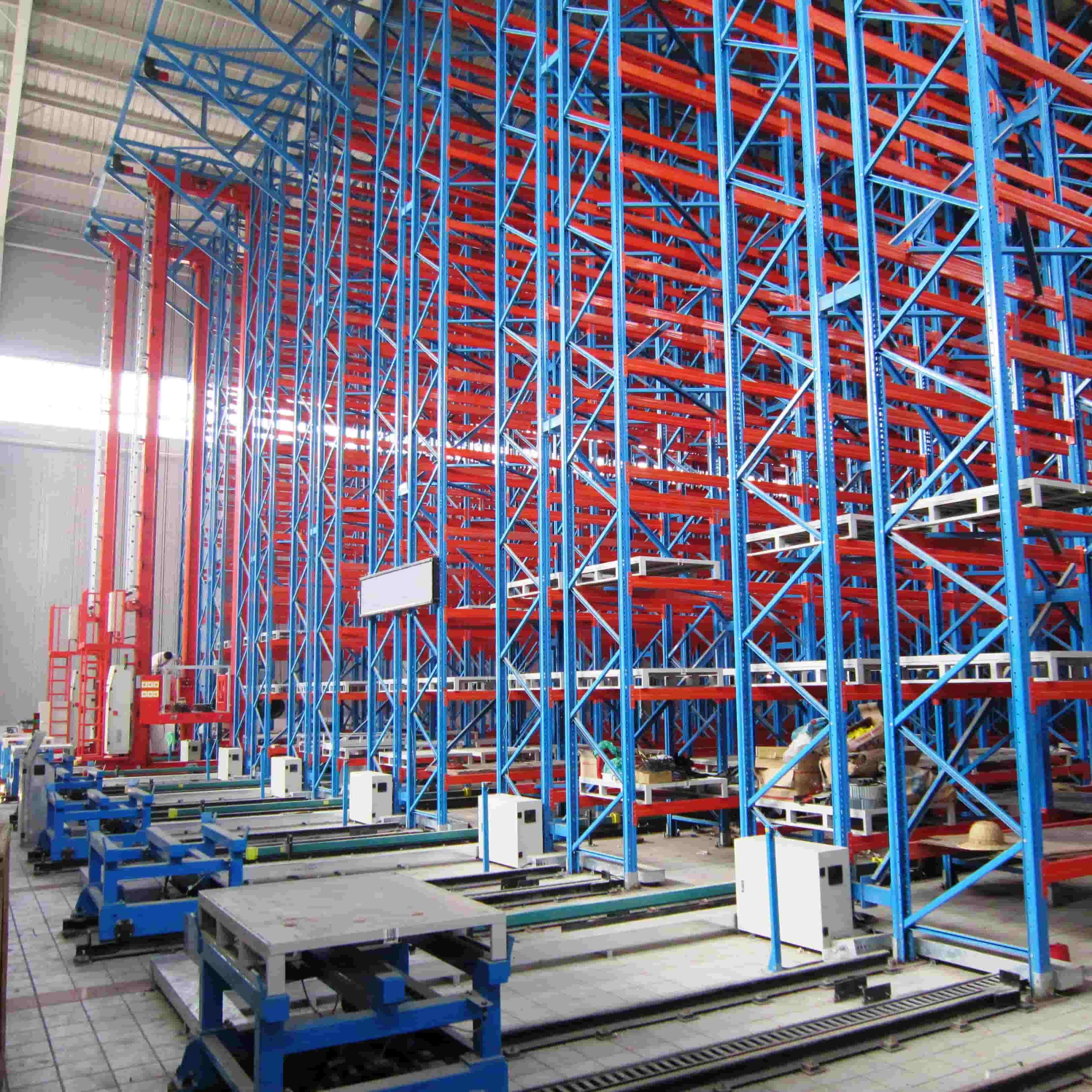
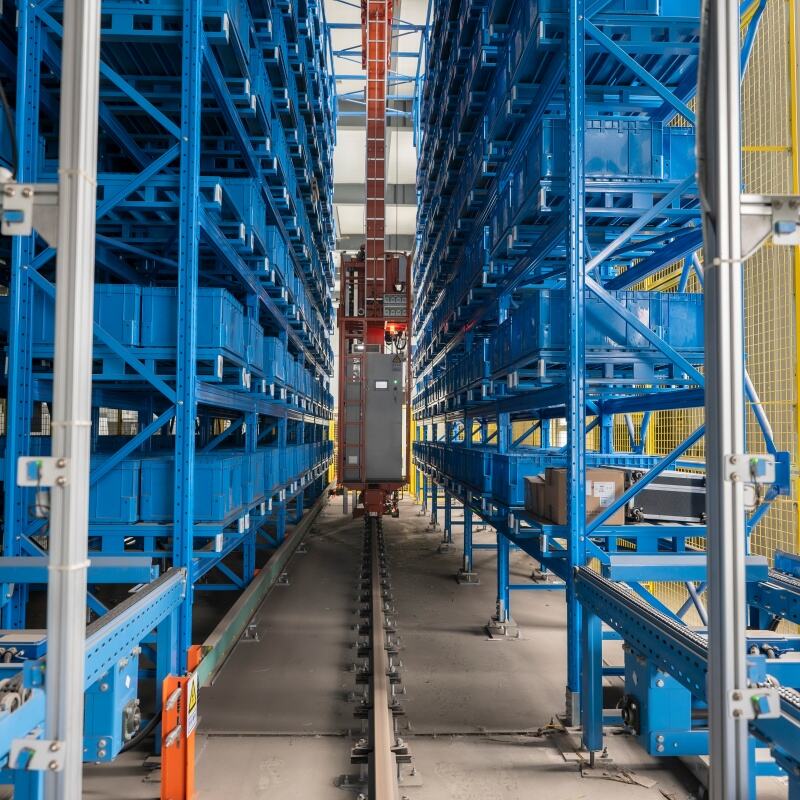
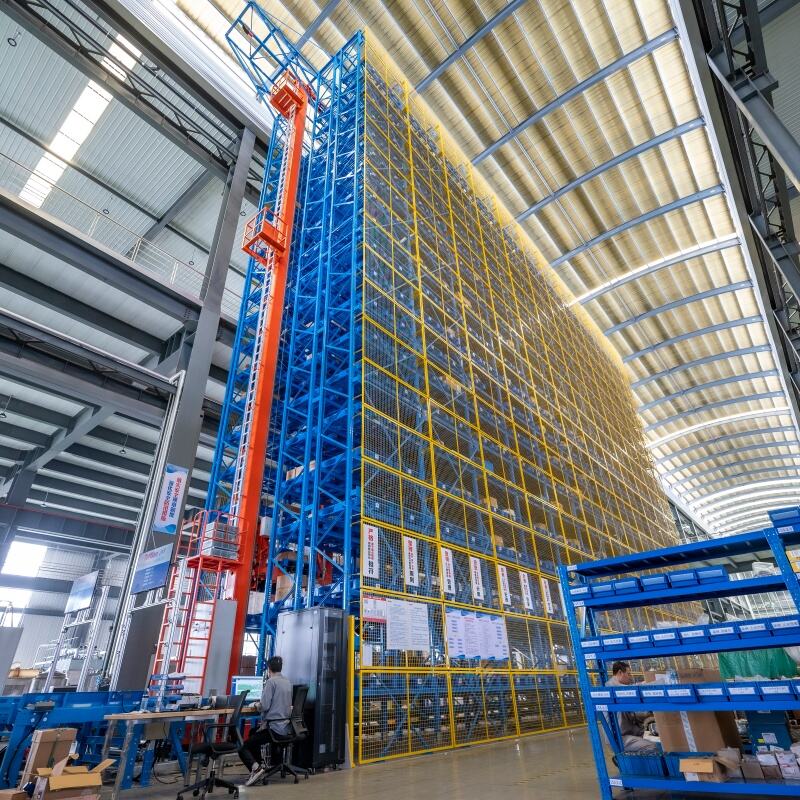
The miniload storage system represents a sophisticated automated warehousing solution designed specifically for handling small to medium-sized items with exceptional precision and speed. This advanced technology serves as the backbone of modern distribution centers, enabling businesses to streamline their inventory management processes while maximizing storage density within limited floor space. At its core, the miniload storage system utilizes automated stacking cranes that operate within narrow aisles to retrieve and store containers, trays, or cartons with remarkable accuracy. The main functions encompass automated storage and retrieval operations, intelligent inventory tracking, and seamless integration with warehouse management software platforms. These systems excel at managing high-volume order fulfillment requirements while maintaining consistent accuracy rates that far exceed manual handling capabilities. The technological features include precision-engineered vertical lift modules, sophisticated control algorithms that optimize crane movements, and sensor-based positioning systems ensuring millimeter-level accuracy during every transaction. Modern implementations incorporate energy-efficient drive systems, regenerative braking technology, and smart power management to reduce operational costs. The miniload storage system applications span diverse industries including pharmaceutical distribution, electronics manufacturing, automotive parts suppliers, e-commerce fulfillment operations, and retail distribution networks. These systems prove particularly valuable in environments requiring temperature-controlled storage, strict inventory rotation protocols, or handling of high-value merchandise demanding enhanced security measures. The modular design philosophy allows businesses to scale their operations incrementally, adding storage capacity or throughput capabilities as demand grows without disrupting existing workflows. Integration capabilities extend beyond basic warehouse operations, connecting with enterprise resource planning systems, transportation management platforms, and customer order processing interfaces to create unified supply chain ecosystems that respond dynamically to changing business requirements and market conditions.

New Product Releases

Implementing a miniload storage system delivers transformative benefits that directly impact your bottom line and operational efficiency. Space utilization improvements stand out as one of the most compelling advantages, as these systems maximize vertical storage capacity while minimizing the footprint required on your valuable warehouse floor. You can store significantly more inventory in the same physical location compared to traditional shelving methods, effectively multiplying your storage capacity without costly building expansions. The speed of operations increases dramatically, with automated cranes retrieving items in seconds rather than minutes, allowing your facility to process substantially more orders each day with the same staff resources. Labor cost reductions occur naturally as automation handles the physically demanding and repetitive tasks of locating and retrieving items, freeing your workforce to focus on value-added activities requiring human judgment and problem-solving skills. Accuracy improvements eliminate the costly errors associated with manual picking operations, ensuring customers receive exactly what they ordered while reducing returns, replacements, and the administrative burden of correcting mistakes. Your inventory visibility reaches new levels of precision as the system tracks every item movement in real-time, providing management with accurate data for making informed purchasing and allocation decisions. Worker safety benefits emerge as employees no longer climb ladders, operate forklifts in congested aisles, or lift heavy containers repeatedly throughout their shifts, resulting in fewer workplace injuries and associated costs. The consistency of operations remains stable regardless of staff turnover, training levels, or fatigue factors that typically affect manual warehouse operations. Energy efficiency surpasses conventional material handling equipment through optimized movement patterns and regenerative technologies that capture and reuse power during normal operations. Scalability advantages allow your operation to grow organically, adding storage modules or throughput capacity incrementally as business volumes increase without replacing the entire system infrastructure. Product protection improves substantially as automated handling reduces damage from drops, collisions, and improper stacking that commonly occur in manual environments. Security enhancements restrict physical access to inventory, creating clear audit trails for every transaction and making unauthorized removal virtually impossible. The miniload storage system operates reliably in challenging environments including refrigerated spaces, clean rooms, or facilities with limited climate control where human productivity typically suffers.

Practical Tips

How Do You Choose the Right Longspan Rack for Changing Inventory Types?

13

Jan

How Do You Choose the Right Longspan Rack for Changing Inventory Types?

Modern warehouses face constant challenges in adapting their storage systems to accommodate varying inventory types and fluctuating stock levels. A longspan rack system offers the versatility and adaptability needed to handle these dynamic requiremen...
View More
Why Is Automated Storage and Retrieval System Adoption Growing Globally?

05

Feb

Why Is Automated Storage and Retrieval System Adoption Growing Globally?

The global logistics landscape is experiencing a revolutionary transformation as businesses increasingly recognize the strategic importance of automated storage and retrieval system implementation. Companies across industries are embracing these soph...
View More
Comparing Heavy Duty Racks with Standard Pallet Rack Systems

16

Mar

Comparing Heavy Duty Racks with Standard Pallet Rack Systems

When it comes to optimizing warehouse storage capacity and operational efficiency, selecting the right pallet racking system becomes a critical decision that impacts both immediate functionality and long-term profitability. The choice between heavy d...
View More
What Are Essential Safety Tips for Installing a Steel Platform?

16

Mar

What Are Essential Safety Tips for Installing a Steel Platform?

Industrial facilities worldwide rely on steel platforms to maximize vertical storage space and improve operational efficiency. These robust structures serve as elevated work areas, storage solutions, and access points in warehouses, manufacturing pla...
View More

Get a Free Quote

Our representative will contact you soon.
Email
Name
Company Name
Message
0/1000

miniload storage system

Maximum Storage Density Through Intelligent Space Utilization

Maximum Storage Density Through Intelligent Space Utilization

The miniload storage system revolutionizes how businesses approach warehouse space management by achieving storage densities that traditional methods simply cannot match. This advantage stems from the system's ability to utilize vertical space effectively, reaching heights of forty feet or more while maintaining rapid access to every stored item regardless of its position within the structure. Unlike conventional shelving that requires wide aisles for forklifts and adequate clearance for manual picking operations, these automated systems operate in aisles as narrow as five feet, dedicating a far greater percentage of your building volume to actual storage rather than navigation space. The precision engineering allows containers to nest closely together with minimal gaps, eliminating the wasted space that accumulates when human workers need extra room for visibility and manual handling. Your facility gains the capacity to store two to three times more inventory within the same four walls, delivering enormous financial benefits by postponing or eliminating expensive facility expansions that would otherwise become necessary as your business grows. The system adapts to your specific inventory profile, accommodating various container sizes and configurations within the same structure through adjustable shelving positions and flexible storage locations. This flexibility means you can optimize storage allocation dynamically as your product mix evolves, ensuring efficient space usage regardless of seasonal variations or strategic shifts in your business model. The compact footprint also reduces heating, cooling, and lighting costs since you maintain a smaller physical space while housing equivalent or greater inventory volumes. Businesses operating in urban locations with premium real estate costs find this density advantage particularly valuable, as maximizing existing facilities becomes far more economical than acquiring additional property in expensive markets. The vertical storage approach also protects valuable floor space for other essential operations including packing stations, quality control areas, and staging zones that require human interaction and cannot be easily automated. The structural design distributes loads efficiently, allowing installation in buildings with standard floor loading capacities without requiring expensive foundation reinforcements that some heavy-duty storage systems demand.
Lightning-Fast Order Fulfillment That Transforms Customer Satisfaction

Lightning-Fast Order Fulfillment That Transforms Customer Satisfaction

Speed defines competitive advantage in today's marketplace where customers expect rapid order processing and same-day shipping capabilities as standard service levels rather than premium options. The miniload storage system delivers exceptional throughput performance that transforms your ability to meet and exceed these demanding expectations consistently. Automated stacking cranes execute retrieval operations in as little as fifteen to thirty seconds per transaction, compared to several minutes required for human workers to walk to locations, locate items, and return to packing stations. This dramatic speed advantage multiplies across hundreds or thousands of daily order lines, enabling your facility to complete substantially more shipments within standard operating hours. The system maintains consistent performance throughout entire shifts without the productivity variations inherent in human operations where fatigue, distractions, and experience levels create fluctuating output rates. During peak periods such as holiday seasons or promotional events when order volumes surge dramatically, the automated system continues operating at full capacity while manual operations typically struggle with overtime costs, temporary labor challenges, and accuracy problems stemming from rushed work and inexperienced staff. The technology supports batch picking strategies and wave planning methodologies that optimize overall throughput by grouping compatible orders and sequencing retrievals to minimize crane travel distances. Your warehouse management system can implement sophisticated algorithms that pre-position frequently ordered items in optimal locations, further reducing average retrieval times and maximizing the number of order lines processed per hour. The parallel processing capability allows multiple cranes to operate simultaneously within the same structure, scaling throughput capacity to match your specific volume requirements without proportional increases in labor costs. Fast order fulfillment translates directly into enhanced customer satisfaction scores, positive reviews, and increased repeat purchase rates that drive long-term revenue growth. The speed advantage also provides flexibility in cutoff times, allowing your operation to accept orders later in the day while still meeting carrier pickup schedules, effectively extending your selling window compared to competitors constrained by slower fulfillment processes. Reduced order cycle times improve cash flow by accelerating the conversion of inventory into shipped orders and invoiced revenue.
Unmatched Accuracy That Eliminates Costly Errors and Builds Customer Loyalty

Unmatched Accuracy That Eliminates Costly Errors and Builds Customer Loyalty

Accuracy represents a critical performance metric that profoundly impacts customer satisfaction, operational costs, and brand reputation in ways that extend far beyond the immediate warehouse environment. The miniload storage system achieves accuracy rates consistently exceeding ninety-nine point nine percent, virtually eliminating the picking errors that plague manual operations and create cascading problems throughout your supply chain. This precision results from computer-controlled operations that remove human error factors such as misreading labels, selecting incorrect items, or miscounting quantities during the picking process. The system directs automated cranes to exact storage locations using coordinate-based positioning rather than relying on visual identification, ensuring the correct container arrives at the picking station every single time. Barcode scanning or radio frequency identification technology verifies each transaction, creating fail-safe checkpoints that catch any discrepancies before items enter the packing and shipping workflow. The financial impact of improved accuracy extends across multiple cost categories including eliminated shipping expenses for replacement orders, reduced customer service workload handling complaints and returns, avoided chargebacks from retail customers receiving incorrect merchandise, and protected brand reputation that takes years to build but can deteriorate rapidly through repeated fulfillment mistakes. Customer retention improves measurably when shoppers consistently receive exactly what they ordered in perfect condition, creating positive experiences that generate repeat business and favorable word-of-mouth recommendations. The data integrity maintained by accurate systems provides reliable information for inventory planning, ensuring your purchasing decisions reflect actual stock levels rather than discrepancies created by location errors and lost inventory. Accuracy benefits extend to regulatory compliance in industries such as pharmaceuticals and medical devices where documentation requirements mandate precise tracking of every unit throughout the distribution process. The audit trail created by automated systems provides irrefutable records for regulatory inspections, quality investigations, and recall situations where you must quickly identify affected inventory and customer shipments. Employee morale improves when workers no longer face criticism or disciplinary actions for errors that were often unavoidable in poorly designed manual processes, creating a more positive workplace culture focused on continuous improvement rather than blame assignment.

Get a Free Quote

Our representative will contact you soon.
Email
Name
Company Name
Message
0/1000

Get a Free Quote

Our representative will contact you soon.
Email
Name
Company Name
Message
0/1000